
5 Mistakes to Avoid With Fence Installation
The most expensive fence mistake Dallas homeowners make costs nothing at the time: they skip a property survey before installation. The average boundary dispute correction in Dallas runs $3,200, and that doesn’t count the fence you have to tear out and move. After that, the costly errors cluster around four more decisions contractors rush and homeowners don’t know to question. Catch them before the first post goes in the ground and you keep your money. Miss them and you’ll pay twice. If you’d rather not roll the dice, call (844) 797-4808 for a free estimate.
Mistake #1: Skipping the Property Survey and Trusting the Neighbor’s Fence Line
An existing fence is not a property line. It’s just a fence someone built years ago, possibly in the wrong spot. We’ve seen this play out across Dallas more times than we can count: a homeowner assumes the fence along the back of the lot marks the boundary, builds a new fence on the same line, and discovers later that two feet of their yard belongs to the neighbor, or that they’ve built onto the neighbor’s property. The correction means survey fees, a new fence section, and a conversation nobody wants to have.
Dallas lots, especially in older neighborhoods like Lakewood, Oak Cliff, and East Dallas, often have fences that have crept over the decades. A previous owner may have replaced a section slightly off the line. A developer may have split a lot. The only way to know where your property actually ends is a survey from a licensed Texas surveyor, and a plat or old fence line won’t cut it for a legal boundary question.
- Get the survey before you get the bid. Reputable installers will ask for it. If a contractor never mentions it, that’s a warning sign.
- Confirm setbacks at the same time. Dallas code sets specific setback and height limits for fences near front and side property lines. A surveyor’s map plus a call to the city helps you avoid tearing out a fence you just paid for.
- Talk to the neighbor early. A five-minute conversation about the shared line beats a dispute after the concrete cures.
If a contractor shrugs at the survey question, find another contractor.
Mistake #2: Setting Posts at Two Feet When Dallas Clay Demands Three
Standard fence-building guidance says bury posts two feet deep. In a lot of the country, that works. In Dallas, it doesn’t hold up. The black and gray clay soil across much of North Texas expands when it’s wet and shrinks when it’s dry, and it moves a lot. A post set two feet deep in that clay will heave, lean, and eventually work its way loose. When it does, the fence sags, the panels rack out of square, and gates stop latching.
The fix is a minimum of three feet of post depth, set in a concrete collar that grips the soil through the wet-dry cycle. That’s the spec we build to in Dallas, and it’s the first thing we check on any fence we’re asked to rebuild. A contractor who quotes a fast, cheap job with shallow posts is quoting a fence that will need repair within a few years.
There’s a reason this matters so much here. Dallas swings between long dry spells and soaking spring rains, and the clay responds to every one. In our experience, the fences that fail early almost always trace back to shallow footings and dry-mixed concrete. Pay for the depth now or pay for the repair later – there’s no third option. For a full breakdown of how we build footings for the local soil, see our Fence Installation in Dallas service page.
Mistake #3: Choosing a Fence Height Without Pulling Code and HOA Rules
A fence height that looks great on paper can violate Dallas code or your HOA’s addendum. The rules aren’t uniform. Front-yard fences face tighter height and setback limits than backyard fences. Corner lots have sight-line requirements near intersections. HOA addendums often stack rules on top of the city’s, capping height, dictating material, or banning certain styles outright.
Here’s the trap. Homeowners pick a fence style they love, sign a bid, and only learn about the height restriction when a neighbor complains or the HOA sends a letter. By then the fence is installed and the correction is on the homeowner’s dime.
- Pull the Dallas Development Code sections on fences before you pick a height, especially for front and side yards.
- Read your HOA’s architectural addendum, not just the main rules. Material and color restrictions often hide in the fine print.
- Get approval in writing. If you have an HOA, submit the architectural request and keep the approval.
A reputable Dallas installer will ask about your HOA before quoting. We do it on every estimate, because a fence that violates the rules isn’t done, no matter how good it looks. Materials like Bufftech and ActiveYards come in a range of styles that satisfy most HOA restrictions, and the right pick protects you from a do-over.
Mistake #4: Mismatching Post Material to Fence Style
Wood posts under a heavy ornamental iron or aluminum panel are a recipe for early failure. Iron and aluminum panels are heavier than wood pickets, and the load on the posts is higher. A pressure-treated 4×4 that would last under a cedar privacy fence will twist and fail faster under a heavier panel, often within the warranty period. Then the homeowner is stuck with the repair bill because the warranty covers the panel, not the failed post.
The post is the foundation of the fence. Match it to the load. For heavier panel fences, steel posts set in concrete are the right call. For wood privacy fences, at least a 4×4 rated for ground contact, though 6×6 posts add lifespan, especially on taller fences. Composite and vinyl systems often have their own post specs from the manufacturer – follow them exactly, because deviating voids the warranty.
This is where brand quality matters. Jerith makes ornamental aluminum fencing built for Texas conditions, with post and panel systems designed to work together. A mismatched assembly undercuts that engineering. Ask your installer to show you the post spec for the exact system you’re buying, and make sure the bid lists it.
Mistake #5: Accepting a Bid Without a Written Post-Installation Inspection
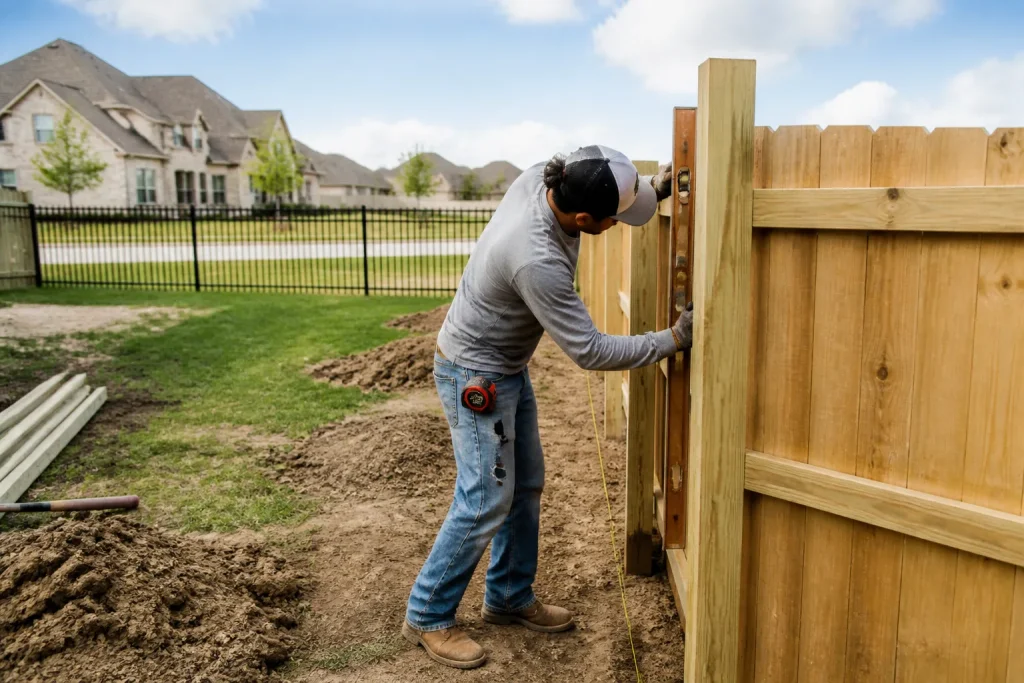
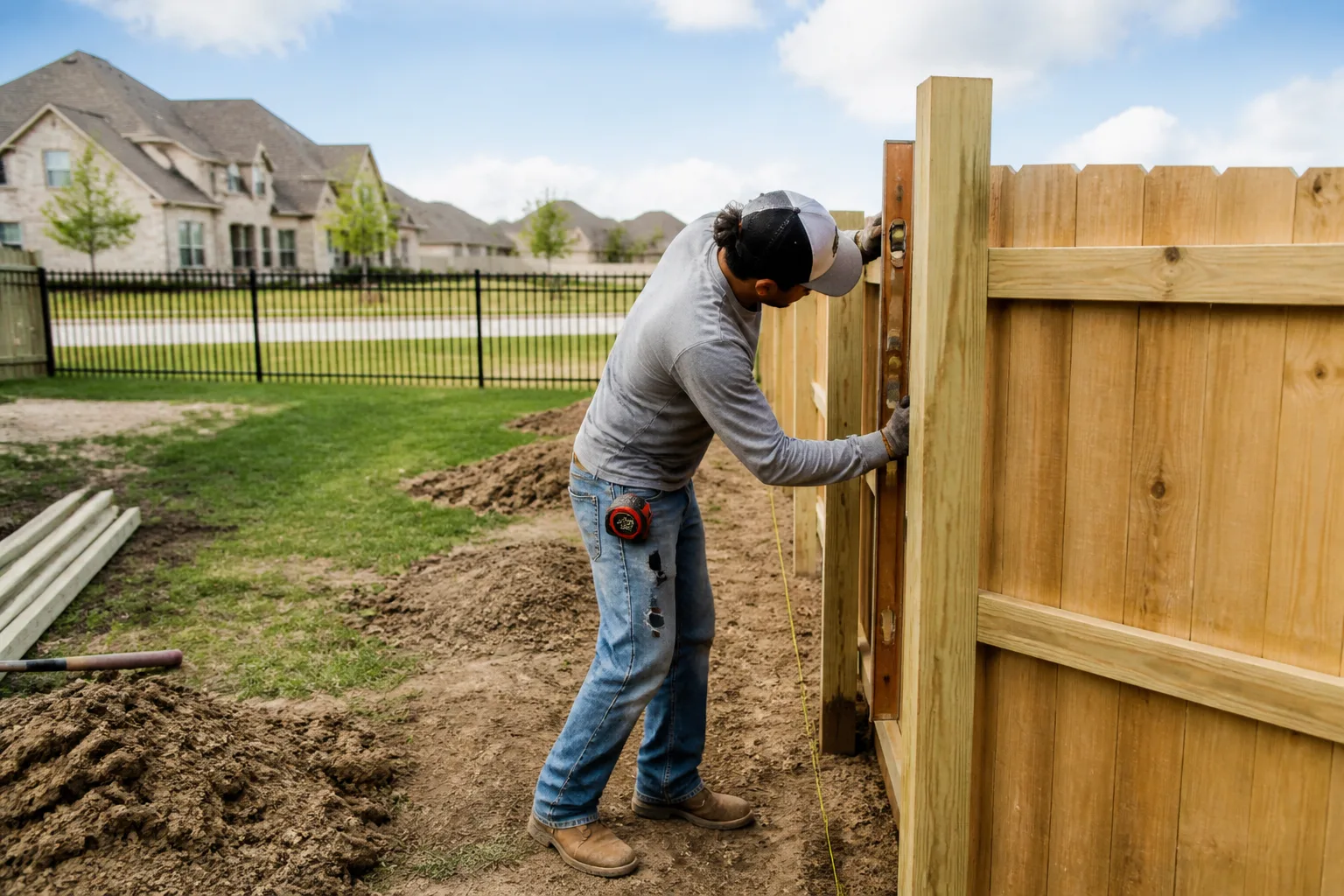
A handshake and a promise aren’t accountability. The gap that leaves homeowners holding repair costs is the missing inspection protocol. When a contractor installs a fence and drives off, who confirms the posts are plumb, the concrete is properly mixed, the gates swing true, and the line is straight? If the answer is “nobody,” you’re the inspector, and you’re finding out about problems months later when the fence starts to lean.
A written post-installation inspection protocol should cover:
- Post depth and plumb checked against the plan, before panels go on.
- Concrete mix and cure time documented.
- Gate alignment and hardware tested.
- A final walkthrough with the homeowner, with any punch-list items in writing.
Ask any Dallas contractor for their inspection process before you sign. If they can’t describe one, that’s your answer. Groundwork Construction Co. of Dallas backs every fence with the 730-Day Done Right Promise – if something’s not right, we make it right, and that’s in writing. That’s the difference between a bid and a guarantee. For help with the hardscape around your new fence line, our Driveway & Pavers in Dallas page covers the options, and Belgard makes a solid pairing for patios and walkways that tie into a new fence.
When to Call a Pro
Honest answer: some fence work is a weekend project. Replacing a couple of pickets, tightening a gate hinge, staining a cedar fence – you can do that yourself. But once you’re setting posts in Dallas clay, matching post material to a heavy panel, pulling code and HOA rules, and needing a written inspection on the back end, the math shifts. The tools and the depth spec alone make it worth calling. Groundwork Construction Co. of Dallas sends background-checked, uniformed technicians, calls are answered by a live person 24/7, and every project comes with upfront pricing so the number you see is the number you pay. From foundation to finish line, we handle the whole job.
Related services in Dallas: fence installation, driveway and pavers, and home additions and ADU construction for homeowners adding space behind a new fence line. Start at our Groundwork Construction Co. of Dallas home page to see all seven service lines.
The Bottom Line
Every fence mistake on this list shares one thing: the cost compounds. A missing survey becomes a boundary dispute. A shallow post becomes a leaning fence. A skipped inspection becomes a repair bill you didn’t budget for. Catch the decision before installation starts and you avoid all of it. In Dallas, clay soil and tight code make those decisions matter more than most homeowners expect.
If you’re in Dallas and need help, Groundwork Construction Co. of Dallas offers free estimates – call (844) 797-4808. Our technicians have up to 12 years of experience, and every job is covered by the 730-Day Done Right Promise. Ask about $1,000 off projects over $10,000 and 0% financing for 18 months.
Frequently Asked Questions
Set fence posts a minimum of three feet deep in Dallas clay, set in a concrete collar. Two feet is standard in much of the country, but Dallas clay expands and shrinks with the wet-dry cycle, and shallow posts heave and fail. Call (844) 797-4808 for a free estimate that accounts for your soil.
Yes. Get a survey from a licensed Texas surveyor before installation so you build on the actual property line, not the neighbor’s fence. Boundary dispute corrections in Dallas run around $3,200 on average, and that’s before you factor in moving the fence. A survey is cheap insurance against that. Call (844) 797-4808 to schedule your free estimate.
No. Dallas code sets height and setback limits, especially in front yards and on corner lots, and HOA addendums often add stricter rules on top. Pull the code, read your HOA’s architectural addendum, and get approval in writing before you build. A Dallas installer who doesn’t ask about your HOA is skipping a step you can’t afford to skip.
Cost depends on fence style, height, linear footage, and post material, so there’s no single number. The best way to know is a written, line-item bid from a licensed installer. Groundwork Construction Co. of Dallas offers free estimates with upfront pricing – the number you see is the number you pay. Call (844) 797-4808 for your exact quote.
Written by the team at Groundwork Construction Co. of Dallas.
Need Construction Help?
Call Groundwork Construction Co. of Dallas - licensed & insured, here with fast after-hours help in Dallas.
(844) 797-4808