
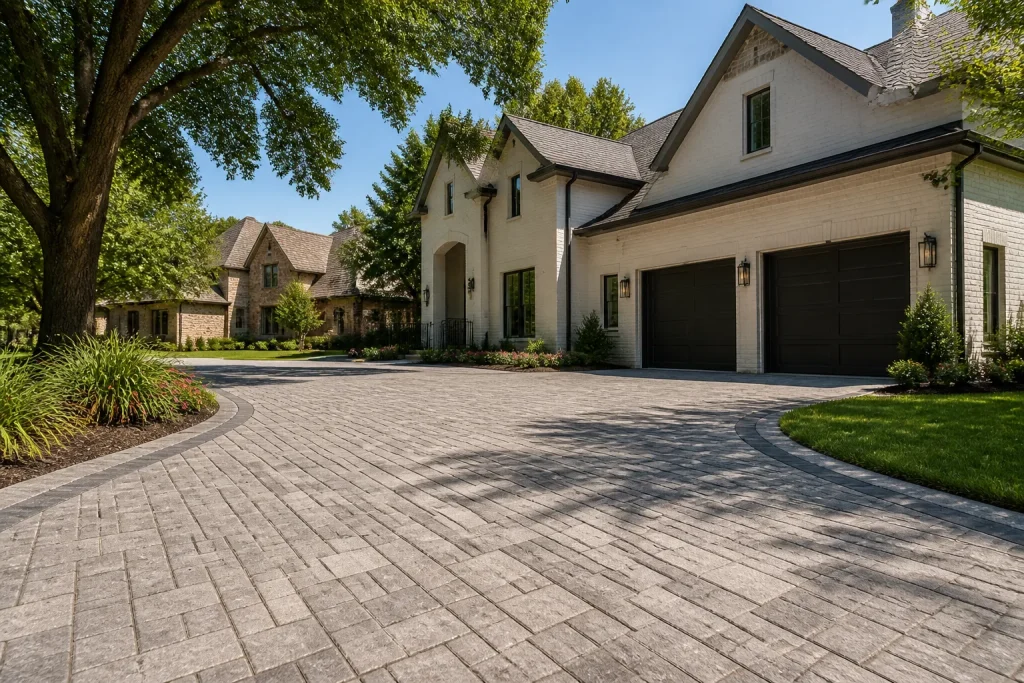
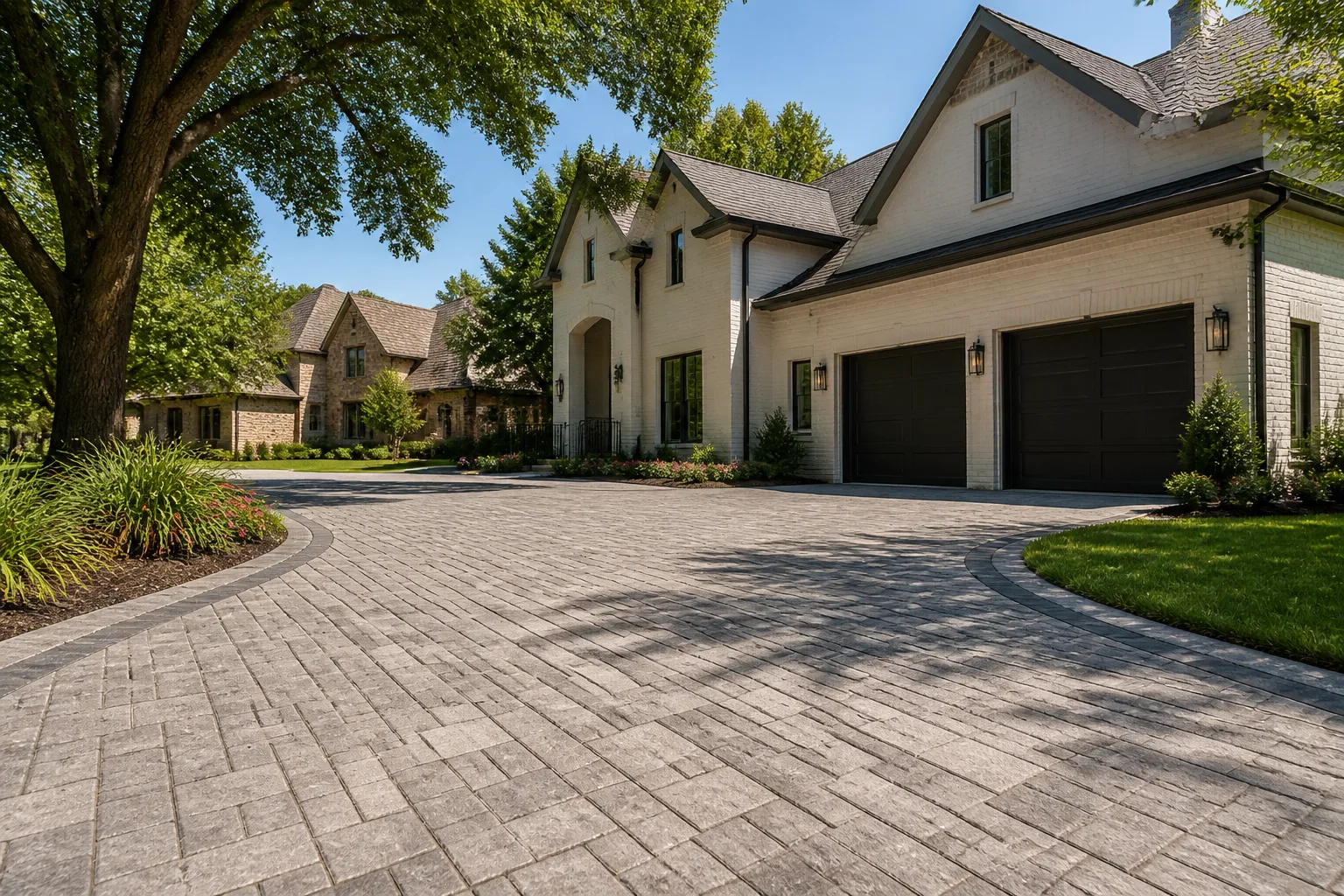
Delta Driveway & Pavers in Dallas: A Homeowner’s Guide
Delta makes pavers rated for foot traffic and pavers rated for vehicle load, and in a showroom they can look nearly identical. That’s the mistake we see most in Dallas: a homeowner picks a Delta paver for its color and texture, a crew installs it under a 4,500-pound truck, and by year two the joints are rutted and the surface is spalling. Matching the right Delta product line to your actual traffic load and driveway pitch is what keeps a Dallas driveway looking new past the five-year mark. If you’d rather have a pro sort that out, call (844) 797-4808.
How Does Delta’s Load Classification System Work in Plain Terms?
Delta groups its hardscape products by the load they’re engineered to carry. Pedestrian-rated pavers are built for patios, walkways, and pool decks. Vehicular-rated pavers are built to handle tire loads, point loading, and the flex a car or truck puts on a driveway every day. The two categories can share a finish and a color, so the only reliable way to tell them apart is the product spec sheet or the box label, not the sample board.
Here’s how to match classification to your real use pattern:
- Standard sedans and crossovers (under 4,000 lbs): most Delta vehicular lines handle this comfortably, provided the base and bedding are built to spec.
- Half-ton pickups and SUVs (4,500 to 6,000 lbs): step up to a Delta line rated for heavier vehicular duty. This is where pedestrian-rated pavers start failing at the joints.
- Full-size trucks, work vans, boat trailers, RVs: heavy-duty vehicular classification, and the base course needs to be thicker than a standard driveway spec.
Dallas driveways that see delivery trucks or a contractor’s trailer need to be classified for that. We’ve seen Lakewood homeowners specify a beautiful pedestrian paver for a wide driveway apron, then have it crack where the garbage truck turns around every Tuesday. Classification isn’t a marketing label. It’s the difference between a surface that lasts and one that tells on you.
How Do Dallas Lot Grades Affect Delta Paver Drainage?
Most Dallas lots sit flat to moderately sloped, and that matters more than people realize. Dallas gets roughly 37 inches of rain a year, much of it in short, heavy bursts in spring and fall. A driveway that drains poorly doesn’t just puddle. It undermines the base, pushes water under the pavers, and starts the joint failure cycle that ends in a full re-lay.
Delta’s product lines handle slope in a couple of different ways. Some lines include integrated slope geometry in the paver profile that helps channel water across the surface. Others rely on the installer cutting a proper cross-slope and pitch during layout. On a flat lot, we typically want a minimum 1.5 to 2 percent slope away from the garage and toward a drainage point, with a channel drain or French drain where the grade won’t carry water away on its own.
The failure we see most in Dallas isn’t Delta’s fault. It’s an installer who laid a flat driveway with no positive pitch because the lot looked level and it was easier. Standing water, then base saturation, then rutting. If you’re in an older Dallas neighborhood like Winnetka Heights or Kessler Park where the lot was graded for a carriage house and a Model T, the drainage design needs to be re-thought for modern vehicles and modern rainfall. That’s on the contractor, not the paver.
What Bedding Sand Depth Does Delta Require for Vehicular Applications?
Delta specifies a bedding sand layer for vehicular installations that’s typically in the 1-inch compacted range, laid over a compacted aggregate base that’s substantially thicker than the bedding. That’s the layer most contractors shortcut, and it’s the one that fails first. When the bedding is too thin or uneven, the paver rocks, the joint sand migrates out, and load transfer from paver to paver stops working.
What a correct Delta driveway build looks like from the bottom up:
- Compacted, properly graded subgrade
- Aggregate base course built to the vehicular spec, compacted in lifts
- Bedding sand at the Delta-specified depth, screeded level
- Vehicular-rated Delta pavers set to the pattern
- Joint sand compacted into the joints in multiple passes
- Surface cleaned and sealed if the product line calls for it
If a contractor tells you the base doesn’t matter because “the pavers are strong enough,” walk away. Pavers are like a good roof: the visible layer is only half the assembly. The base is doing the heavy lifting.
Related services in Dallas: if you’re redoing the driveway, it’s often the right time to plan the approach in one job. See our Driveway & Pavers in Dallas page for how we scope the full approach.
Are Delta Pavers Compatible With Radiant Heating in Dallas?
Yes, and it’s a growing question here. Dallas winters aren’t Minneapolis, but we get hard freezes and ice events that catch people off guard, and a heated driveway is no longer the luxury it was a decade ago. Delta’s vehicular paver lines are compatible with hydronic radiant heating systems when the tubing is embedded in the base or in a slab beneath the pavers, provided the assembly is engineered for it.
The details that matter in Dallas:
- Pavers must be rated for the thermal cycling: a vehicular line does this better than a pedestrian line because it’s designed for higher stress overall.
- The heating element goes below the pavers, not between them. Tubing laid in the bedding sand is a shortcut that voids most product warranties.
- Expansion and control joints still matter. Heat encourages expansion, and a Dallas driveway with no relief joints will buckle no matter how good the pavers are.
- Insulation under the slab does help. It directs the heat up instead of into the ground, and it’s cheap compared to re-doing a failed heat system.
We see heated driveways most often in homes in Preston Hollow and on steep north-facing approaches where shade keeps ice around longer. If you’re considering one, plan it into the driveway build from the start. Retrofitting heat under an existing Delta driveway means pulling the pavers back up, so it’s a decision that’s much cheaper before the first paver goes down.
What Does a Compliant Delta Driveway Inspection Checklist Look Like?
A Delta-compliant driveway installation has documented checkpoints at each stage. Ask your contractor to walk you through them before work starts, and expect them to be verifiable, not just promised. Here’s what we check on every Dallas driveway:
- Subgrade: compacted, graded for drainage, no soft spots
- Base course: aggregate depth per the vehicular spec, compacted in lifts, checked with a plate compactor
- Bedding sand: Delta-specified depth, screeded level, not walked on before the pavers go down
- Paver classification: confirmed against your vehicle load on the spec sheet, not the sample
- Slope: minimum positive pitch away from the structure, checked with a level at three or more points
- Joint sand: compacted into the joints, joints filled to spec
- Edge restraint: set on the concrete edge or spike restraint, the full perimeter
- Cleanup and seal (if applicable): done per the product line
If the contractor can’t tell you the base depth in inches or the paver classification in writing, you’ve found your answer about how the rest of the job will go. We prefer to put this checklist in writing up front. Upfront pricing, no surprises includes the spec, not just the dollar amount. If you want a Dallas driveway installed to Delta’s spec the first time, that’s what our Groundwork Construction Co. of Dallas home is built on, with the 730-Day Done Right Promise standing behind the work.
When Should You Call a Pro for a Delta Driveway in Dallas?
Any time a driveway is being built or replaced, call a pro. The base, bedding, and slope work are the parts that can’t be fixed later without tearing it all out. A Delta paver is a great product; it’s only as good as the assembly under it. Call a professional for:
- A new Delta driveway, apron, or parking pad
- Replacing a failing surface that’s rutting or losing joint sand every year
- Adding drainage to a flat Dallas lot
- A heated driveway installation
- Any installation where you need the classification verified against your actual vehicles
We’ve seen this go wrong enough times that we can spot a bad base in about thirty seconds of walking a driveway. Several years ago we pulled up a driveway in Lake Highlands where the pavers looked immaculate from the street; the base was three inches of decomposed granite and half the joints had already given up. That’s the story a sample board never tells you.
The Bottom Line
Delta’s paver lines are engineered for consistent performance when they’re matched to the right load class, right slope design, right bedding depth, and right base assembly. The most common Dallas mistake is picking by appearance and installing a pedestrian paver where a vehicular one belongs. Match the product to your actual vehicles, plan for Dallas’s rainfall and lot grades, insist on a documented checklist, and your Delta driveway will look like new well past the point where a shortcut job starts showing its age.
If you’re in Dallas and need help, Groundwork Construction Co. of Dallas offers free estimates. Our technicians have up to 12 years of experience, we’re covered by the 730-Day Done Right Promise, and calls are answered by a live person 24/7. Call (844) 797-4808 to schedule your free estimate.
Frequently Asked Questions
Pedestrian-rated Delta pavers are engineered for foot traffic and light loads on patios, walkways, and pool decks. Vehicular-rated pavers are built to handle tire loads, point loading, and the daily flex of a car or truck. They can share the same finish and color, so you must confirm the classification on the spec sheet, not the sample board. If you’re in doubt, call (844) 797-4808 and we’ll check it against your vehicles before you buy.
Delta specifies a bedding sand layer in the 1-inch compacted range for vehicular applications, laid over a proper compacted aggregate base that’s substantially thicker. When the bedding is too thin or uneven, the pavers rock and the joint sand migrates out. Getting this right is a contractor’s job, and it’s the step most Dallas driveways fail at.
Usually, yes. Dallas gets about 37 inches of rain a year, much of it in short, heavy bursts, and most lots are flat to moderately sloped. Plan for at least a 1.5 to 2 percent pitch away from the garage and add a channel drain or French drain where the grade can’t carry water away on its own. A flat-lot driveway with no positive pitch is the leading cause of base saturation and rutting in Dallas.
Yes, Delta’s vehicular paver lines are compatible with hydronic radiant heating systems when the tubing is embedded in the base or in a slab below the pavers. The heating element should never go between the pavers or in the bedding sand. Installing heat into a new driveway from the start is far cheaper than retrofitting it later, and it’s a smart option for shaded north-facing approaches in Dallas.
If you want your Delta driveway installed right the first time, or you’d rather plan a heated approach before you lay a single paver, call (844) 797-4808 for a free estimate. Upfront pricing, no surprises.
Related services in Dallas: Fence Installation in Dallas and Home Additions & ADU in Dallas pair naturally with a driveway project when you’re planning a wider approach or a new structure on the property.
Written by the team at Groundwork Construction Co. of Dallas.
Need Construction Help?
Call Groundwork Construction Co. of Dallas - licensed & insured, here with fast after-hours help in Dallas.
(844) 797-4808