
Last updated November 17, 2026
 Bathroom remodeling
 Kitchen remodeling
 Home additions & ADU
 Roofing
 Windows & doors
 Driveway & pavers
 Fence
Free written scope consultation - allowances, timeline, and change-order rules on paper before a single trade is scheduled
Bathroom Remodeling Maintenance Schedule: What to Do and When
Most bathroom remodels show their first signs of failure within 18 months. Not because the work was bad. Because nobody told the homeowner what to do after the crew pulled out of the driveway. We’ve walked into Dallas bathrooms less than two years old with crumbling caulk lines, cloudy fixtures, and grout pulling away from a shower pan, and the culprit is almost never the installation. It’s the missing calendar. This guide gives you a dated, task-specific maintenance schedule for the first year after your remodel and every year after, broken out by material type, and it tells you which jobs you can handle yourself versus which ones will void your workmanship warranty if you touch them. Keep it somewhere you’ll actually look.
Quick Answer
The core of a bathroom remodeling maintenance schedule is simple: inspect your caulk joints at 30, 90, and 180 days, reseal stone and grout once a year, clean fixtures monthly with pH-neutral products, and check your exhaust fan’s airflow every season. The first year needs more check-ins because sealants cure, settle, and reveal weak points. After that, a light annual routine keeps the room sound for a decade or more. The single most important task is caulk inspection, and the day-90 check is the one that catches almost every early failure before it spreads.
Table of Contents
- The First 30 Days: What to Check After the Last Tile Is Set
- Why Caulk Fails First (and the Day-90 Inspection Test)
- The Month-by-Month First-Year Schedule
- Material-by-Material Care: Tile, Stone, Grout, Caulk, Fixtures
- Dallas Hard Water: Protecting Fixture Finishes and Warranty Coverage
- DIY vs. Pro: What You Can Safely Handle
- The Printable Annual Schedule
- How the 730-Day Done Right Promise Fits Your Schedule
The First 30 Days: What to Check After the Last Tile Is Set
The first month after your remodel finishes is not a passive waiting period. It’s your best window to catch settling, and settling is where most warranty claims start. Silicone caulk shrinks as it cures. Grout releases slightly as it dries fully. A shower pan that was sealed on install day is still expanding and contracting under its first real hot-water cycles. Walk the room with a flashlight and a roll of painter’s tape, mark anything that looks off, and photograph it.
Here’s what to check during the first 30 days:
- Caulk lines. Run a dry fingertip along the base of walls, the shower-to-pan joint, and around the tub. Any spot that feels soft, gummy, or pulls away from tile needs a note.
- Grout lines. Look for hairline cracks at corners and where the floor meets the wall. Small crazing inside grout is often fine; cracks at a change-of-plane are not.
- Shower drain and pan slope. After a shower, check whether water pools in the corners. A properly sloped pan in Dallas drains within a few minutes without a squeegee.
- Exhaust fan airflow. Hold a tissue to the grille. If it doesn’t flutter and hold, the fan is undersized, miswired, or ducted wrong.
- Fixture operation. Open and close the shower valve fully hot, then fully cold, and check the toilet and sink drains for slow movement.
- Mirror and cabinet mounting. Push gently on wall-mounted items. Any wobble is a loose anchor that should be corrected now, not at year two.
A 30-day walk-through is a routine part of any well-run remodel handoff. If something on this list looks wrong, call the contractor who did the work. Don’t wait for the year mark. The earlier a settling issue gets recorded, the cleaner the fix.
If you’re planning a bathroom remodel in Dallas and want a contractor who walks this list with you, our Groundwork Construction Co. of Dallas home page explains how we handle project closeout.
Why Caulk Fails First (and the Day-90 Inspection Test)
Caulk is the first thing to fail in any bathroom, and it fails at the joints where two different materials meet: tile to tub, tile to shower pan, backsplash to counter. Grout is rigid. Tile is rigid. When the room warms up and cools down, those rigid pieces move at different rates. Caulk is the flexible material that absorbs the difference. When it loses adhesion, water gets behind it, and behind it is wood framing and drywall.
The day-90 inspection is the single highest-value check in the entire schedule. Here’s the test we use:
- Dry the joint completely with a towel. No damp surface.
- Press a fingernail into the caulk bead at the shower-to-pan corner and at the tub-to-wall corner.
- If the caulk feels hard, cracked, or lifts cleanly away from either surface, it has failed. Mark it.
- Look for dark staining behind the bead when you flex it slightly. That’s moisture that has already traveled behind the seal.
- In Dallas, pay close attention to the joint where the shower wall meets the pan and where the tile meets the toilet base. Both see constant splash.
If the caulk has failed at 90 days on a new remodel, that’s a warranty conversation, not a homeowner’s repainting project. Re-caulking a joint yourself can void the very workmanship protection that would have covered the repair. Note the location, take a photo, and call the contractor. Any tile professional will tell you the same thing.
Failed caulk at a shower pan is not just cosmetic. Water that gets behind a failed joint in a Dallas upstairs bathroom finds the ceiling of the room below within a couple of seasons. Catch it at 90 days and the fix is a $150 sealant repair. Miss it for two years and the fix is drywall, framing, and possibly a new pan.
The Month-by-Month First-Year Schedule
Year one is the only year that needs this much attention. After the first twelve months, most of the settling has happened, and the schedule relaxes into something you can do in a half hour each season. Here’s what to do, month by month.
Months 1-3 (the settling window). Do a full walk-through at 30 days and again at 90 days. Focus on caulk, grout, and any fixture that wobbles. Log what you find.
Months 4-6 (the first-season test). Dallas gets its first humid stretch in late spring and its first real heat by June. At the 180-day mark, check ceiling paint above the shower for any bubbling or flaking, look at the exhaust fan grille for dust buildup, and inspect the tile floor for any loose-sounding hollow spots.
Months 7-9 (the summer-hard-water window). Summer is when hard-water deposits show up fastest on fixtures in Dallas. By month 7, you’ll see white crusting on showerheads, glass, and faucet aerators if your water is heavy in minerals. This is the month to start a weekly squeegee routine and a monthly vinegar-soak habit (details in the hard-water section).
Months 10-12 (the annual reset). Reseal natural stone counters and stone tile in month 10 or 11, before the holiday season. Check caulk again at the year mark. Replace your exhaust fan filter if it has one. And schedule a professional check on anything that looked wrong at the 90-day inspection but wasn’t fixed.
If you plan to expand the scope next year (a new vanity, a shower bench, a second bathroom), this is also the point to look at our Home Additions & ADU in Dallas page, because some of those projects are better done as one build than two.
Material-by-Material Care: Tile, Stone, Grout, Caulk, Fixtures
Every material in a bathroom wants something different. A single “clean the bathroom” routine flattens all of that into one bucket and does damage. Here’s how each surface actually wants to be treated.
Porcelain and ceramic tile. Warm water with a small amount of pH-neutral floor cleaner. No bleach on the tile itself. No acidic products on the grout. Tiles are nearly indestructible; the cleaners people use on them are what causes the problem.
Natural stone (marble, travertine, quartzite). Stone is porous. It wants a stone-specific pH-neutral cleaner and a penetrating sealer resealed every 12 months in a wet environment. In Dallas, marble shower walls can etch from hard water alone, not just acid cleaners, so a squeegee after every shower is the highest-return habit you’ll build.
Grout. Sealed grout should be resealed every 12-18 months in a shower. If the grout is unsealed cementitious grout, seal it in the first month, then every year after. Do not use bleach-heavy cleaners that break down the sealer faster than the grout itself.
Caulk. Silicone caulk should last 3-7 years if it was applied to a clean, dry surface, and less if the joint moves. Inspect at 30, 90, 180 days, then annually. Do not paint over caulk in a wet area. Do not caulk over failed caulk. Remove and replace.
Fixtures. Chrome, brushed nickel, matte black, and brushed gold all have different finish tolerances. Chrome handles mild soap and water. Matte black and brushed finishes scratch and degrade from abrasive cleaners faster than chrome. Warm water and a soft microfiber cloth is the safest universal answer. Skip anything with abrasive particles in the label.
Fixtures from quality brands hold up better over the long haul. That’s part of why we specify the brands we do, whether it’s Kohler for bathroom fixtures or the material partners behind a full remodel. Built to last, backed in writing, is the promise we make when we hand off the room.
Dallas Hard Water: Protecting Fixture Finishes and Warranty Coverage
Dallas water is hard. Depending on where you are in the metro, water hardness runs from about 8 to 15 grains per gallon, and that number is why so many Dallas bathrooms show mineral buildup faster than bathrooms in softer-water cities. White crusting on showerheads, cloudy glass doors, spotted matte black fixtures, scale in faucet aerators. If you’ve ever wondered why your Dallas shower glass looks foggy after two months, this is why.
The right preventive routine:
- Weekly: Squeegee shower walls and glass after every shower. Two minutes of squeegee a week saves hours of scrubbing a year.
- Monthly: Soak the showerhead and faucet aerator in a 50/50 white vinegar and water solution for 20 minutes, then rinse and dry. Remove the aerator first, don’t soak the finished fixture body.
- Monthly: Wipe polished chrome and brushed finishes with a damp microfiber cloth and dry immediately. Skip vinegar on these metals. Vinegar on polished chrome over time dulls the finish. Use a pH-neutral glass and surface cleaner instead.
- Quarterly: Descale glass shower doors with a dedicated hard-water cleaner. Skip anything labeled “heavy-duty” or “scrubbing” on the finish itself.
What not to do: vinegar soaks on matte black, brushed gold, or any finish with a PVD coating. Those finishes can lose their protective layer to acid over time. Finish warranties almost always exclude acid damage and abrasive cleaners. A manufacturer will read the label of what you used, so keep the label boring. pH-neutral, no abrasives, no acid.
If you’re already seeing etched glass, permanent spotting, or mineral deposits that won’t lift, the underlying problem is often that the exhaust fan is undersized or not running long enough after a shower. A properly sized fan running 20 minutes after each shower removes a lot of the moisture that carries those minerals onto surfaces. If your fan is original to a 1990s Dallas build, it’s almost certainly undersized by today’s standards.
DIY vs. Pro: What You Can Safely Handle
Some maintenance tasks cost nothing to do yourself. Some tasks void your workmanship warranty the moment a homeowner touches them. Knowing the difference is the whole game. Here’s the honest split.
Safe and appropriate for a homeowner:
- Cleaning tile, grout, and glass with pH-neutral products
- Squeegeeing, drying fixtures, and wiping down surfaces
- Replacing the exhaust fan grille or cleaning its grille
- Soaking a showerhead or aerator in vinegar
- Tightening a loose cabinet knob or drawer pull
- Swapping a light bulb or a vanity bulb
- Applying a penetrating sealer to stone counters (per manufacturer instructions)
Requires a pro to protect the warranty:
- Re-caulking a shower or tub joint within the warranty period. Call the contractor first.
- Regrouting, especially if you’re considering epoxy grout.
- Any plumbing work behind a wall or under a floor (shower valve, drain connection, supply lines, tile-over-pan).
- Resetting a loose tile or fixing a shower pan that has moved.
- Replacing a shower pan or installing a new one.
- Electrical changes to the fan or lighting circuit.
Anything involving water behind a wall or electrical behind a switch is a licensed professional’s job, full stop. The homeowner who tries to “just tighten” a shower valve behind tile often pays for a tile tear-out. The homeowner who re-caulks a joint themselves during the warranty window can end up with a repair that a warranty would have covered and now won’t.
One more note: on exterior-facing bathroom work like a bathroom window replacement, our Fence Installation in Dallas page isn’t the right match. For window work it’s the windows and doors line, but the principle holds. Anything that touches the building envelope, hire it out. You’ll sleep better.
The Printable Annual Schedule
Here’s the condensed annual schedule. Print it, tape it inside your vanity cabinet, and check off the tasks as you go. This is the version you can hand to a house sitter or a new homeowner if you sell the house.
Every month
- Clean fixtures with pH-neutral product
- Squeegee shower walls and glass (weekly actually, but assign to the routine)
- Run the exhaust fan at least 20 minutes after every shower
Every 3 months
- Test caulk with the fingernail flex method (shower pan, tub, toilet base)
- Descale shower glass
- Check under-sink cabinet for moisture or swelling
- Inspect the toilet base for movement
Every 6 months
- Soak showerhead and faucet aerators in vinegar
- Check exhaust fan airflow with the tissue test
- Inspect grout for cracks at change-of-plane joints
- Look at ceiling above the shower for bubbling paint
Every 12 months
- Reseal natural stone counters and stone tile
- Reseal shower grout (if it’s cementitious and in a wet zone)
- Full caulk inspection and replacement of any failed bead
- Professional check of shower pan slope if any concern
- Drain flush on the toilet and sink to prevent clogs
Every 3-5 years
- Replace the exhaust fan if it’s older than 10 years or running loud
- Full re-caulk of shower and tub joints
- Professional inspection of shower valve and drain connection
The Dallas-specific twist: because of our water and summers, treat the schedule as a floor, not a ceiling. If your bathroom sits on an upstairs floor above another room, add a 3-month moisture check on the ceiling below the shower. Water that gets through a failed shower pan doesn’t stay in the bathroom, and a ceiling stain on the floor below is the first hard evidence most Dallas homeowners see.
If a bathroom remodel is on the other side of this schedule for you, our team also handles exterior work like Driveway & Pavers in Dallas, so you can sequence multiple projects and not chase four contractors for one property refresh.
How the 730-Day Done Right Promise Fits Your Schedule
The reason a maintenance schedule matters so much is that what happens after handoff is what determines whether a good remodel ages well. And this is where the protecting structure matters. Every project we complete at Groundwork Construction Co. of Dallas is covered by the 730-Day Done Right Promise: if it’s not done right, we make it right. That’s two full years of workmanship coverage, one of the longest windows in the residential construction space, and it exists specifically to cover the settling, curing, and seasonal-testing issues that show up in the first year.
Here’s how the promise lines up with the schedule:
- Day 30 and Day 90: if the caulk has failed on a new install, that’s a promise-covered item. Call it in, don’t paint over it.
- Month 6 to 12: if a tile moves, a pan doesn’t drain, or a valve leaks, that’s on us to fix. Document it, keep it on your list, and call.
- Year 2: the coverage continues. Anything that fails from workmanship gets corrected, which is exactly the window where corner cracking or a pan issue would appear.
The tasks in the annual schedule that a homeowner owns (cleaning, sealing, descaling, filter changes) are maintenance. Everything that touches the install itself (caulk joints within warranty, tile, pan, drain, valve) is the contractor’s problem during the promise window. That’s the split. Our technicians have up to 12 years of experience, and they know what a legitimate warranty issue looks like versus normal maintenance.
We also handle the exterior side of the property with the same coverage. If your next project involves a courtyard bathroom, hot tub surround, or outdoor shower, that’s often paired with Home Additions & ADU in Dallas work rather than years apart. Built to last, backed in writing, extends to every category.
Common Mistakes to Avoid
- Treating caulk like grout. Caulk is flexible because it’s supposed to be. Homeowners who scrape it out and replace it with grout on a corner joint create a rigid surface that cracks in the first seasonal swing. It fails faster than the caulk did.
- Using bleach on grout. Bleach strips the sealer, and once the sealer is gone, water pulls straight into the grout line. A Dallas shower can lose its sealer to bleach in a single season. Use a pH-neutral product.
- Vinegar-soaking the fixtures instead of the aerator. Vinegar is perfect for a showerhead or aerator. On the polished chrome, brushed, or matte finish of a fixture body, acid can dull the finish, and finish warranties almost universally exclude acid damage.
- Ignoring a loosened toilet base. A rocking toilet is compressing its wax ring. Left alone, that’s a slow leak through the subfloor, and it happens in Dallas bathrooms more often than you’d guess after a hard summer of expanding and contracting.
- Skipping the 30-day walk-through entirely. The first month is when most settling happens and when it’s easiest to photograph and log issues. The homeowner who never did the walk-through finds the caulk problem at year two when it’s already grown into drywall.
- Re-caulking during the warranty window. The biggest and most common mistake. A homeowner adds a bead of silicone over a joint that was actually a warranty-covered failure. Now the contractor can’t confirm the original issue and the claim gets muddied.
- Running the fan only while you’re in the room. Twenty minutes after each shower is the number that keeps the mirror clear and the grout dry. Fans run for two minutes are doing very little.
When to Call a Professional
Call a licensed professional when you see any of these in a Dallas bathroom: active water staining on a ceiling below the bathroom, a shower pan that pools water in a corner, caulk that failed within your warranty window, a tile that sounds hollow when tapped, a toilet that rocks at the base, a shower valve that drips behind the wall, or an exhaust fan that fails the tissue test after cleaning the grille. Any of these is a sign that something is happening behind the surface, and the cheapest time to fix it is now. Do not open a wall or pull a tile to investigate. Document, take photos, and call.
Groundwork Construction Co. of Dallas offers free estimates in Dallas and answers every call with a live person, 24/7. No voicemail black holes. Call (844) 797-4808, describe what you’re seeing, and we’ll tell you whether it’s a maintenance task or a warranty matter.
Frequently Asked Questions
Shower grout should be resealed every 12 to 18 months if it’s cementitious, and natural stone should be resealed every 12 months in a wet environment. In Dallas’s hard water, treat 12 months as the upper limit. If water beads on the surface, the sealer is still working. If it soaks in, reseal. Call (844) 797-4808 for a free estimate if you’re not sure whether your surfaces are sealed.
Caulk fails because it’s doing the hardest job in the room: flexing between two materials that move at different rates as the shower heats up and cools down. Silicone warranties are commonly 3-7 years, and that’s when installed right. In Dallas, a poorly cured or poorly installed bead can fail within months. The day-90 inspection catches almost every early failure. If caulk fails inside your warranty window, call (844) 797-4808 and we’ll come look before you touch it.
Squeegee after every shower, soak showerheads and aerators monthly in 50/50 white vinegar, and wipe finished metals with pH-neutral cleaner only. Vinegar on a chrome or brushed finish body is a warranty risk. Dallas water runs hard enough that a weekly squeegee habit is the highest-return thing you can do. Call (844) 797-4808 if you want a professional eye on spotting that won’t lift.
Not inside a workmanship warranty window. The 730-Day Done Right Promise covers workmanship defects for two full years, and re-caulking a joint yourself can make the original issue unverifiable. Outside the warranty window, yes, you can absolutely re-caulk, as long as you remove the old bead, clean and dry the surface, and use a bathroom-rated silicone. Call (844) 797-4808 if you’re not sure which side of the window you’re on.
A well-installed bathroom lasts 15 to 25 years before major element replacement, but it needs maintenance well before that point. Caulk replacement is a 3-7 year item, sealing a 12-18 month item, and finish touch-up is ongoing. A remodel that shows failure inside 18 months is almost always a maintenance gap or an installation issue, not the age of the materials. Free estimates in Dallas are available at (844) 797-4808.
The 730-Day Done Right Promise is our two-year workmanship guarantee: if something we installed isn’t done right, we make it right, for 730 days from handoff. That’s one of the longest workmanship windows in residential construction. It covers install failures, not maintenance neglect or damage from acid cleaners on finishes. Call (844) 797-4808 to review exactly what a given project is covered for.
The Bottom Line
The remodel ends when the crew leaves. The investment depends on what happens next. Do the 30-day and 90-day walk-throughs. Inspect caulk by touch, not by glance. Stay off vinegar on finished metals. Run the fan longer than feels necessary. Reseal stone and grout on the calendar, not when you notice a problem. And if something fails inside your warranty window, call before you touch it. A dated schedule turns a bathroom from a project that ages into a project that lasts, and the contractors who back their work in writing are the ones who make that schedule easy to follow. Call (844) 797-4808 for a free estimate, and we’ll walk your bathroom with you before anything else gets signed.
Written by the team at Groundwork Construction Co. of Dallas.
Styles & brands we work with
- Kitchen remodeling
- Bathroom remodeling
- Home additions & ADU
- Roofing
- Windows & doors
- Driveway & pavers
- Fence
See the difference
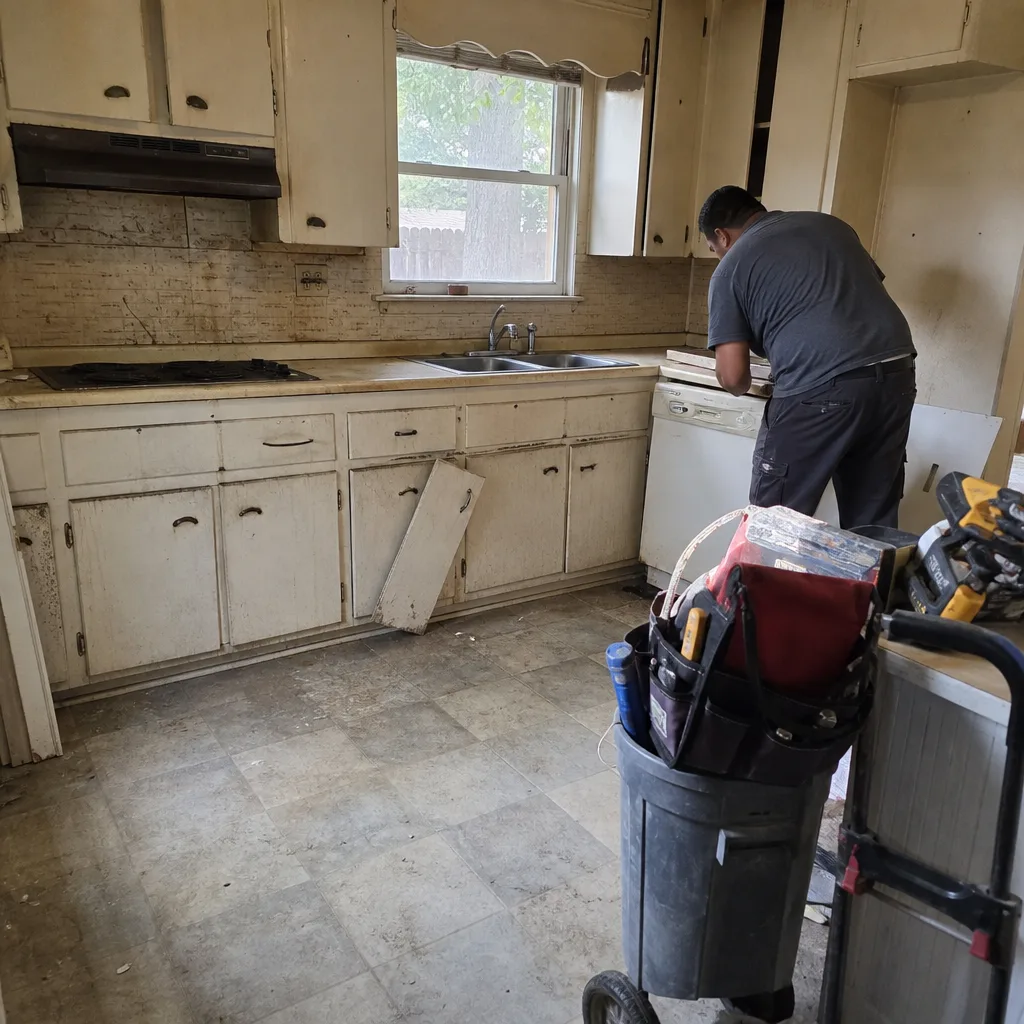 Before
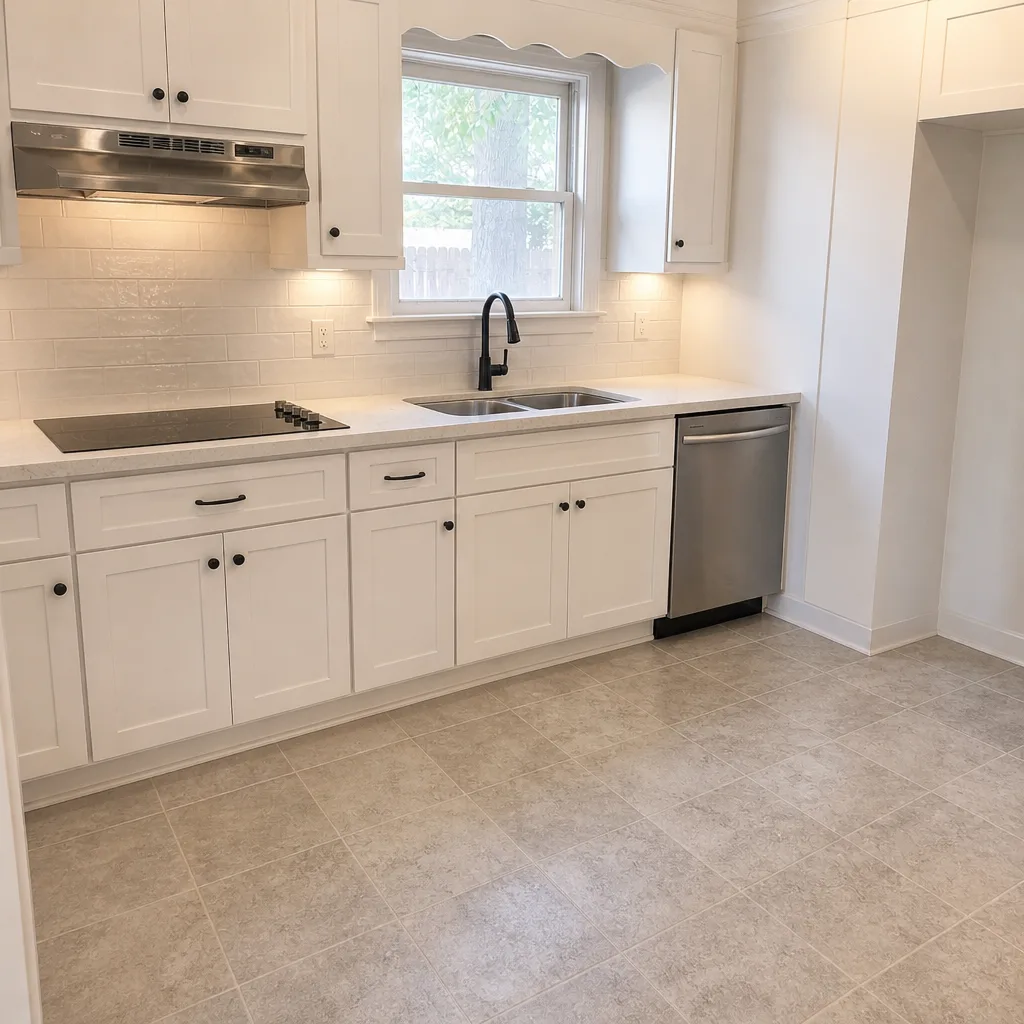 After
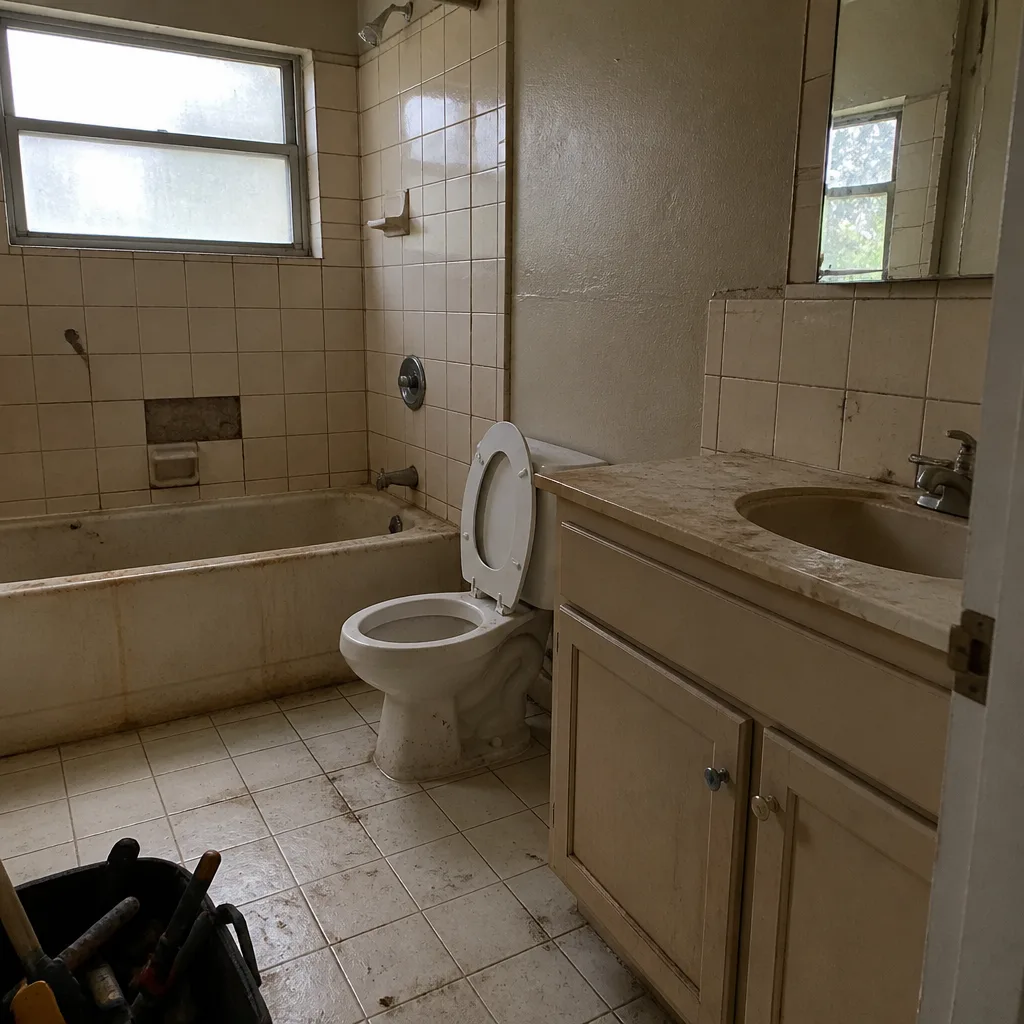 Before
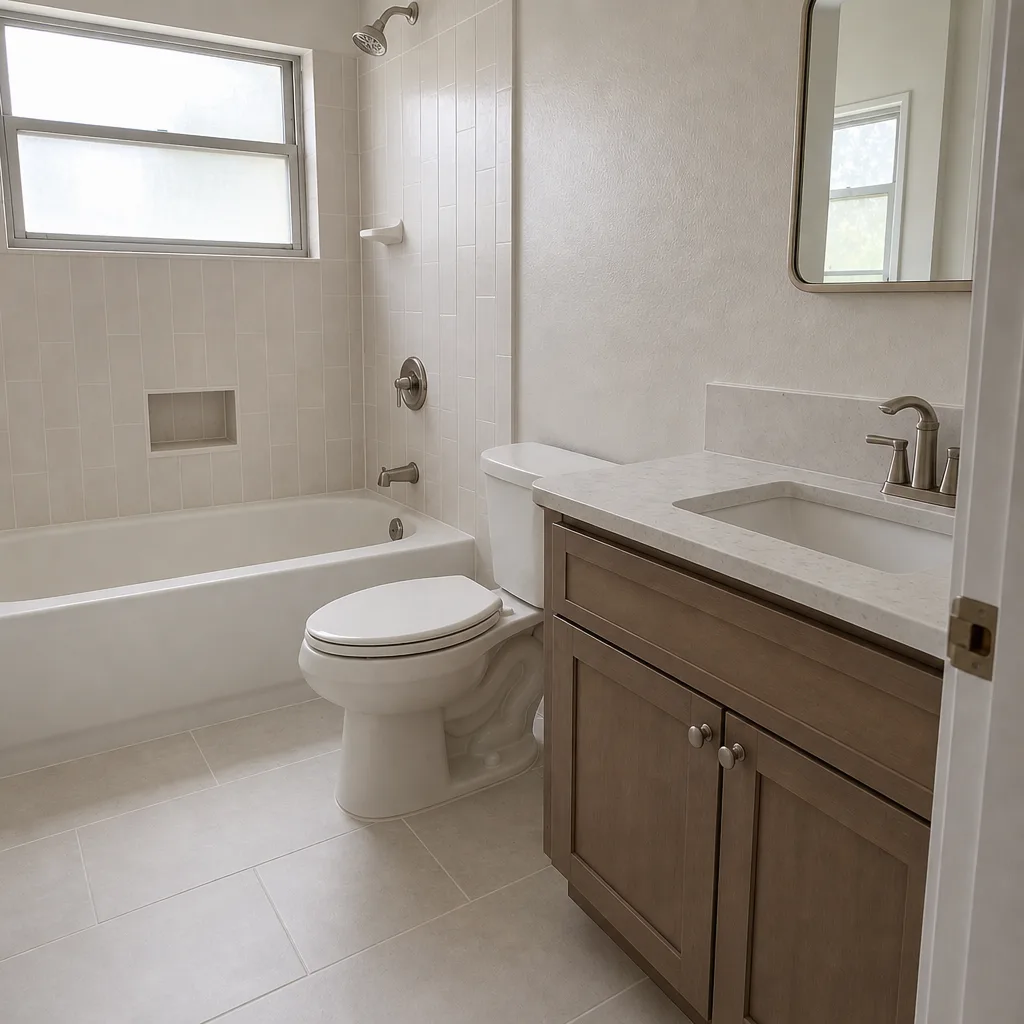 After
 Before
 After