
Last updated November 17, 2026
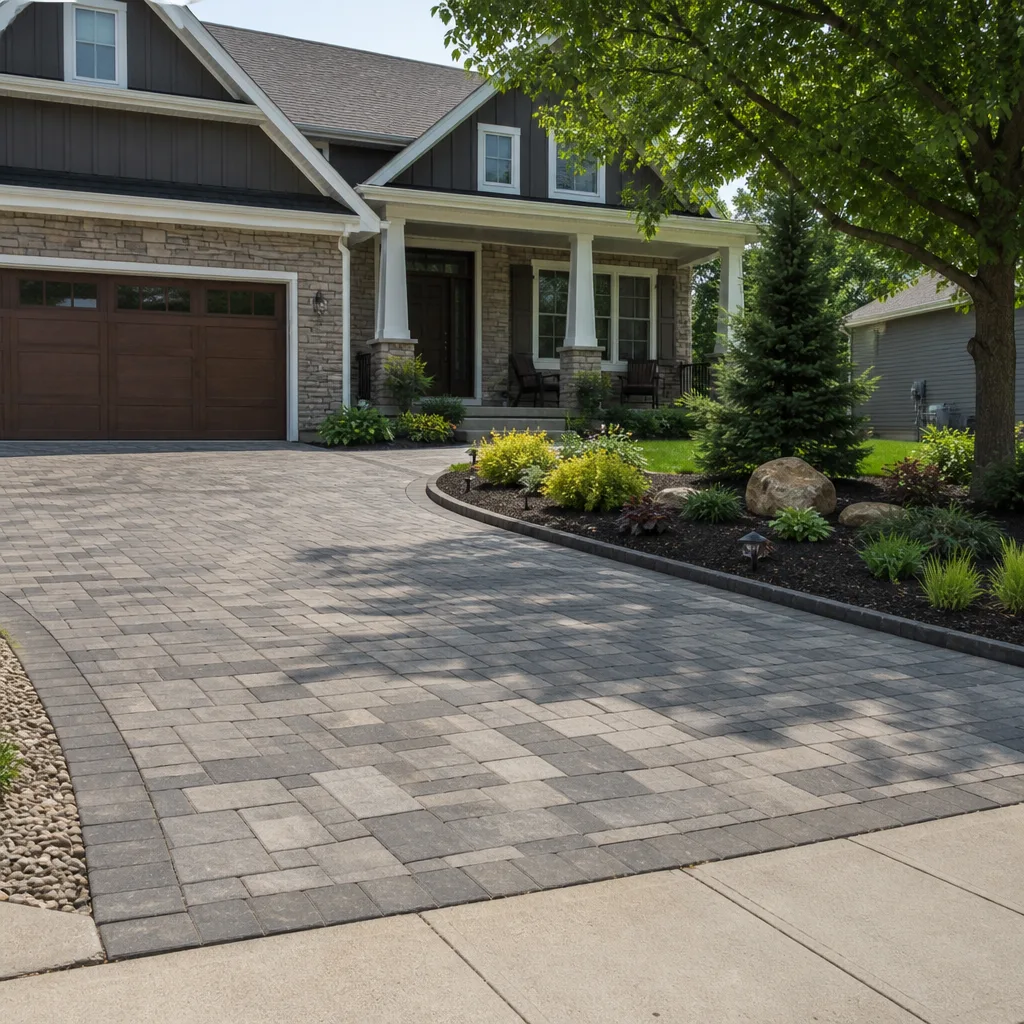 Driveway & pavers
 Kitchen remodeling
 Bathroom remodeling
 Home additions & ADU
 Roofing
 Windows & doors
 Fence
Free written scope consultation - allowances, timeline, and change-order rules on paper before a single trade is scheduled
The Complete Driveway & Pavers Guide for Dallas Homeowners
Dallas sits on expansive black clay that can shift 4+ inches between a wet spring and a dry August. That same soil that cracks concrete slabs in subdivisions across Plano and Frisco will destroy an improperly installed paver driveway inside three years, no matter how good the pavers look on delivery day. The material is rarely the problem. The base is. In this guide we’ll walk through why Blackland Prairie clay demands a deeper, better-compacted foundation than national installation charts assume, how concrete, brick, and natural stone actually hold up under 100°F heat cycling and relentless UV, what Dallas-area HOAs want to see before demo day, and how to read a paver quote line-by-line so the shortcuts are obvious before you sign.
Quick Answer
A Dallas paver driveway typically costs $12 to $28 per square foot installed, all-in, which puts a standard two-car driveway at roughly $8,000 to $22,000 depending on material, base depth, demo, and drainage. The single biggest factor in whether that driveway lasts 25 years or fails in three is not the paver brand. It’s how deep and how well-compacted the base layer is for North Texas clay. Get the base right and almost any quality paver performs. Get it wrong and even premium stone will heave, settle, and crack within a few Dallas summers.
Styles & brands we work with
- Kitchen remodeling
- Bathroom remodeling
- Home additions & ADU
- Roofing
- Windows & doors
- Driveway & pavers
- Fence
Table of Contents
- Why Dallas Clay Breaks Driveways That Work Elsewhere
- Base Depth: Where National Standards Fall Short in Dallas
- Concrete Pavers vs. Brick vs. Natural Stone Under Texas Heat
- Dallas-Area HOA Approvals Before Demo Day
- How to Read a Paver Quote Line-by-Line
- The True Cost of a Dallas Paver Driveway
- Drainage and Slope in Dallas Subdivisions
- Keeping Pavers Looking New in North Texas
Why Dallas Clay Breaks Driveways That Work Elsewhere
The Blackland Prairie runs a broad band through Dallas County, and its clay content is extraordinary. This is soil with a high shrink-swell potential, meaning it expands dramatically when saturated and contracts hard when it dries. During a typical Dallas year, that cycle repeats several times. A wet October followed by a dry December moves the ground. A wet spring after a dry winter moves it back. That movement is measured in inches, not fractions.
Concrete slabs resist that movement poorly. A slab is rigid, so when the clay beneath it heaves on one end and drops on the other, the slab has nowhere to go but up, down, or into a crack. You’ve seen the result on driveways all over Richardson, Garland, and older East Dallas blocks: long diagonal cracks, slabs lifting at joints, and that characteristic trip hazard where one panel rides higher than its neighbor.
Pavers handle movement better because they’re flexible. Individual units can shift slightly without failing structurally. But that flexibility is only an advantage if the base underneath is built to distribute the load and drain water away. A paver driveway on a shallow, poorly compacted base over Dallas clay behaves worse than a slab, because water gets into the joints, saturates the subgrade, and the whole field starts settling and rutting.
What makes this a Dallas problem specifically is the combination. The clay is bad. The heat is bad. And the rainfall comes in concentrated bursts that overwhelm inadequate drainage. A driveway built to a national installation guide written for sandy or loam soils will pass inspection and still fail here. We’ve seen it repeatedly on installs done by out-of-area crews using the same base spec they used in Houston or Phoenix.
Base Depth: Where National Standards Fall Short in Dallas
National paver installation standards often call for a 4-inch compacted aggregate base for residential driveways. Under typical soil conditions, that’s fine. Over Blackland Prairie clay, it’s usually not enough. The base needs to be deep enough and strong enough to bridge localized soft spots and spread the vehicle load across a wider area, so the clay beneath doesn’t take concentrated pressure and move.
In our experience across Dallas-area installs, a properly built residential driveway over this clay needs 6 to 8 inches of compacted, graded aggregate base, sometimes more where the subgrade is especially poor or the slope is challenging. That base has to be installed in lifts, usually 2 to 3 inches at a time, and each lift compacted with a plate compactor or roller before the next goes down. A crew that dumps 8 inches of base and compacts it once hasn’t built an 8-inch base. They’ve built about 3 inches at the bottom and loose material on top.
- Excavate to full depth. The trench should be deep enough for base plus bedding sand plus paver thickness. If the existing soil is soft or saturated, it may need to be removed and replaced with select fill.
- Proof-roll the subgrade. A heavy roller or loaded truck driven over the excavated subgrade reveals soft spots that need to be dug out before base goes in.
- Install base in lifts. 2 to 3 inches at a time, each compacted, with moisture added as needed to reach proper density.
- Check compaction with a plate test or density gauge. Good crews verify. Bad crews assume.
- Grade for drainage before pavers go down. Slope should move water to the street or a defined drainage point.
- Lay bedding sand and pavers, then compact and sand the joints. Polymer or stabilized joint sand helps keep water from washing through.
If a quote mentions “4-inch base” for a Dallas driveway, that’s the first thing to question. It’s not automatically wrong for every situation, but it is a flag worth asking about directly. This is the kind of detail we cover in depth on our Driveway & Pavers in Dallas service page as well.
Concrete Pavers vs. Brick vs. Natural Stone Under Texas Heat
Dallas summers test materials in ways most of the country doesn’t. Surface temperatures on unshaded driveways regularly top 140°F in July and August. Add intense UV exposure and occasional hard freezes in winter, and you’ve got a brutal cycle for anything installed outdoors. Here’s how the three main options perform.
Concrete Pavers
Interlocking concrete pavers are the workhorse choice for Dallas driveways, and for good reason. Manufactured pavers from brands like Oldcastle are engineered for consistent compressive strength, they resist freeze-thaw, and the color runs through the body of the paver, so chips and surface wear don’t show as glaring defects. They come in dozens of sizes and finish profiles, which makes matching existing HOA-approved styles easier. Cost lands in the middle of the range. When installed over a proper base, a quality concrete paver field will outlast most driveways built around it.
Brick Pavers
Clay brick pavers bring warmth and character that concrete can’t duplicate, and they’re a natural fit for older Dallas neighborhoods with established brick homes. The catch is that brick performance varies widely. Some brick is made for paving and holds up beautifully. Some brick made for wall construction doesn’t handle traffic loads and blazing heat well and will spall or chip. Ask specifically whether the brick is rated for paving use. Brick also runs hotter on the surface than lighter-colored concrete, and dark bricks can get uncomfortable against bare feet, though for a driveway that matters less.
Natural Stone
Natural stone pavers – sandstone, limestone, granite, and similar – are the premium option, and on a Dallas house they look spectacular. They’re also the most expensive and the most variable. Stone is quarried, not manufactured, so hardness, porosity, and color consistency vary block to block. Some limestones absorb water and stain, and some sandstones break down over time. As the bed and joint materials, use compatible aggregates from brands like Sakrete or Quikrete to keep the system consistent. Natural stone is a great choice if you’re buying from a supplier you trust and have a contractor who genuinely knows the material. It’s a bad choice if you’re buying on price alone.
| Material | Installed Cost (per sq ft) | Heat/UV Performance | Best For |
|---|---|---|---|
| Concrete pavers | $12 – $20 | Excellent; strong color integrity | Most Dallas driveways |
| Brick pavers | $16 – $24 | Good if paving-rated; watch spalling | Older neighborhoods, period homes |
| Natural stone | $18 – $28+ | Variable; depends on stone type | Premium finishes, custom designs |
Dallas-Area HOA Approvals Before Demo Day
Large parts of the Dallas metro sit under HOA architectural review. Neighborhoods in Frisco, Allen, McKinney, Plano, and many of the master-planned communities south of Dallas County all have design committees that review driveway changes before work begins. If you skip that step and install your dream driveway, you may be tearing it back out. That’s not a hypothetical. We’ve seen it happen on more than one project that came to us to be redone.
The approval process itself is usually straightforward if you follow it in order. First, request the HOA’s current architectural guidelines and any recent updates. Driveway material, color, and pattern restrictions are common here; some HOAs expressly prohibit certain materials or specify an approved pallet. Second, submit your plans with samples and photos of the proposed paver style. Third, get written approval in hand, not verbal. Fourth, pull any required city permit or confirm that none is required. Fifth, and only then, schedule demo.
City permits vary by jurisdiction. Dallas, Plano, Frisco, and the surrounding cities have different requirements for driveway work depending on scope and whether the project changes drainage or the right-of-way. A contractor who builds driveways in the area regularly will know which citys need what and will handle the paperwork. That knowledge is one of the most underrated reasons to hire local.
How to Read a Paver Quote Line-by-Line
A paver quote is either a full accounting of what you’re getting or a starting point for change orders. The difference is almost always visible in the line items. Here’s what a complete Dallas paver quote should include.
- Demo and haul-off. Tear-out of existing concrete or pavers, plus dumpster and disposal fees.
- Base excavation depth. Should state the depth in inches, not just say “prep base.”
- Base material and compaction spec. “6-inch compacted base in lifts” is specific. “Base prep” is not.
- Bedding sand. Depth and material type.
- Pavers, brand, style, and quantity. With a 5% to 10% overage allowance for cuts and waste.
- Edge restraint. This is critical and often skipped. Paver edges need a rigid restraint system to hold the field in place.
- Joint sand. Polymer or stabilized joint sand, not plain sand.
- Drainage corrections. Grading, drains, and any changes to how water flows. On Dallas clay this line is often what separates a 25-year driveway from a 3-year one.
- Permits and inspection fees. Itemized, not buried.
- Workmanship warranty terms. In writing, with a specific length and scope.
Red flags: a one-line price with no line items, a base spec that doesn’t list depth, a quote that excludes drainage corrections, no mention of edge restraint, no workmanship warranty, and “final price may vary” with no explanation of how. Any of those deserve a direct question. If the answer isn’t specific, walk. There are too many quality crews in Dallas to gamble on one that hides the details. Also useful: read how the contractor talks about project scope and pricing on their main Groundwork Construction Co. of Dallas home page before you call.
The True Cost of a Dallas Paver Driveway
Most cost guides quote the paver material price and stop. That’s a fraction of what you actually pay. The true cost of a Dallas paver driveway includes demo, base prep, drainage, edge restraint, permits, and the labor that makes all of it hold together. Here’s what a real Dallas project looks like, line-item by line-item, for a typical two-car driveway in the 600 to 800 square foot range.
| Line Item | Typical Dallas Range |
|---|---|
| Demo and haul-off | $1,200 – $2,800 |
| Base excavation and prep (6-8 inch compacted) | $3,000 – $6,000 |
| Drainage corrections (varies widely) | $400 – $2,000 |
| Paver material (concrete, mid-grade) | $2,400 – $4,800 |
| Paver installation labor and joint sand | $2,000 – $4,500 |
| Edge restraint and finishing | $300 – $800 |
| Permits and inspection fees | $0 – $500 |
The headline is $8,000 to $22,000 for a standard two-car driveway using concrete pavers, with the range driven by base depth, drainage complexity, and finish grade. Upgrading to brick or natural stone pushes the top end higher. A larger circular drive or apron design adds square footage and labor accordingly.
Two things are worth saying plainly about price. First, the lowest bid is usually low because something in this list isn’t in it. Second, “paving” is not where a driveway is won or lost. The base and drainage items together are often 40% to 50% of the job, and that’s why they can’t be skipped. When we quote a paver driveway in Dallas, upfront pricing is the standard: the number you see is the number you pay, and there are no surprise change orders once work begins. We also offer 0% financing for 18 months and $1,000 off projects over $10,000, so a five-figure driveway doesn’t have to be a lump-sum decision.
Drainage and Slope in Dallas Subdivisions
Drainage is where Dallas driveways fail that look perfectly fine the day they’re finished. Water is the enemy of a paver install, and not just on the surface. If water pools against the house, finds its way under the pavers, or saturates the base during a heavy rain, the entire system is at risk. Once the base holds water, you get pumping, rutting, and joint sand washing out, and the driveway starts to fail from underneath.
Proper grading moves water away from the foundation, toward the street or a defined drainage point, and does so with enough slope that water doesn’t sit. A general minimum slope of 1% to 2% is typical, but on Dallas clay where water pools easily, many installs benefit from the steeper end of that range. Downspouts should discharge away from the driveway, not onto it. Low spots in the adjacent yard should be addressed before the driveway goes in, not after.
Some Dallas Driveways need more than grading. If the site is flat, has an uphill neighbor, or sits in a low area, a channel drain or trench drain may be the right call. It adds cost, but it’s cheaper than tearing out a failed driveway in year four. An experienced paver crew working in Dallas will flag drainage concerns during the site visit, not after the base is already in.
Keeping Pavers Looking New in North Texas
A properly installed paver driveway is genuinely low maintenance, but “low” isn’t “none.” Dallas sun, summer heat, and the occasional hard freeze each put their marks on the surface over time. A few habits keep the driveway looking and performing the way it should.
Rinse the driveway a few times a year and spot-treat oil or rust stains quickly before they set. Refill joint sand as it settles, especially after the first year; stabilized joint sand reduces the need for this but doesn’t eliminate it. Keep an eye on the edges; if the edge restraint is holding properly, the field stays tight, and if it’s not, gaps appear at the perimeter and start to migrate inward. Have the driveway inspected every 3 to 5 years so small issues get caught before they turn into base problems. And keep trees and shrubs trimmed back so roots and shade don’t create drainage or moisture problems along the edges.
The good news is that a well-built paver driveway on a proper Dallas base may need nothing beyond this for a couple of decades. Concrete slab driveways rarely make it that long here before major repairs. The paver system’s flexibility, done right, becomes its biggest advantage over the long haul.
Common Mistakes to Avoid
- Accepting a 4-inch base spec on Dallas clay. National installation standards understate what’s required in North Texas. Ask directly about base depth and compaction method, and expect 6 to 8 inches of compacted base on a residential driveway.
- Skipping HOA approval. If your Dallas-area neighborhood has an architectural review committee and you install before approval, you risk a forced removal. Get written approval in hand first.
- Hiring a crew from out of the area. Installers who don’t regularly build over Blackland Prairie clay apply the specs that worked somewhere else. Local experience with this soil matters more than a lower bid.
- Choosing pavers by price alone. A $2-per-square-foot saving on pavers can vanish the first time the outer bricks spall or a cheap stone stains in the first Dallas summer.
- Paying for pavers before paying for drainage. Correcting grading, adding a channel drain, or replacing soft subgrade before installation is cheaper than redoing the driveway later.
- Ignoring edge restraint. A paver field without a proper restraint system will spread and separate at the edges over time, no matter how well the base is built.
- Choosing a contractor with no written workmanship warranty. “We stand behind our work” isn’t a warranty. A specific term in writing is.
See the difference
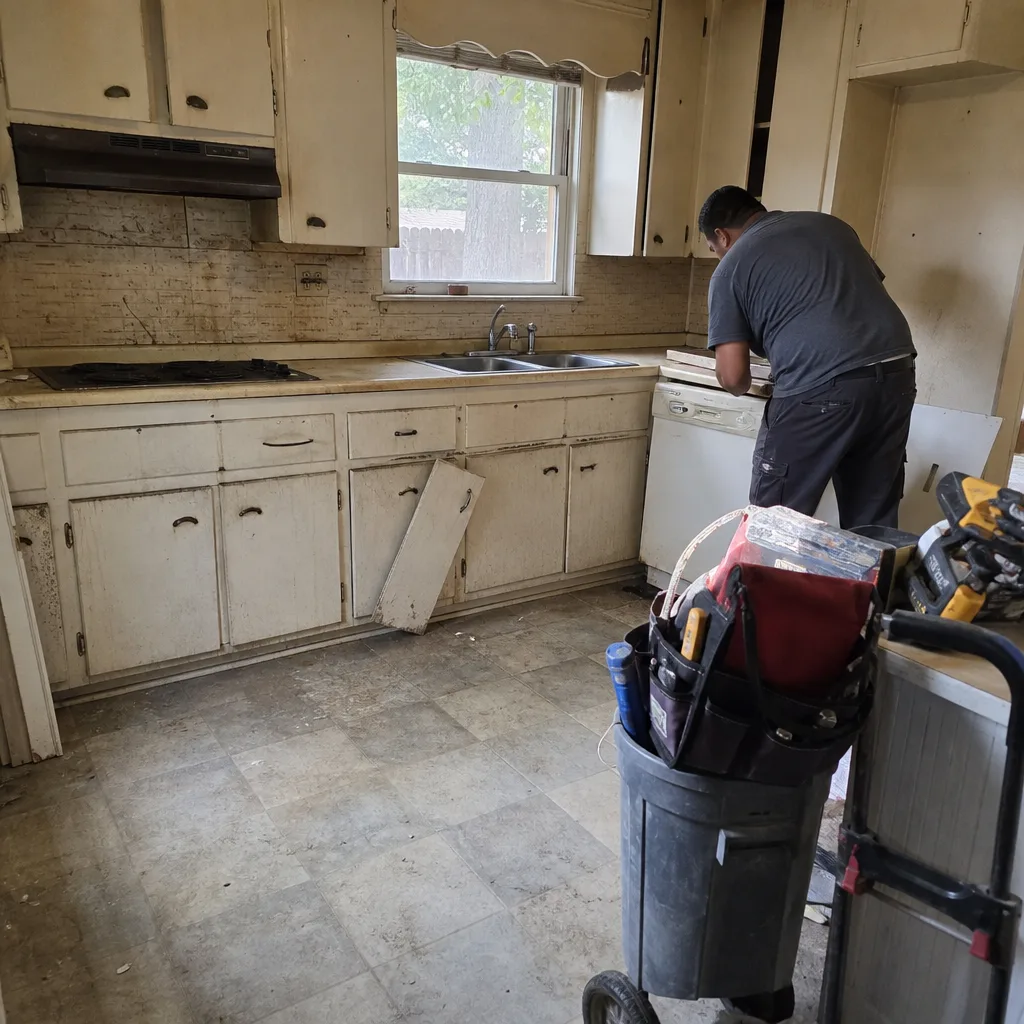 Before
 After
 Before
 After
 Before
 After
When to Call a Professional
Some driveway fixes are simple weekend projects: refilling joint sand, spot-cleaning a stain, trimming back a shrub that’s spilling onto the pavers. Others aren’t. If your existing driveway has settled unevenly, if water pools against the house, if pavers are shifting or rocking underfoot, or if you’re planning a full replacement, those are jobs that need proper excavation, base work, drainage correction, and compaction that a homeowner can’t achieve with rented equipment and a single weekend. Partial repairs on a failing paver driveway almost always fail too, because the problem is in the base, not the surface. Groundwork Construction Co. of Dallas offers free estimates in Dallas, and we’ll walk you through the base depth, drainage, and material options before you commit to anything. Call (844) 797-4808 to schedule yours. Every project we handle is covered by our 730-Day Done Right Promise, priced upfront, and built by background-checked, uniformed technicians.
Frequently Asked Questions
A paver driveway in Dallas typically runs $12 to $28 per square foot installed, all-in, which puts a standard two-car driveway at about $8,000 to $22,000. The biggest variables are base depth, drainage requirements, and paver material choice. Call (844) 797-4808 for an exact quote, and estimates are free.
For Dallas homes over Blackland Prairie clay, a properly built paver driveway needs 6 to 8 inches of compacted aggregate base, installed in 2 to 3 inch lifts and compacted between each lift. National standards often call for 4 inches, but that’s typically written for soils without this clay’s shrink-swell behavior. Anything shallower risks settling and early failure.
Three to five years before visible settling, rutting, or edge spread shows up. The pavers themselves are rarely the failure point; the base is. A properly installed driveway on a correct Dallas base can last 25 years or more with modest maintenance.
If your Dallas-area neighborhood has an HOA with architectural review, yes. Get the current design guidelines, submit your plan with paver samples, and get written approval before demo day. Verbal approval isn’t enough; forced removal is a real risk in master-planned communities around Frisco, Plano, and Allen.
Interlocking concrete pavers generally outperform pour-in-place concrete on Dallas’s shifting clay because they flex with the soil instead of cracking. Pavers also allow individual repair if a section does settle. Concrete is cheaper upfront but more likely to require major repair or replacement in this soil.
Permit requirements vary by jurisdiction. Dallas, Plano, Frisco, and surrounding cities each have their own rules based on project scope and whether drainage or right-of-way is affected. A local contractor who regularly builds driveways in the area will know which permits apply and can handle the paperwork. Call (844) 797-4808 and we’ll walk you through it – estimates are free.
The Bottom Line
The single thing that determines whether your Dallas paver driveway lasts 25 years or fails in 3 isn’t the paver. It’s the base, the drainage, and the diligence of the crew that builds them. Dallas’s Blackland Prairie clay demands deeper compaction, more careful grading, and more drainage attention than national standards assume, and any contractor who doesn’t know that will build you a driveway that looks great and fails early. Concrete pavers are the workhorse choice for most Dallas homes, brick and natural stone handle the premium end if the material is rated for paving use, and HOA approval should be your first step before demo. Read every quote line-by-line, ask about base depth, and don’t let anyone hide the important details behind a single number. From foundation to finish line, quality starts below the surface.
If you’re planning a driveway project in Dallas and want straight answers and a quote you can actually read, call Groundwork Construction Co. of Dallas at (844) 797-4808 for a free estimate. We’ll walk you through your material options and the real cost of a Dallas driveway. Related work we handle locally includes Fence Installation in Dallas and Home Additions & ADU in Dallas.
Written by the team at Groundwork Construction Co. of Dallas.