
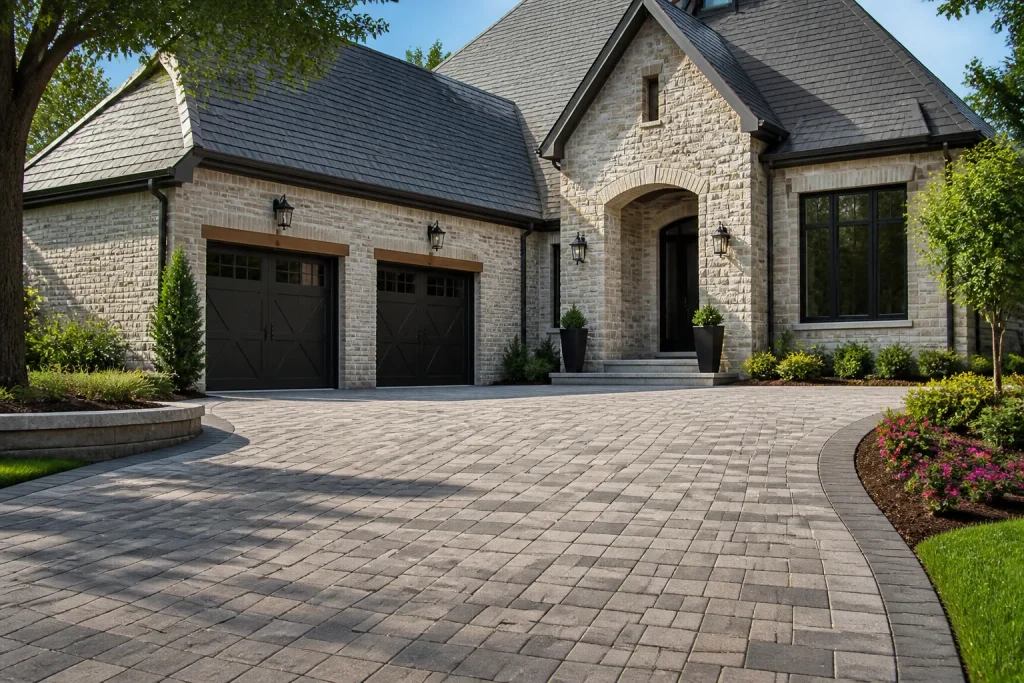
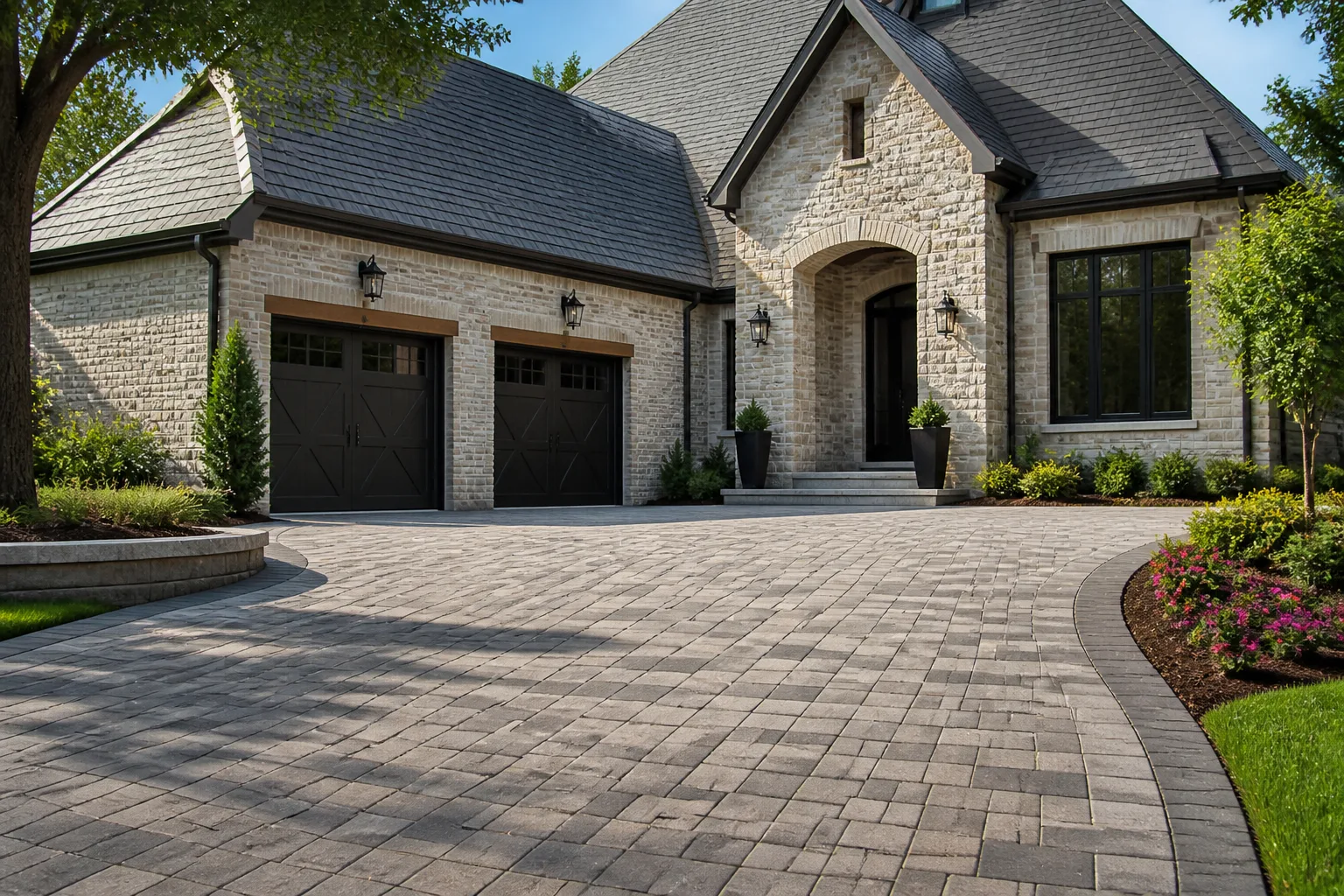
Moen Driveway & Pavers in Dallas: A Homeowner’s Guide
Most driveway failures in Dallas aren’t product failures. They’re soil preparation failures. Moen-grade materials installed over improperly compacted caliche base will crack within two summers, and the warranty language on the box won’t save you. This guide explains what a Moen paver system actually demands from the ground up in Dallas, so you choose the right installer for the job before the first paver goes down.
If you’d rather have someone who already knows the difference between a properly compacted base and a shortcut, call (844) 797-4808 and we’ll walk you through it.
What makes Moen pavers different from budget brands in Dallas?
Moen pavers are held to tighter dimensional tolerances than the discount pallets you’ll find stacked at a Dallas big-box store. That precision is the whole point of buying them, and it’s also the source of every problem homeowners have with them. A paver that’s manufactured to within a millimeter of spec won’t sit flush if the base underneath it shifts by a quarter inch. The tighter the tolerance, the less forgiving the install.
Here’s what that means practically for a Dallas homeowner:
- Base compaction has to be higher. Moen paver systems want a densely compacted, well-graded base, which usually means multiple lifts of material, each compacted separately, not one thick layer rolled once. On a budget paver, sloppy base prep just looks uneven. On Moen, it telegraphs through as lippage and joint failure.
- Screed accuracy matters more. The bedding layer has to be screeded to a consistent depth. If your install crew eyeballs it, tight-tolerance pavers will show every high and low spot.
- Edge restraint is not optional. Moen pavers in Dallas need a properly pinned edge restraint so the field doesn’t creep outward through our summer heat cycles.
In short: Moen rewards a good installer and punishes a lazy one. Ask any Dallas paver contractor you talk to how many compaction passes they run and what lift thickness they use. If the answer is vague, that tells you something.
Why does Dallas clay soil need a 6-inch compacted base before Moen pavers go down?
Dallas sits on some of the most expansive clay in the country. That clay swells when it’s wet and shrinks hard when it dries out, and North Texas does both on a seasonal schedule. A thin base layer won’t isolate your pavers from that movement. For a Moen paver system in Dallas, a minimum 6-inch compacted base layer is the floor, not a premium upsell. On heavy-traffic driveways with poor native soil, we’ve seen specs call for more.
Here’s the sequence that actually works:
- Excavate to depth. Account for the base, the bedding sand, and the paver thickness. Skimping on excavation is the most common shortcut we find on failed Dallas driveways.
- Proof-roll the subgrade. Before any base material goes in, the exposed soil gets checked for soft spots and pumped-out areas, especially around downspouts and low corners.
- Lay the base in lifts. Each lift compacted before the next goes down. One 6-inch dump compacted once is not the same thing, and it’ll fail differently.
- Check grade and slope continuously. Not just at the end.
- Screed the bedding layer and set the pavers. Then compact the finished surface and sweep joint sand in.
If an installer quotes you a Moen driveway in Dallas and can’t tell you what their base depth is, that’s the whole conversation right there. For a deeper look at how we build these, see our page on Driveway & Pavers in Dallas.
How do Dallas summers above 100°F affect Moen paver joint spacing?
Dallas regularly pushes past 100°F in July and August, and paver systems expand and contract with that swing. Moen’s joint spacing recommendations account for thermal movement, but they only work if the installer follows them and uses the right joint sand. Joint spacing that’s too tight in a Dallas summer leads to spalling and edge chipping. Spacing that’s too wide lets sand wash out and pavers work loose.
The math that matters on a Dallas driveway:
- Joints need to stay open enough to absorb expansion. On a 40-foot run, the cumulative movement across a hot Dallas day is real. Every joint has to share that load.
- Joint sand is part of the system. It’s the flexible material that lets the pavers move without grinding against each other. Cheap sand or an improper fill voids the whole benefit.
- Restraint at the edges absorbs the rest. The perimeter restraint takes the expansion the joints can’t. Without it, a Moen driveway in Dallas will start to open up at the edges within a few seasons.
We’ve seen the alternative up close. A homeowner over in Lakewood had a paver drive installed with tight, dry-set joints and no proper edge restraint. Two summers later the pavers along the street side had walked outward by nearly an inch and were chipping at the corners. The pavers were fine. The install wasn’t. Moen’s thermal guidance exists for exactly this reason, and following it is a choice your installer makes or doesn’t.
What does the Moen warranty cover versus what your contractor’s warranty has to cover?
This is where Dallas homeowners get tripped up most often. A manufacturer’s product warranty covers manufacturing defects: a paver that’s out of spec, a batch with a color or dimensional problem, material that fails on its own. It does not cover a paver that cracked because the base sank or the joints were filled wrong. That’s not the product’s fault.
So the product warranty and the workmanship warranty have to close the gap between them, and the workmanship side is on your contractor:
- Product warranty: covers the material itself. Read the fine print on what voids it. Improper installation almost always does.
- Workmanship warranty: covers the base prep, compaction, slope, joint fill, and edge restraint, which is the part that actually fails first in Dallas.
- The gap: if your contractor’s workmanship warranty is a year or two, you’re on the hook for a failure that shows up in year three. That’s the wrong end of the deal.
This is why every Groundwork project in Dallas is backed by the 730-Day Done Right Promise: if it’s not done right, we make it right, for two full years of workmanship coverage. On a Moen system, that’s the piece that closes the gap the manufacturer’s warranty leaves open.
While base prep is being done, we also see homeowners using the same project window to address their fence line and grading, since the equipment and access are already there. Our Fence Installation in Dallas page covers how we handle that side of the yard.
Why is the 1/8-inch-per-foot drainage slope a dealbreaker in Dallas?
A paver surface has to shed water away from your foundation and driveway at a minimum of 1/8 inch of fall per horizontal foot. Most Dallas installers skip this because it’s invisible once the job is done and nobody checks it unless there’s a problem. But it’s the single most common cause of long-term paver failure, and here’s why it matters in Dallas specifically.
Dallas gets intense, short-duration storms that dump a lot of water fast, followed by dry spells. If your paver surface is flat or slopes the wrong way, that water ponds, seeps into the joints, and starts working on the base. Over time the base softens and the pavers settle unevenly. On a Moen system, that uneven settling shows up immediately as lippage because of the tight tolerances.
How to check what you’re getting:
- Ask for the drainage plan in the quote. Slope direction should be spelled out, not left to the crew.
- Check where the water goes. Your driveway should shed toward a swale, a drain, or the street, never toward the house.
- Watch the first rain. Ponding in the middle of the driveway within days of install is a red flag.
Getting the slope right means the base work and the surface work have to be planned together, from the ground up.
When should you call a pro instead of doing it yourself?
Moen pavers are heavy, the base work is machine-dependent, and getting the slope and compaction right by hand is a job for a trained crew with the right equipment. A homeowner can handle small paver paths and garden edging. A full driveway in Dallas with a Moen system over clay soil is a different project. That’s when you bring in an experienced installer who can spec the base depth, run proper compaction, hit the slope, and back the workmanship in writing.
If you’re thinking about the whole property while you’re at it, a paver project often pairs naturally with other outdoor work. We’d also point you toward our Home Additions & ADU in Dallas page if a detached structure or expanded footprint is on your radar.
Related services in Dallas: driveway and paver installation, fence installation, home additions and ADU work, all handled by a single construction partner from foundation to finish line.
The Bottom Line
Moen pavers are a good product with tighter dimensional tolerances than the budget brands, and that precision is only worth having if the installation behind it meets the higher bar. In Dallas, that comes down to three things: a minimum 6-inch compacted base over our expansive clay, joint spacing and edge restraint built for 100°F summers, and a drainage slope of at least 1/8 inch per foot. Pair Moen’s product warranty with a workmanship warranty long enough to cover the base, and you’ve closed the gap that causes most paver failures in this city.
No-hassle upfront pricing means the number you see is the number you pay, and every job comes with the 730-Day Done Right Promise and background-checked, uniformed technicians. Calls are answered by a live person 24/7, and estimates are free. Current standing offers include $1,000 off projects over $10,000, a free project estimate and design consult, and 0% financing for 18 months.
If you’re in Dallas and need help, Groundwork Construction Co. of Dallas offers free estimates. Call (844) 797-4808.
Frequently Asked Questions
A Moen paver driveway in Dallas typically runs higher than a budget paver install because the material costs more and the base prep has to be built to a higher compaction standard, with a minimum 6-inch compacted base over the clay. Expect your quote to reflect both the material and the deeper excavation and multiple-lift compaction. Call (844) 797-4808 for an exact quote. Estimates are free and we lay out the line items upfront.
The minimum is 6 inches of compacted base over Dallas’s expansive clay soil, laid in lifts and compacted separately rather than dumped and rolled once. On heavy-traffic driveways or poor native soil, the base needs to go deeper. A proper installer will tell you their lift thickness and compaction method before you sign anything. If they can’t, that’s your answer.
Generally no. A manufacturer’s product warranty covers manufacturing defects in the pavers themselves, not cracks or settling caused by base failure, poor drainage, or improper joints. That failure is on the installation. That’s why the workmanship warranty matters so much in Dallas. The 730-Day Done Right Promise covers our workmanship for two years, closing the gap the product warranty leaves open.
A Moen paver system installed correctly over a properly compacted base in Dallas can last decades. Paver installations that fail early almost always fail from base and drainage problems, not the pavers. Get the base depth, the 1/8-inch-per-foot slope, and the joint spacing right, and the system performs for the long haul. Get them wrong and even premium pavers will crack inside two or three summers.
If you’d rather have it handled from the ground up, our team at Groundwork Construction Co. of Dallas home can walk your project and put the plan in writing. Call (844) 797-4808 for a free estimate.
Written by the team at Groundwork Construction Co. of Dallas.
Need Construction Help?
Call Groundwork Construction Co. of Dallas - licensed & insured, here with fast after-hours help in Dallas.
(844) 797-4808