
Last updated November 17, 2026
 Windows & doors
 Kitchen remodeling
 Bathroom remodeling
 Home additions & ADU
 Roofing
 Driveway & pavers
 Fence
Free written scope consultation - allowances, timeline, and change-order rules on paper before a single trade is scheduled
Windows & Doors Troubleshooting: Common Problems and How to Fix Them
Drafty windows in a Dallas home are almost never a window problem. They’re usually an installation or air-sealing problem, and replacing the window without fixing the cause is a $600 mistake waiting to happen again. We’ve walked into enough Old East Dallas bungalows and Lakewood two-stories to know the pattern: the homeowner is sure the glass is bad, and the actual gap is at the rough opening, behind the trim, where nobody looked. Here’s the fix. This guide is a decision tree, not a symptom list, so you can sort your problem into one of three buckets before you call anyone: DIY fix, warranty claim, or replacement. Do that first and you’ll save money.
Quick Answer
Most window and door problems in Dallas fall into one of five categories: condensation between panes (a failed seal, usually a warranty or replacement issue), sticking operation (movement, settling, or swollen wood), drafts (air sealing or installation, rarely the glass itself), water intrusion (flashing and caulking), and frame damage (rot or impact, which needs replacement). Diagnose which category you’re in before you spend money. Nine out of ten calls we get point to a clear next step once the cause is actually identified, and knowing whether you’re dealing with a warranty claim, a contractor accountability issue, or routine maintenance changes who you call and how much you pay.
Styles & brands we work with
- Kitchen remodeling
- Bathroom remodeling
- Home additions & ADU
- Roofing
- Windows & doors
- Driveway & pavers
- Fence
Table of Contents
- Why You Diagnose Before You Spend a Dollar
- Condensation Between the Panes: A Failed Seal
- Windows and Doors That Stick: Movement, Not Hardware
- Drafts That Aren’t Really About the Window
- Water Intrusion: Flashing, Caulking, and Dallas Storms
- Frame Damage: When Replacement Is the Only Answer
- The Truly DIY-Fixable Problems vs. the Traps
- How to Document a Failure for a Warranty or Insurance Claim
- Common Mistakes to Avoid
- When to Call a Professional
Why You Diagnose Before You Spend a Dollar
The reason diagnosis matters so much is that the same symptom can have three completely different causes, and the cause decides who pays. We’ve seen homeowners replace a $900 window to fix a draft that a $12 tube of sealant would have solved. We’ve also seen people patch and caulk a window for two years while the frame behind it quietly rotted.
Here’s the simple test. Before you call anyone, answer three questions for the problem in front of you:
- Where exactly is the symptom? On the glass, the frame, the trim, the wall around the window, or the floor beneath it?
- When does it appear? All year, only in summer, only in winter, or only after rain?
- Is it changing over time? Getting worse, staying the same, or appearing once and gone?
Those three answers cut almost every problem down to one bucket. A draft that appears on the north side only in a cold snap is air sealing. Water that shows up on the sill after a storm is flashing. A door that sticks every August and frees up every November is frame movement, not hardware. Answer those questions honestly and the path forward gets obvious.
When you’re ready to price a real fix or a replacement, Groundwork Construction Co. of Dallas home is the place to start, and estimates are free.
Condensation Between the Panes: A Failed Seal
Condensation fogging up the inside of the glass, between the panes, is a failed seal, full stop. The airtight space between the panes is meant to hold argon or krypton gas and a desiccant. When the perimeter seal fails, moisture gets in, the gas escapes, and the window fogs from the inside out. You can wipe the outside glass until your arm falls off; that fog won’t come off because it isn’t on the surface.
Here’s what makes this easy to diagnose: interior condensation between panes is a manufacturing failure. It’s a warranty issue if the window is still covered, and a replacement issue if it isn’t. It’s virtually never an installation problem and it’s never something you can clean or reseal. This is one of the handful of window problems where the answer is genuinely “replace the glass unit.”
What to do about a fogged window
- Confirm it’s between the panes. Run a fingernail across the fog. If your nail catches nothing, it’s internal.
- Find your purchase paperwork. Most window warranties cover seal failure for a set number of years. Andersen and Marvin units, which we install, carry manufacturer-backed glass warranties worth checking before you pay anyone.
- Photograph the fog with a straight edge. Hold a ruler against the glass and snap a photo so the manufacturer can see it’s between panes, not surface condensation.
- Decide: glass replacement vs. full unit. On newer windows, the insulated glass unit alone can be swapped. On older units, full replacement is often the smarter long-term money.
One Dallas-specific note: a window that fogs on the inside surface (not between panes) in summer is just high humidity and cold air conditioning, and that’s normal. Fog between the panes at any time of year is a failed seal. Don’t let anyone tell you otherwise. If you’re pricing replacement units, call (844) 797-4808 for a free estimate.
Windows and Doors That Stick: Movement, Not Hardware
Doors that stick seasonally in a Dallas home are almost always a foundation or frame-movement issue, not a hardware issue. This is the single most misunderstood problem we see. In July and August, the soil under North Texas homes dries and shrinks, clay soils move, and the whole frame of the house shifts a fraction of an inch. A door that swings freely in January catches on the strike plate in August. It’s not the hinge. It’s the house.
Here’s how to confirm it’s movement rather than hardware:
- Watch the strike plate gap. If the door is rubbing at the top corner in summer and clearing in winter, that’s frame movement.
- Check the latch alignment. A door that no longer catches cleanly in the strike plate, but sits flush when open, points to the frame tilting, not a misaligned latch.
- Look at drywall around the door. Hairline cracks radiating from the upper corners of the door frame are a foundation signal.
- Test the same door at different times of year. Seasonal sticking is movement. Year-round sticking is hardware or swelling.
If it’s confirmed movement, the fix is not sanding the door or swapping the hinges. It’s addressing the frame. On doors that stick year-round, you’re dealing with swollen wood or worn hardware, which is a different problem entirely. On interior doors in older Dallas neighborhoods, especially the pre-war homes around Bishop Arts and Kessler Park, we routinely find doors hung out of square decades ago that finally stopped clearing the floor.
Don’t grab the plane the first time a door sticks. Diagnosis first. Call (844) 797-4808 for a free estimate if the sticking is seasonal and you want a professional read on it.
Drafts That Aren’t Really About the Window
This is where we started, and it’s worth repeating: most draft complaints in Dallas homes are air-sealing and installation problems, not window problems. A cold breeze on your neck in January doesn’t prove the glass is bad. It proves air is moving somewhere it shouldn’t.
Here’s the sequence we use on every draft call:
- Candle or smoke test around the perimeter. A lit candle or a small incense stick held near the trim while the window is closed tells you exactly where air is moving. Most drafts show up at the rough opening, the corners, or behind the trim.
- Check the weatherstripping. Worn or compressed weatherstripping on an operable window is a $15 fix at any hardware store. On a fixed window, weatherstripping doesn’t apply; the problem is behind the trim.
- Inspect the rough opening from outside. Look for gaps between the window frame and the exterior wall sheathing. If you see daylight where the frame meets the house, the window was underinsulated or under-sealed at install.
- Check for missing insulation in the wall cavity. Air coming through the wall, not the window, is a common cause of drafts in homes built before 1970.
If the draft confirms air is coming around the perimeter of the window, not through it, replacing the window doesn’t solve the problem. It just pays for a new window around the same gap. That’s the $600 mistake, and we see it in Dallas far more than we’d like. Fix the air sealing first. Then, if you still want replacement windows for style, efficiency, or resale, at least you’re doing it for the right reason.
If you want a professional read on whether the draft is fixable or needs replacement, call (844) 797-4808 for a free estimate. If the drafting is part of a bigger project, our team handles Home Additions & ADU in Dallas and window work together all the time.
Water Intrusion: Flashing, Caulking, and Dallas Storms
Water intrusion is the window problem most likely to cause real damage fast, and in Dallas, the storm rhythm is unforgiving. Spring storms drop three inches in an hour, and a window that stayed dry through a mild winter will reveal its failing flashing on the first hard rain. Water on the interior sill after a storm is a flashing or caulking failure, not a glass failure.
The four common sources of window water intrusion:
- Failed or missing flashing. The metal or membrane that routes water away from the top of the window. When it’s missing or installed backward, water runs into the wall.
- Degraded caulking. Exterior caulk around the window perimeter has a lifespan. UV exposure and Texas heat dry it out; it cracks and lets water in.
- Clogged or missing weep holes. The small slots in the bottom of the window frame that let water drain out. Painters fill them by accident more often than you’d believe.
- Improperly sloped sills. If the sill doesn’t slope away from the house, water pools instead of draining.
What to check after a Dallas storm
- Look at the interior sill and the drywall below the window for staining or softness.
- Check exterior caulk at the perimeter and re-caulk any visible cracks, once the wall is dry.
- Make sure weep holes at the bottom of the frame are open. A paperclip clears them.
- If water shows up on the interior frame after rain, stop patching and get a professional to inspect flashing.
Water intrusion is one of the problems that gets worse if you try to patch it yourself. Caulk over a bad flashing job traps water against the sheathing and rots the wall from inside. That’s a contractor call. Call (844) 797-4808 for a free estimate before the next storm cycle.
Frame Damage: When Replacement Is the Only Answer
Some window and door problems are genuinely replacement problems, and frame damage tops the list. If the wood frame is soft, spongy, or stained dark, you’re past patching. Water has been getting in for months, and the wood is rotting from the inside. This is where a $120 patch job becomes a $3,000 replacement if you wait.
The signs that replacement is the answer, not repair:
- Soft wood anywhere on the frame. Push a screwdriver into the frame with light pressure. If it sinks in, the wood is gone.
- Cracks through the frame that run into the wall. Structural, not cosmetic.
- Visible rot or termite damage around the perimeter. North Texas termite pressure is real, and a damaged frame is an open invitation.
- Impact damage. Storm, hail, or debris damage that cracked the frame itself is a replacement.
Once the frame is compromised, the fix isn’t cosmetic. Replacement is the right answer. This is also where premium material choices pay off. We install Andersen and Marvin windows specifically because the frames hold up better to Dallas heat cycling than builder-grade units, and the warranties last longer. GAF and CertainTeed products come into play on the immediate exterior around those windows, where flashing and trim have to work together.
Replacement is also when a project becomes worth doing properly in one pass. If your window and door scope is part of a bigger envelope project, it pays to think about it as one job with the same crew, not separate trades. Our Driveway & Pavers in Dallas page covers the hardscape side of the same exterior scope. Call (844) 797-4808 for a free estimate if your frame damage points to replacement.
The Truly DIY-Fixable Problems vs. the Traps
Some window and door problems are genuinely DIY-fixable with under $50 in materials, and some get measurably worse the moment you touch them. Being honest about which category you’re in saves money and prevents damage.
Under $50 and genuinely DIY
- Worn weatherstripping on an operable window. A $10 to $20 replacement kit from any hardware store and a few minutes of work.
- Sticking operable window tracks. Silicone spray lube, under $10, on the track, not on the latch.
- Door hinges squeaking or binding. A few drops of oil on the hinge pin.
- Exterior caulk around a window perimeter. A $15 tube of exterior-grade caulk fixes routine hairline cracks in the seal.
- Clogged weep holes. A paperclip or a quick cleaning pass, free.
- Tightening a loose hinge plate on a door. A screwdriver and possibly a slightly longer screw.
Traps that get worse if you try
- Caulking over a window with water intrusion. Traps water against the sheathing. You’ll rot the wall from the inside without seeing it.
- Sanding a seasonally sticking door. The door will clear the frame in three months and then rattle and leak air all winter. You fixed nothing.
- Patching a fogged insulated glass unit. It cannot be repaired from outside. You’ll waste time and grout the manufacturer’s warranty window.
- Adjusting a window that’s out of square. You’ll crack the sash or the frame, and you’ll void the manufacturer warranty on an otherwise claimable failure.
- Chasing structural cracks in a frame with filler. That’s cosmetic cover over a structural problem, and it fails at the worst possible moment.
The honest rule: if the problem is on the surface or the seal, DIY is fine. If the problem is behind the trim, in the frame, or came in with water, get a professional diagnosis before you spend money. Call (844) 797-4808 for a free estimate if you’re not sure which bucket you’re in.
How to Document a Failure for a Warranty or Insurance Claim
Documentation is where most window and door claims fall apart. The problem isn’t that the homeowner isn’t owed a fix. It’s that they can’t prove the failure, the timing, or the cause. Manufacturers and insurers both need evidence, and the evidence is easiest to collect the day the problem starts.
Here’s the process we recommend:
- Photograph the problem on day one. Not when you’re ready to file. The first photo sets the timeline.
- Get scale in every photo. Hold a tape measure, a coin, or a standard ruler next to the fog, crack, or water stain. Manufacturers use scale to judge severity.
- Photograph wide and close. One wide shot showing the whole window and the wall around it. One close shot showing the specific failure.
- Photograph the inside and the outside. A claim needs both perspectives. Same window, same time, both sides.
- Keep weather records. For water intrusion claims in Dallas, a dated record of the storm that revealed the leak matters. Local news dates and rainfall totals work.
- Save every piece of written correspondence. Emails, text messages, and paper receipts. If a contractor told you the install was sealed properly, that’s evidence.
- Get a professional inspection on the record. A written inspection with photos holds up far better than a homeowner’s written account.
One thing we tell every homeowner: if the failure is on the installation, not the material, the claim isn’t just against the window. It’s against the contractor. That’s exactly where a strong workmanship guarantee matters, and it’s why every Groundwork project is covered by the 730-Day Done Right Promise. If it’s not done right, we make it right, and that’s in writing, not implied.
If a past contractor’s install has failed and you’re staring at water damage, call (844) 797-4808. Estimates are free, and the crew is background-checked and uniformed on every visit, with calls answered by a live person 24/7.
Common Mistakes to Avoid
- Replacing a window to fix a draft before confirming the seal around the rough opening is intact. Dallas homes with bad air sealing pay for a new window and get the same draft in January, because the air was never coming through the glass in the first place.
- Caulking over an active water leak to “get through the rainy season.” Trapping water against the sheathing is how a $300 flashing fix becomes a $4,000 wall repair, and it’s the mistake we see most on older homes around Oak Cliff.
- Sanding a seasonally sticking door instead of diagnosing frame movement. In clay-soil North Texas, the door isn’t warped, the foundation has shifted a fraction of an inch, and sanding it down means it will rattle and leak air all winter.
- Assuming fogged glass is surface condensation. Between-pane fog is a failed seal with a warranty clock running. Homeowners who wait a year often cross the end of the coverage window and lose the claim.
- Replacing a single window in an older Dallas home without checking wall insulation or the flashing around it. The new window gets blamed when the wall behind it is the real problem, and it happens in homes built before 1970 more often than not.
- DIYing frame rot with wood filler. Filler doesn’t stop water or restore structural integrity, and the wall behind it rots quietly until the replacement cost multiplies.
- Documenting a warranty failure weeks after it started. The first photo sets the timeline. Without it, the manufacturer argues the failure is months newer than it is.
When to Call a Professional
Call a professional when the problem shows up behind the trim, in the frame, or with water. Drafts with visible perimeter gaps, water intrusion after a storm, soft wood on any part of the frame, fogged sealed units past the warranty window, seasonal door sticking that suggests frame or foundation movement, and any window that’s out of square all warrant a professional diagnosis. Water intrusion especially: patching over it makes the damage worse, and it’s the failure most likely to cost five figures if you wait.
Groundwork Construction Co. of Dallas offers free estimates in Dallas. Call (844) 797-4808 and we’ll walk the actual window or door with you, diagnose the root cause before anyone quotes a project, and tell you flatly whether you’re in the DIY, warranty, or replacement bucket. No-hassle upfront pricing, no surprises.
See the difference
 Before
 After
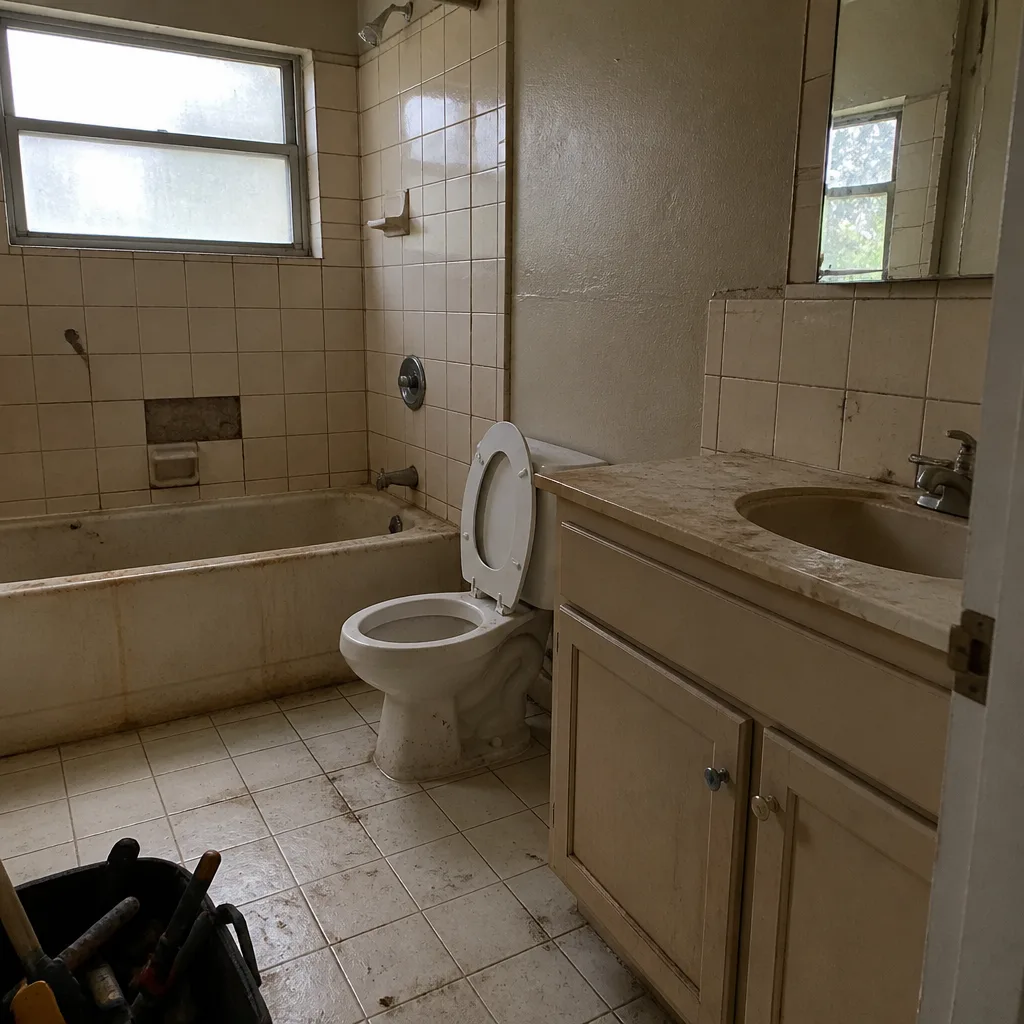 Before
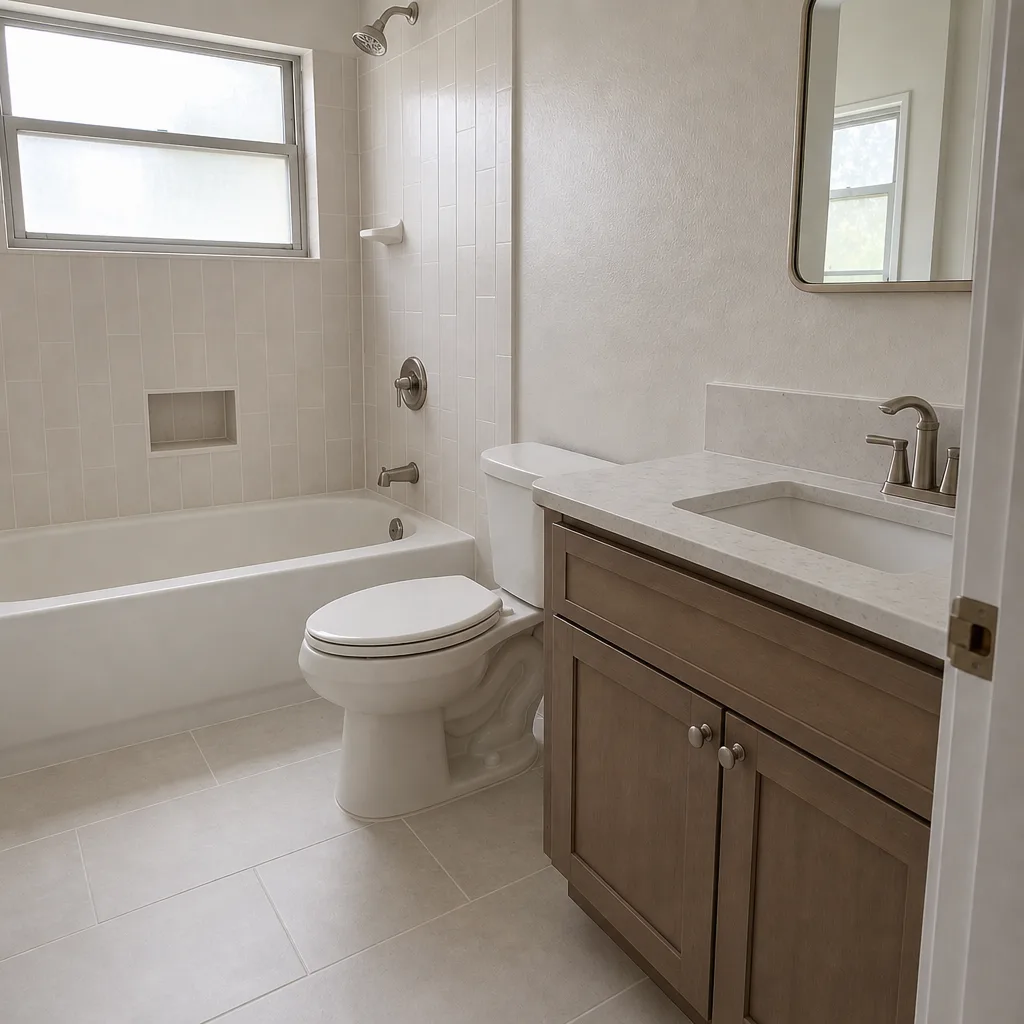 After
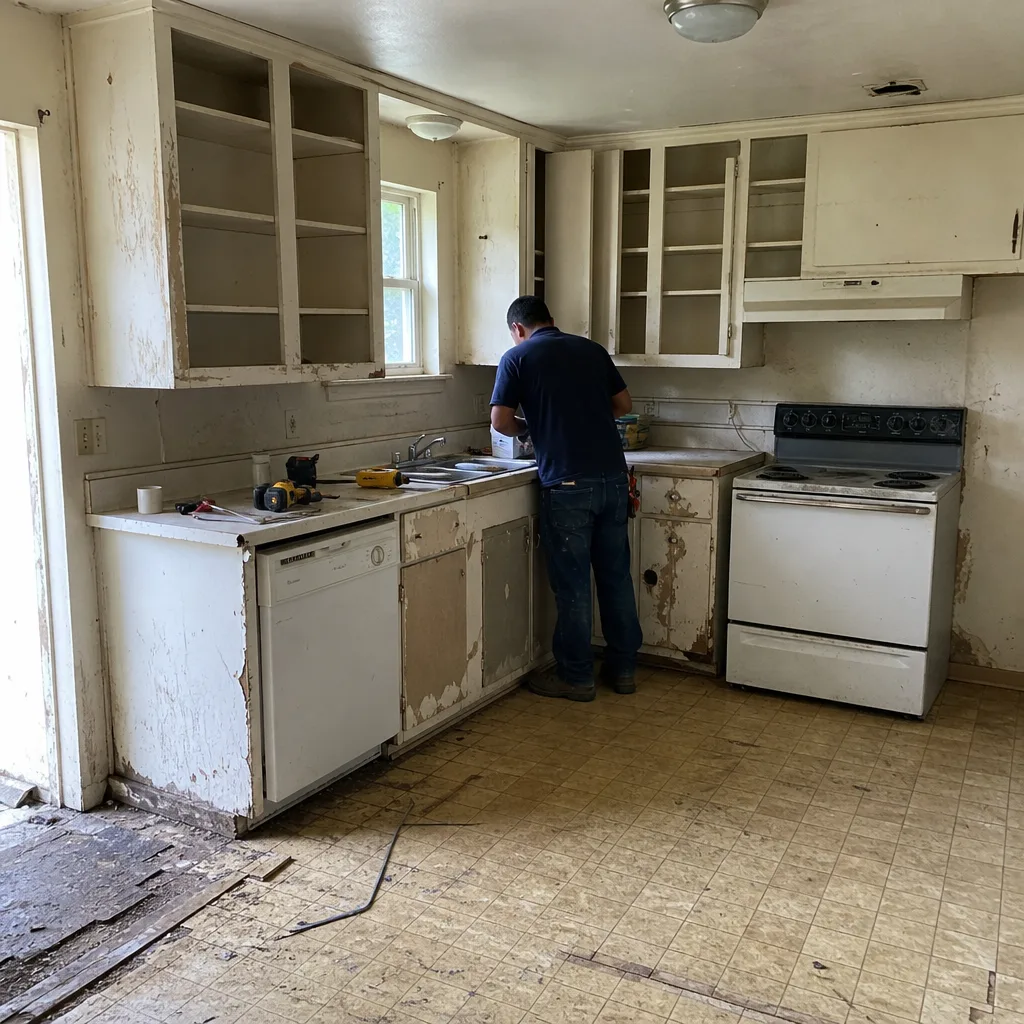 Before
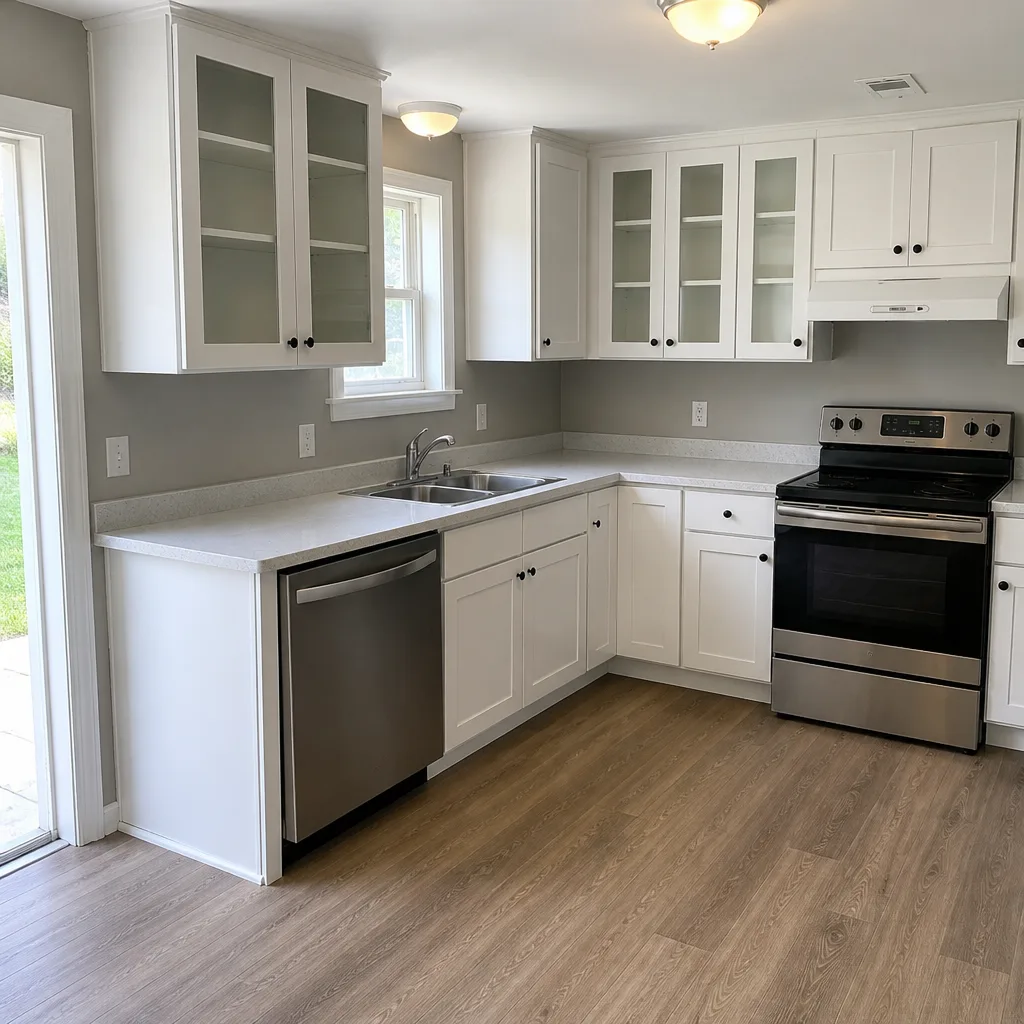 After
Frequently Asked Questions
Condensation between the panes means the sealed glass unit has failed, the gas has escaped, and moisture has entered the gap. This is a manufacturing failure, not a cleaning problem, and it can’t be wiped off. Check your manufacturer’s warranty before doing anything else, because seal failures are covered by most window brands within a set number of years. If you’re past the window, it’s a glass-unit replacement. Call (844) 797-4808 for a free estimate if you’d like a professional read on replacement versus repair.
Seasonal sticking in a Dallas home is almost always foundation or frame movement, not hardware. North Texas clay soils expand and contract with moisture, and a door that rubs at the top corner in July and clears in January is showing you the house is moving. Hairline drywall cracks near the door frame corners confirm it. Don’t sand the door. Address the movement, then rehang if needed. Call (844) 797-4808 for a free estimate and we’ll tell you whether it’s foundation, frame, or hardware.
Often yes, and for under $50. Weatherstripping on an operable window, silicone lube on a sticking track, and a fresh line of exterior caulk on the perimeter are all genuine DIY fixes, and any hardware store carries the materials. The catch is that most Dallas drafts aren’t at the glass; they’re at the rough opening or behind the trim. If a smoke test shows air coming around the perimeter rather than through it, the fix is air sealing, not window replacement. Call (844) 797-4808 if you’re not sure, and the estimate is free.
If the glass fogged between the panes or the frame cracked without any impact, it’s a manufacturer warranty issue. If water is coming in around the perimeter, the window doesn’t sit plumb, or you see gaps at the rough opening, it’s a contractor accountability issue. Both can be legitimate claims, but they go to different parties. Document the failure with wide and close photography before either claim, and call (844) 797-4808 for a free estimate if a prior install is the cause.
Just the glass on a newer window with a failed seal, and the whole unit on an older window or one with frame damage. Soft or spongy wood, structural cracks, or visible rot around the perimeter means the frame has to go, and the fix is replacement. On a window under about ten years old with a clean frame and a fogged insulated glass unit, replacing the glass alone is often the right call. Call (844) 797-4808 for a free estimate and we’ll price both paths.
Photograph the failure on day one, inside and outside, with a scale object visible in every shot, and keep a dated record of the storm that revealed it. Wide shots show the whole window and surrounding wall; close shots show the failure itself. Save every email, text, and paper receipt. Get a professional inspection on the record if you can. Call (844) 797-4808 for a free inspection estimate, and we’ll help you build documentation that holds up. If the leak is part of broader exterior scope, our Fence Installation in Dallas page covers the fence side of the same weather envelope.
The Bottom Line
Nine out of ten window and door problems come down to five causes, and once you sort yours into DIY, warranty, or replacement, the path forward is clear. Fogged glass is a failed seal, deserving a warranty check before any spending. Sticking doors in Dallas are movement, not hardware. Drafts are almost always air sealing, not the window. Water intrusion is behind the trim and never fixed by patching. Frame damage is replacement, full stop. Diagnose first, document early, then decide. When the answer is a professional fix or a replacement, Groundwork Construction Co. of Dallas is here: free estimates, upfront pricing, and the 730-Day Done Right Promise on every job. Call (844) 797-4808.
Written by the team at Groundwork Construction Co. of Dallas.