

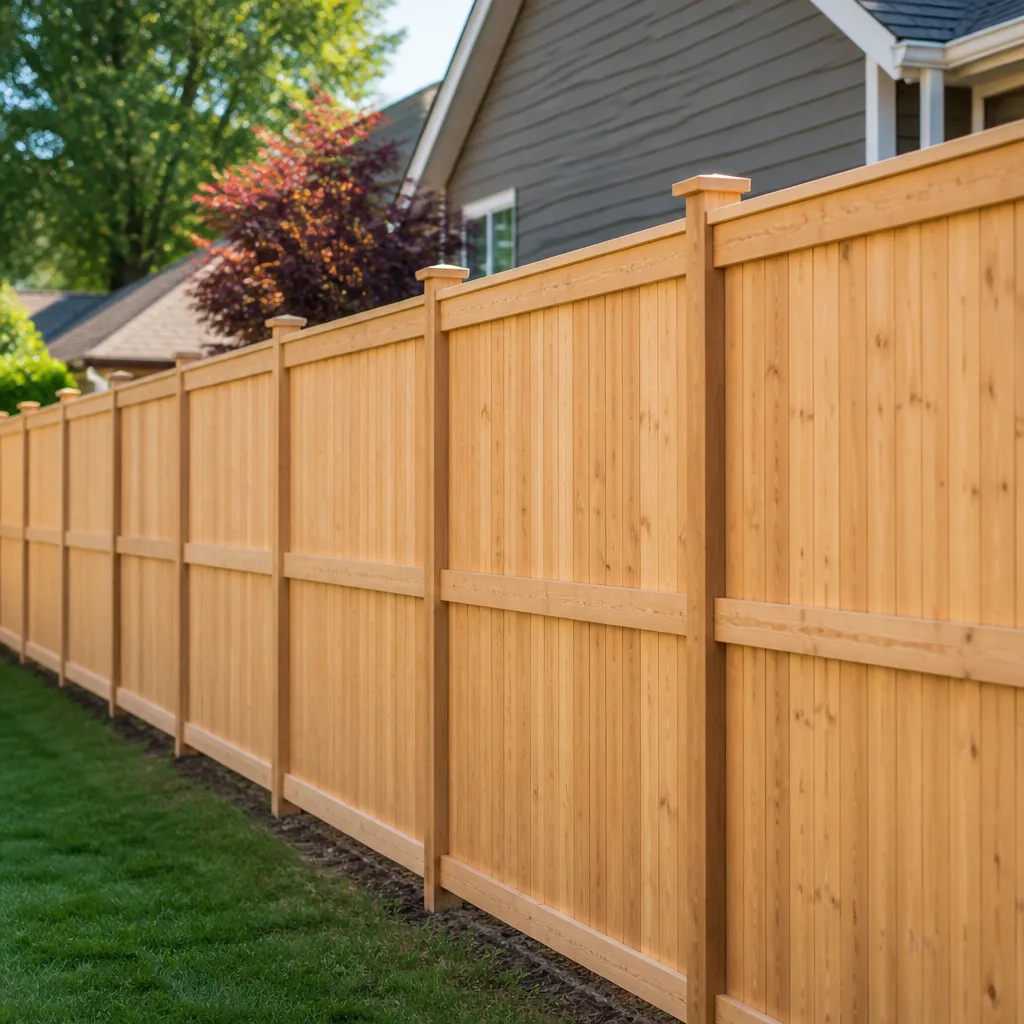
 Fence
 Kitchen remodeling
 Bathroom remodeling
 Home additions & ADU
 Roofing
 Windows & doors
 Driveway & pavers
Free written scope consultation - allowances, timeline, and change-order rules on paper before a single trade is scheduled
Chain Link Fence in Lancaster, TX: What It Takes and What It Costs
A chain link fence in Lancaster, TX runs $3,500 – $9,000 for a typical residential lot, and most jobs are finished in one to three working days once the materials land on site. That number covers galvanized or vinyl-coated chain link, terminal posts, gates, and the concrete footings each post sits in. Call (844) 797-4808 and we’ll come look at the line, measure it, and give you a written number before anyone touches a shovel. Wind matters here more than most people expect, and we’ll get into that below.
How a Chain Link Fence Goes In, Stage by Stage
Chain link is one of the few fence types where the schedule is genuinely predictable. Here’s what actually happens, and where you make decisions.
Day 1, first half: layout, marking, and utility check
We walk the property line with you and mark post locations. Before any digging, the line gets called in for utility locates, especially on the older 75146 blocks where irrigation lines, old septic laterals, and buried electric can sit closer to the surface than anyone remembers. That locate is usually a two-business-day turnaround, so it’s the one item that can shift the start date. You decide at this stage whether you want a straight run or a stepped line that follows the grade.
Day 1, second half: post holes and footings
Post holes go down roughly 24 to 36 inches depending on post height and soil, then get set in concrete and left to cure. This is the phase that takes the longest wall-clock time and the least labor. On Lancaster’s blackland clay, hole depth and footing diameter matter more than on sandier ground, because the clay swells when wet and shrinks when it dries. A shallow footing in that soil will lean within a couple of seasons. You’ll decide gate positions before holes are drilled, since gates need heavier terminal posts and bracing.
Day 2 or 3: rails, tension wire, and mesh
Top rail goes up, tension wire or bottom rail goes in at the base, and the mesh gets stretched. Stretching is the part that separates a tight fence from a wavy one, and it’s why the day count isn’t just about linear feet. You’ll pick mesh height and gauge before this stage, not during it.
Finishing: gates, hardware, and walkthrough
Gate frames, hinges, latches, and any walk gates get hung and adjusted. Then we walk the whole run with you, check every post and tension point, and hand over the written workmanship coverage. If a latch is off or a section isn’t pulling tight, it gets fixed before we leave.
What you decide, and when
- Before day 1: height, gauge, coating, gate count and swing direction.
- At layout: exact fence line relative to the property survey, and whether you’re stepping the run with grade or holding a level top line.
- Before rails go up: whether you want tension wire at the base or a bottom rail, which changes cost and how the bottom edge behaves.
- At walkthrough: anything you want re-tensioned or adjusted, before we close the job out.
Styles & brands we work with
- Kitchen remodeling
- Bathroom remodeling
- Home additions & ADU
- Roofing
- Windows & doors
- Driveway & pavers
- Fence
The Chain Link Options Worth Deciding Carefully
Most of the price swing on a chain link job comes down to three choices. Get these right and the fence outlasts the mortgage.
- Galvanized vs. vinyl-coated mesh. Bare galvanized is the cheaper option and holds up fine, but it takes on a dull gray look over the years. Vinyl-coated comes in black, green, and brown, blends better against landscaping, and the coating adds a layer between the zinc and North Texas weather. It costs more per linear foot, and if the coating gets nicked by a string trimmer, that spot is where rust starts.
- Gauge. Standard residential is 11.5 gauge. Heavier 9 gauge costs more but resists dogs, kids, and hail-driven debris noticeably better. On a Lancaster fence that’s meant to hold a large dog, we usually steer toward heavier gauge and a bottom rail.
- Post and rail spec. Terminal posts run larger in diameter than line posts, and corners and gate posts need bracing. Skipping bracing is the most common corner cut we see on fences put up cheap, and it’s exactly what fails first in a spring windstorm.
- Height and gates. Four-foot is the standard residential run; five and six-foot are common where privacy or pet containment matters. Walk gates and drive gates each add cost, and a drive gate wide enough for a trailer or RV changes the post spec.
- Top finish. A top rail is standard; tension wire at the bottom is a cost choice that affects how the bottom of the mesh behaves against a dog pushing under it.
What a Chain Link Fence Costs in Lancaster, TX
Residential chain link in Lancaster lands in the $3,500 – $9,000 range. Here’s what moves a job toward one end or the other.
| Line item | Typical range |
|---|---|
| Full residential chain link run, installed | $3,500 – $9,000 |
| Heavier gauge or vinyl-coated upgrade | Adds a few hundred to over a thousand, depending on footage |
| Walk gate | Adds several hundred each |
| Drive gate (vehicle width) | Adds considerably more than a walk gate |
| Removal of an existing fence | Quoted separately by footage |
The four variables that push a job up: total linear feet, how many gates, mesh gauge and coating, and whether old fence has to come out first. Site conditions are the fifth, and in Lancaster that usually means clay soil and old buried lines. What’s in a written estimate: post count and spacing, gauge and coating, gate hardware, concrete footings, and the workmanship coverage. What typically isn’t: removal and disposal of an old fence, tree root grinding, or survey work if the property line isn’t clearly marked.
See the difference
 Before
 After
 Before
 After
 Before
 After
What Lancaster Lots Specifically Do to a Chain Link Job
Lancaster sits at the fast-growing southern edge of Dallas County, and that growth cuts both ways for fence work. Along the I-35E corridor, former ranch and farmland is turning into new subdivisions while older 75146 blocks near the historic downtown core still hold postwar homes. On a new-build lot, we sometimes run into drainage or septic records that predate the neighborhood, and the fence line has to respect those easements. On an older block, the fence often goes in over decades of buried irrigation and old planting. The clay is the constant. Blackland prairie soil swells and shrinks hard with wet-dry cycles, so a post set shallow in August will be leaning by the next wet spring. That’s why footing depth is the thing we don’t compromise on here. Fencing the property line is often part of a full Fence Installation in Lancaster, and if you’re redoing the drive at the same time, homeowners often pair this with Concrete Driveways & Concrete Work in Lancaster so the gate swing clears a fresh slab.
Serving Lancaster, TX – Our Local Coverage Area
We serve Lancaster and nearby communities. Use the map below to see the area we cover. If you’re nearby, we can almost certainly help.
Frequently Asked – Chain Link Fence in Lancaster
Most residential runs are finished in one to three working days after the utility locate clears. The locate itself can add a couple of business days, and post concrete needs to cure before the mesh is stretched, so the calendar time is longer than the labor time. Call (844) 797-4808 and we’ll give you a real date range once we’ve seen the footage.
Fence permits and height limits depend on your lot and any HOA rules that apply, so we check the requirements for your specific address before work starts. We don’t guess at it and we don’t let you find out the hard way at a resale inspection. Call (844) 797-4808 and we’ll walk through what applies to your property.
In most cases, yes. A chain link fence is posts and mesh, so there’s no trenching and no plumbing or structural work involved. The one thing that has to happen is a utility locate, and if a line runs right where a post needs to go, we shift the post rather than dig into it. Call (844) 797-4808 to set up a site check.
The lowest-cost honest path is standard galvanized 11.5 gauge, fewer gates, and a straight run that follows your existing grade. Cutting post depth or corner bracing to save money costs more later, especially on Lancaster clay. Our written estimate lays out each line so you can see exactly where the money goes. Call (844) 797-4808 for a free on-site quote.
Workmanship on every job we do is covered by our 730-Day Done Right Promise: if it isn’t done right, we make it right. Manufacturer coverage on the mesh and hardware is separate and depends on the product spec you choose, and we’ll spell that out in writing. Call (844) 797-4808 if you want to talk through the coverage before you commit.
Get a Straight Number on Your Chain Link Fence
We’ll come out to your property, measure the actual line, check for buried utilities and old fence that needs to come out, and hand you a written estimate with every line itemized. No vague “pricing varies” answer, no surprise add-ons once the posts are in the ground. If it’s part of a larger project, we can fold it into our fence installation scope and talk through the whole plan at once. We work throughout Lancaster and the surrounding area. Call (844) 797-4808 to schedule your free estimate.
Written by the team at Groundwork Construction Co.