
Last updated November 17, 2026
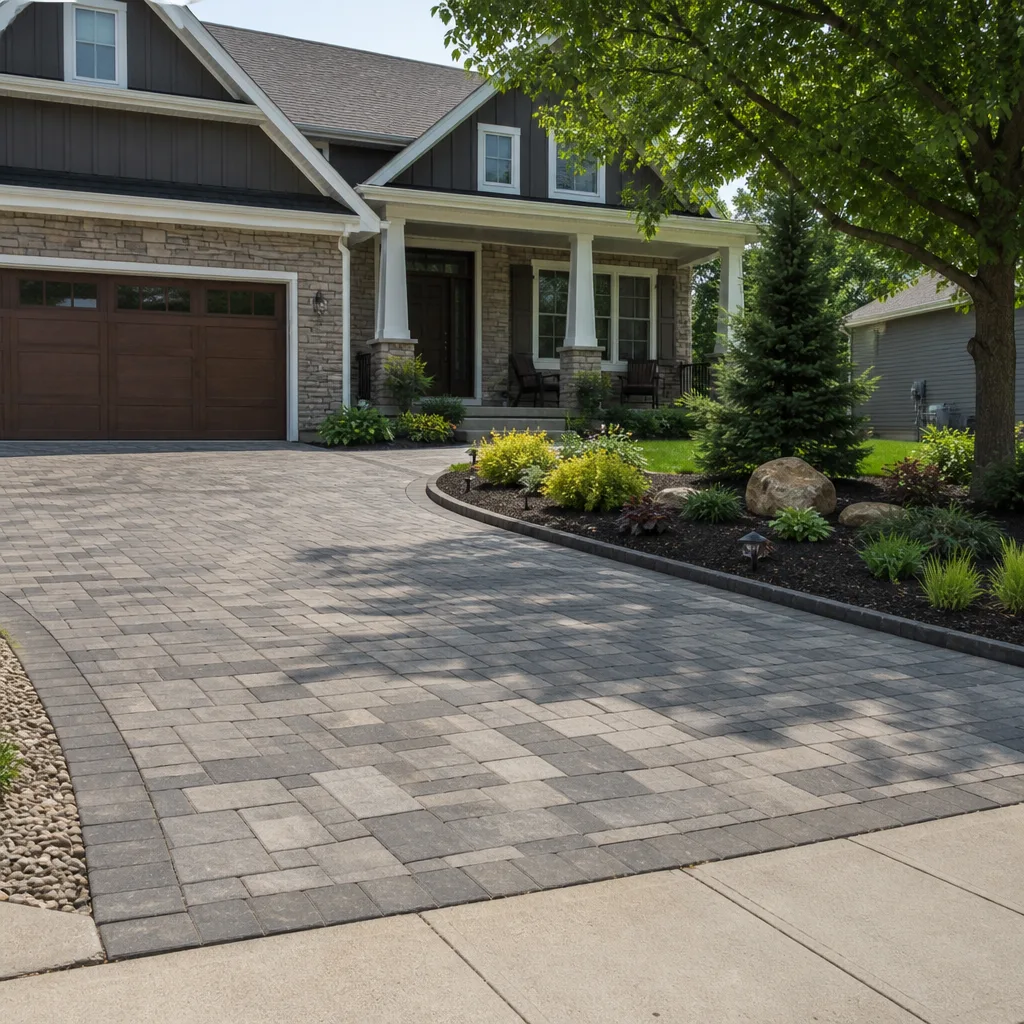 Driveway & pavers
 Kitchen remodeling
 Bathroom remodeling
 Home additions & ADU
 Roofing
 Windows & doors
 Fence
Free written scope consultation - allowances, timeline, and change-order rules on paper before a single trade is scheduled
How Long Does Driveway & Pavers Take? Timelines and What to Expect
A contractor who quotes you “3 days” for a driveway paver project is technically accurate about the laying phase and completely silent about the 2 – 4 weeks of permitting, material lead time, and base curing that happen before and after those three days. That gap between the number you hear and the calendar you actually live through is where most Dallas homeowners get burned. We’ve watched families plan a spring graduation party around a “three-day” install that didn’t finish until the following month, not because anyone lied, but because nobody mapped the full project clock. This guide does exactly that: every phase from permit desk to final inspection, Dallas-specific timelines by municipality, how Texas heat reshapes the curing schedule, and how to write a contract that protects you when the schedule slips.
Quick Answer
A typical paver driveway in Dallas takes 3 to 6 weeks from signed contract to final walkthrough, and the actual paver-laying portion is only 2 to 4 of those days. The rest is permit approval (1 – 3 weeks depending on the city), material procurement (3 – 10 business days), demolition and haul-off (1 – 2 days), base prep and compaction (2 – 4 days), and jointing, curing, and inspection (3 – 7 days). A small walkway or patio can compress to 10 – 14 days total; a large driveway with complex drainage or a circular layout can stretch to 7 – 8 weeks.
Styles & brands we work with
- Kitchen remodeling
- Bathroom remodeling
- Home additions & ADU
- Roofing
- Windows & doors
- Driveway & pavers
- Fence
Table of Contents
- The Seven Phases of a Paver Driveway Project
- Dallas Permit Timelines: City of Dallas vs. Collin County Suburbs
- How Texas Weather Windows Affect Your Schedule
- Legitimate Delays vs. Red Flags
- How to Structure Your Contract Around Milestones
- Material Lead Times and Brand Availability
- Curing, Jointing, and Final Inspection
- Common Mistakes to Avoid
The Seven Phases of a Paver Driveway Project
Every paver driveway runs through the same seven phases, whether it’s a small residential job in Lakewood or a multi-car driveway in Frisco. What changes is how long each phase takes. Here’s the full clock, in order:
- Permit application and approval (3 – 21 days). The City of Dallas typically processes residential right-of-way and driveway permits in 10 – 15 business days when the plan is complete. Suburban cities vary widely. This phase starts the moment you sign and submit.
- Material procurement (3 – 10 business days). Paver orders are placed with the manufacturer (Belgard, for example) and delivered to a staging area or your property. Custom colors or specialty profiles can push this to 2 – 3 weeks.
- Demolition and haul-off (1 – 2 days). Removing the old concrete or asphalt surface and hauling it to a licensed disposal site.
- Base prep and compaction (2 – 4 days). Excavation to depth, graded sub-base, geotextile fabric, and layer-by-layer compaction of crushed stone. This is the phase that determines whether the driveway lasts 10 years or 30.
- Paver installation (2 – 4 days). Setting the bedding sand, laying pavers, cutting edge pieces, and installing restraints.
- Jointing and compaction (1 day). Polymeric sand swept into the joints, then a final plate compaction pass.
- Curing, final inspection, and walkthrough (3 – 7 days). Polymeric sand needs to set, the city may require a final inspection, and you get the walkthrough.
Add those up and you have 2 to 6 weeks of sequential work, with the biggest variables being permit speed and material availability. For a deeper look at the work itself, see our Driveway & Pavers in Dallas service page.
Dallas Permit Timelines: City of Dallas vs. Collin County Suburbs
Permit turnaround is the single biggest scheduling wildcard in Dallas, and it varies dramatically by municipality. Homeowners who received a “3-day install” quote rarely realize the permit clock alone can eat 3 weeks.
- City of Dallas: Residential driveway permits run 10 – 15 business days for a complete submittal. Incomplete plans are kicked back and restart the clock, which is why we submit with survey drawings and drainage plans attached.
- Plano: Generally 7 – 10 business days, but Plano requires an engineered site plan for driveways crossing a public sidewalk. Missing that document adds a week.
- Frisco: One of the faster approval cities in the metro, often 5 – 8 business days, helped by an efficient online portal. Frisco is strict about right-of-way dimensions.
- McKinney: 10 – 14 business days. McKinney reviews drainage calculations carefully in areas with older storm infrastructure, particularly in the historic district.
- Richardson and Garland: 8 – 12 business days, with occasional add-on requirements for alley-adjacent properties.
Two things drive the variance. First, whether your driveway touches the public right-of-way (almost all front driveways do), which pulls in the city’s engineering review. Second, whether your property sits in a special overlay district where additional drainage review applies. Dallas has several such overlays near White Rock Lake and in older neighborhoods around Oak Cliff where stormwater runoff from impervious surfaces gets extra scrutiny.
The practical takeaway: if a contractor quotes you a schedule that ignores permit lead time entirely, they’re describing a fantasy calendar, not a project plan.
How Texas Weather Windows Affect Your Schedule
Dallas weather shapes paver projects more than most homeowners expect. Two forces matter most: summer heat and spring storm season.
Summer heat. A paver install in July in Dallas isn’t just uncomfortable for crews, it changes the material timeline. Polymeric sand needs to be activated with water and allowed to cure without premature drying. In direct-heat conditions with temperatures over 100°F, that curing window stretches from a standard 24 hours to 48 – 72 hours. We schedule summer installs in early morning and stage the sand work for the cooler end of the day. Some contractors skip that adjustment and end up with sandy, unstable joints that wash out within a few months.
Spring storm season. Dallas sees its heaviest rain from March through May. Base preparation and excavation work can’t happen on saturated soil, so a week of storms can push the timeline by 3 – 5 days per rain event. A reasonable contractor builds rain days into the schedule rather than pretending they won’t happen.
Winter cold snaps. Polymeric sand won’t set properly below 40°F, and the occasional February freeze shuts down work for a few days. Dallas projects scheduled in January and February typically carry 3 – 7 float days for cold weather.
The honest version of what we tell clients: a July install in Dallas can add 2 – 3 days to a schedule that would take 10 days in October. Anyone promising the same timeline year-round isn’t accounting for the material chemistry that governs the finish work.
Legitimate Delays vs. Red Flags
Some delays are unavoidable and expected. Others signal a contractor juggling too many jobs or hiding a problem. Here’s how to tell them apart.
Legitimate delays you should accept:
- Permit holds. If the city requests a revised plan or a drainage detail, that’s a real-world pause. Ask for a copy of the city response to verify.
- Material backorder. Certain colors, especially on premium brands like Belgard, can sit in queue. Legitimate contractors show you the order confirmation and the delivery window.
- Weather days. Storms blocking excavation or curing are legitimate. Two straight weeks of rain in May is a plausible delay; a single rain shower that pushes the project a week is not.
- Utility conflict. Discovering a buried irrigation line, gas line, or surprise root system during demo is a real, documentable delay.
Red flags:
- No crew on-site for days at a time. If your driveway sits half-excavated for a week and no one shows up, the contractor has spread too thin. Real crews progress through phases sequentially.
- Silence on scheduling. A good contractor gives you the next day’s plan by end of day. Silence is a workload signal.
- “Waiting on materials” with no documentation. Ask for the purchase order. If they can’t produce one, they haven’t ordered.
- Vanishing deposits. Any contractor asking for a large deposit before signing a written contract with milestone dates is one to walk away from.
In our experience, the biggest predictor of an on-time paver project isn’t the paver installer’s skill, it’s the contractor’s scheduling discipline on the front end. A crew that arrives on the right day, with materials on-site and permits in hand, finishes ahead of one that “works fast” but can’t coordinate logistics.
How to Structure Your Contract Around Milestones
The most important line on a paver contract isn’t the price. It’s the schedule, broken into milestones with dates. A vague “3 weeks to complete” promise gives a contractor unlimited wiggle room. A milestone-based contract gives both sides something to hold to.
Ask for these milestone dates, in writing:
- Permit submission date (the day after signing, ideally) and the target approval date.
- Material order date and the confirmed delivery window.
- Demo start date.
- Base prep completion date (this is the most technically demanding phase; you want a hard date).
- Paver installation start and finish dates.
- Jointing and curing window, with the final inspection date.
- Final walkthrough and completion date.
Beyond dates, three contract clauses to insist on: a weather-delay clause that caps the number of excused weather days, a change-order clause requiring written approval before any extra charge, and a workmanship warranty with a defined duration. Our Groundwork Construction Co. of Dallas home page lays out how our 730-Day Done Right Promise works in practice. Every written milestone, every change order, and the full walkthrough fall under that warranty.
If your contractor won’t put milestone dates in the contract, that’s the answer you need about how they run a schedule.
Material Lead Times and Brand Availability
Material lead time is the phase most often glossed over in the planning conversation. Here’s what actually happens between “you sign” and “pavers show up.”
- Standard concrete pavers (Belgard, most profiles): 5 – 10 business days from order to delivery. Standard colors and shapes are usually in-stock in the Dallas market.
- Premium or specialty pavers: 2 – 3 weeks for custom profiles, unique color blends, or large-format pavers.
- Clay brick pavers: 2 – 4 weeks, depending on whether the color matches a historic neighborhood palette. Older Dallas neighborhoods like Munger Place and Swiss Avenue often want brick that reads correctly against 1920s housing stock.
- Permeable systems: 2 – 3 weeks for the specialized base materials and jointing products.
The larger point is that even when pavers are “available,” delivering them to your Dallas staging area takes coordination. Trucks don’t fit on narrow residential streets without planning; curbside drop-off in older neighborhoods can require a temporary yard or staging spot. These logistics are solvable but they consume time, and they need to be in the schedule rather than discovered on demo day.
If you’re also considering an ADU or addition that will share logistics, our Home Additions & ADU in Dallas page covers how multi-scope projects stagger schedules.
Curing, Jointing, and Final Inspection
The last 3 – 7 days of a paver project are the least visible and most important for longevity. This is the phase where shortcuts show up months later as loose pavers or sand washing out.
Jointing. Polymeric sand is swept into every joint, then wetted. In ideal Dallas conditions (60 – 85°F, low humidity), the sand sets within 24 hours. In summer heat, that window stretches. In winter cold, it can require a heater blanket or rescheduling.
Curing. The base and bedding sand need to stabilize under the paver surface before you drive on the driveway. Standard guidance: keep vehicles off for 48 – 72 hours and heavy vehicles for a week.
Final inspection. Depending on the municipality, a final inspection may be required to confirm the driveway meets the approved plan and the drainage works. City of Dallas typically requires a final inspection within 30 days of completion; Frisco and Plano are more flexible on the timeline but still require it.
We walk every client through the driveway on completion day, flag any paver that needs adjustment before the crew leaves, and document the walkthrough in writing. It’s part of what the 730-Day Done Right Promise covers: any settlement, joint failure, or paver looseness in the first two years is on us to fix, not on you to negotiate.
Common Mistakes to Avoid
- Booking based on the install days alone. If you hear “3 days,” ask what happens during the 3 weeks before and after. A quote that only covers the visible work is a quote that leaves the other phases exposed.
- Skipping the permit verification. Some contractors suggest starting demo before the permit pulls. In Dallas, that can trigger a stop-work order and a double fee. Wait for the permit number before demo starts.
- Scheduling the install right before an event. A wedding, graduation, or holiday in Dallas is a common deadline, and homeowners regularly back the schedule too tight. Add 2 weeks of buffer beyond the contractor’s stated completion date for any hard deadline.
- Choosing pavers by color alone. Dallas summer sun fades certain pigment dyes faster than others. Ask specifically about UV stability in the Texas climate and see a sample that’s been installed for 3+ years, not a fresh-from-the-box sample.
- Ignoring drainage. Dallas sits on clay-heavy soil in many neighborhoods. Driveways that don’t drain properly push water toward the foundation. Any paver plan should include a grading and drainage detail, not just a pretty top surface.
- Signing without milestone dates. A contract without a milestone schedule is an open-ended commitment. It’s fair to ask for one and reasonable to walk if the contractor won’t provide it.
- Failing to ask about curing. If your contractor can’t tell you when you can park on the new driveway, they haven’t thought about the finish work carefully.
If your project includes fencing or gates on the driveway edge, coordinate those timelines separately; our Fence Installation in Dallas page covers how fencing schedules interlock with driveway work.
When to Call a Professional
Paver work is one of those categories where the line between DIY and professional is usually a drainage or structural question, not a “can I lay a paver” question. Call a professional if any of these are true: your driveway slopes toward the house or garage, your property sits on expansive clay soil (much of North Dallas and Plano), your existing driveway has visible settling or cracks that suggest a base problem, or the driveway crosses a public sidewalk or right-of-way. Each of those means permits, drainage engineering, or base remediation beyond what a weekend project can handle. It’s also worth calling if your project involves more than 600 square feet, since hauling and base compaction at that scale requires equipment no homeowner has. Groundwork Construction Co. of Dallas offers free estimates in Dallas and surrounding cities – call (844) 797-4808 and we’ll walk the site, check the drainage, and give you a written schedule and price in one conversation.
See the difference
 Before
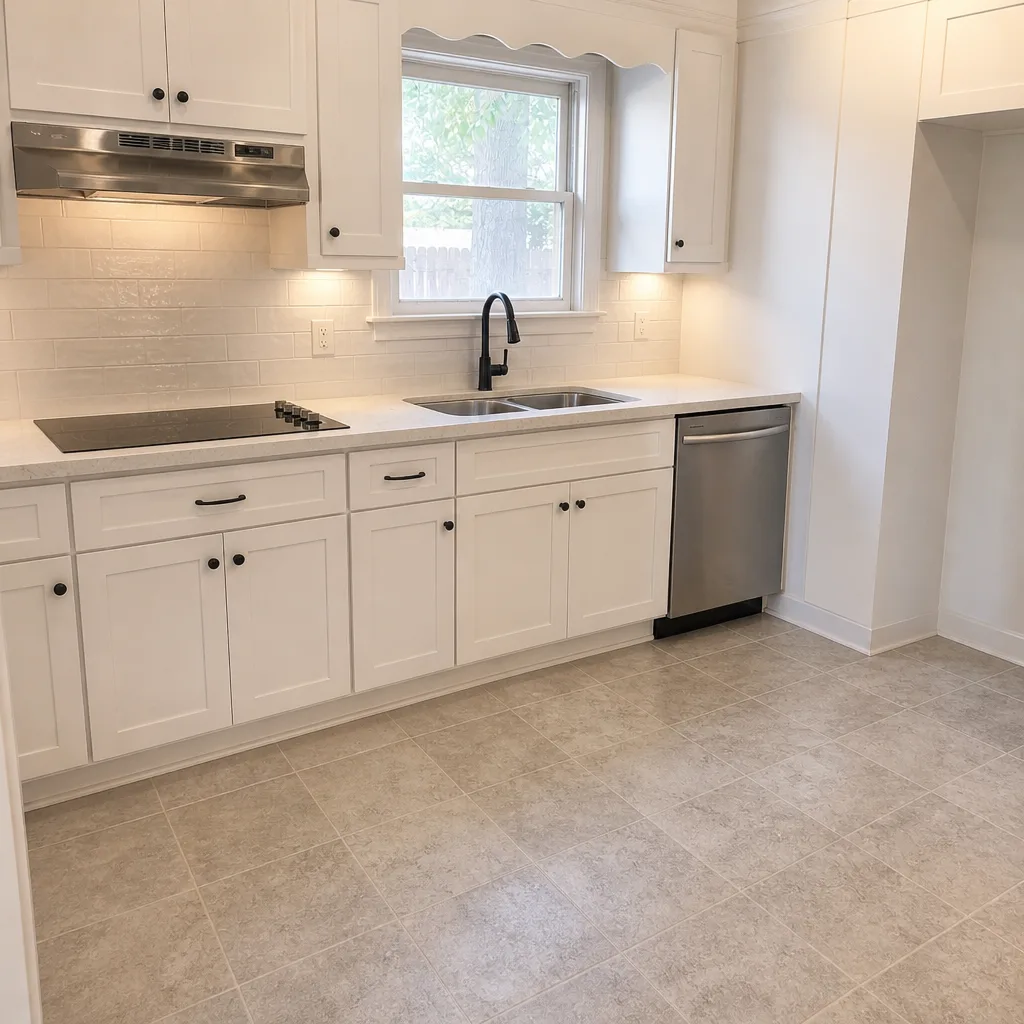 After
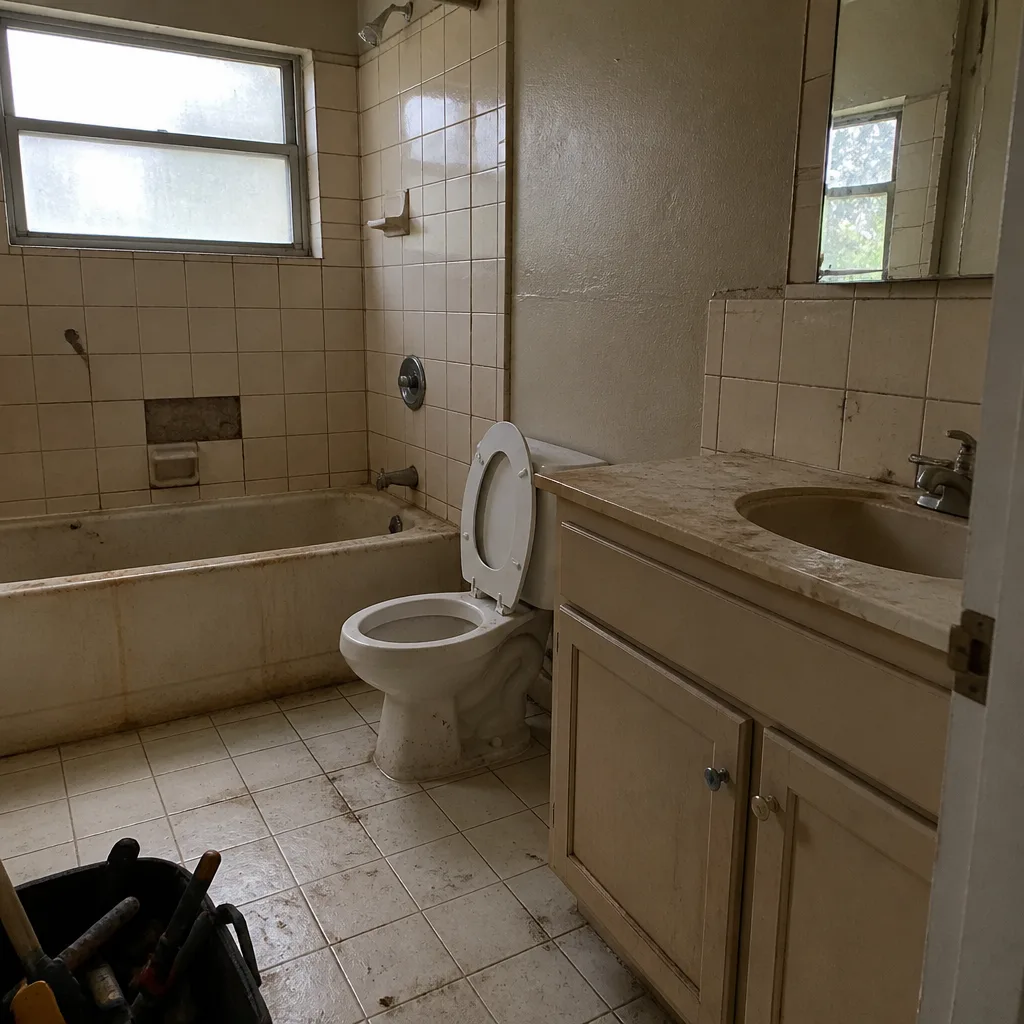 Before
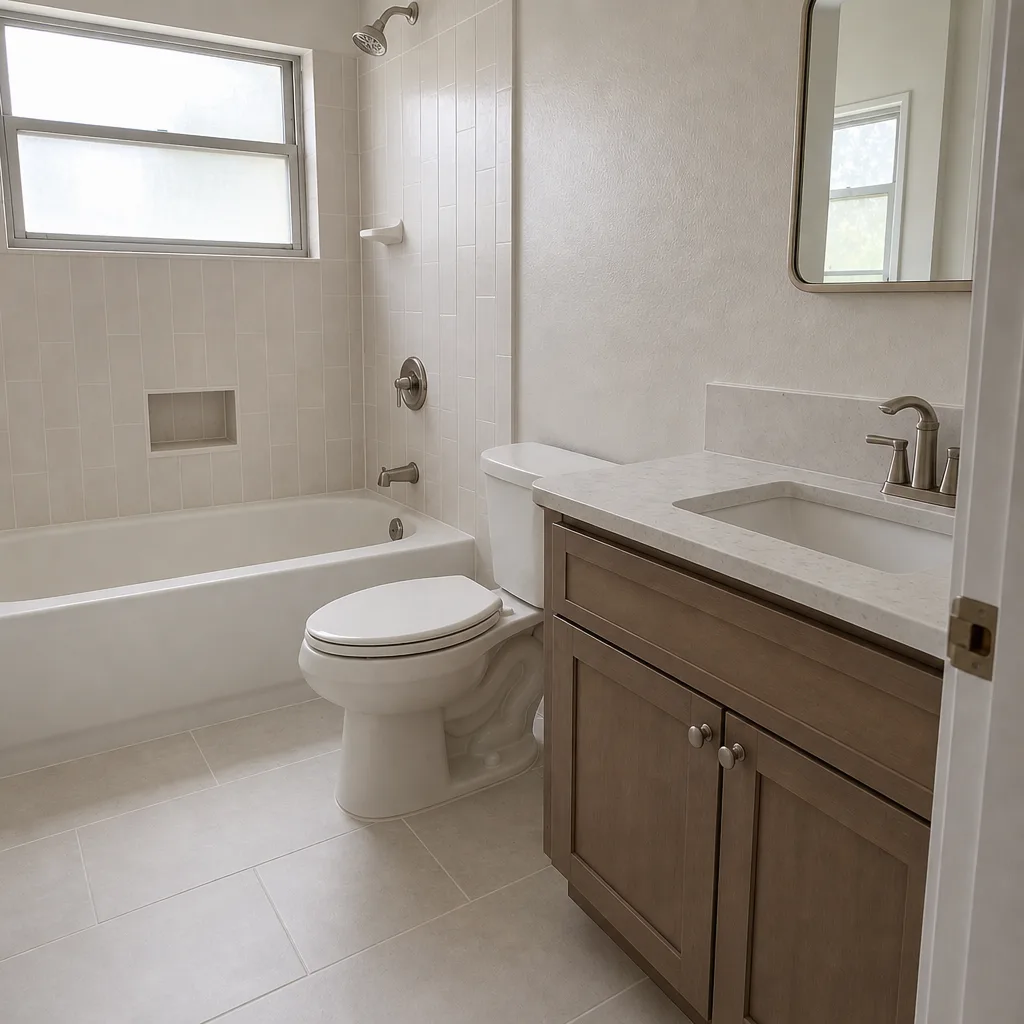 After
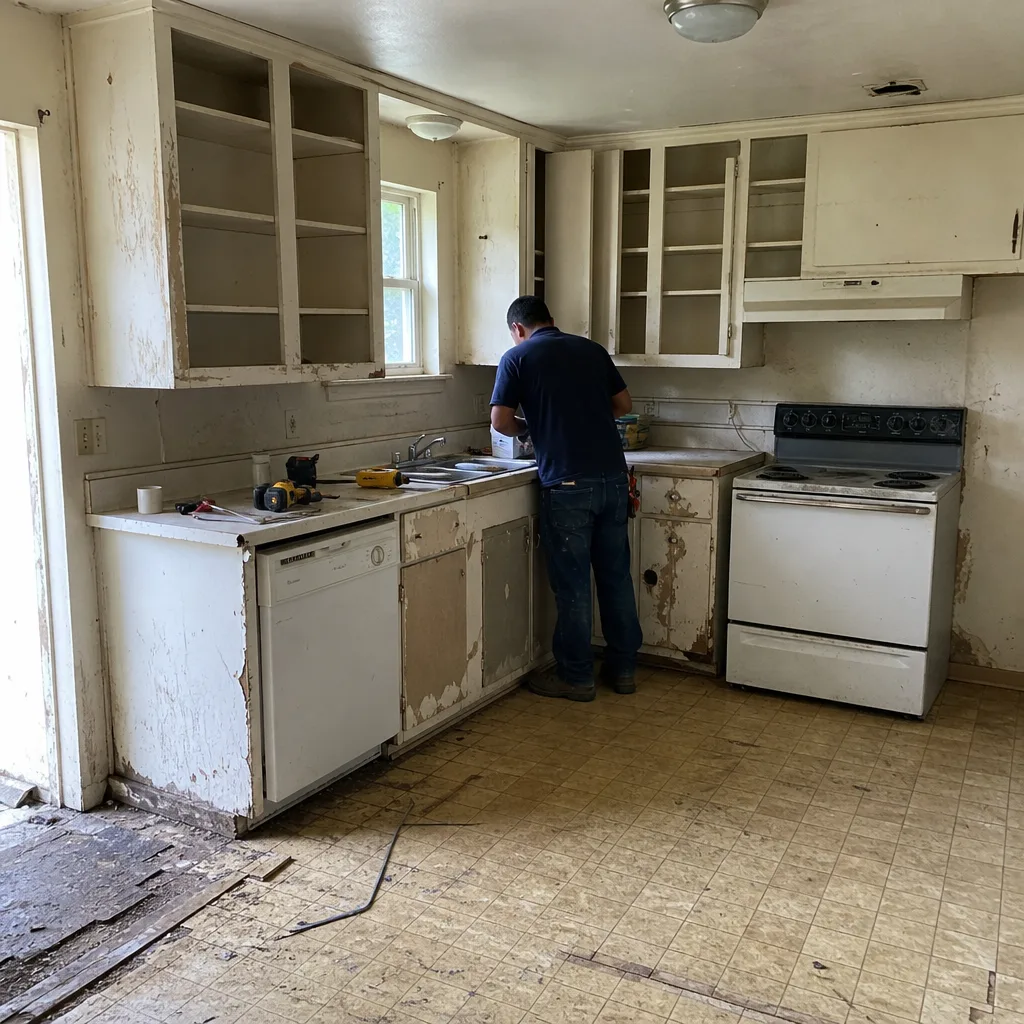 Before
 After
Frequently Asked Questions
A typical Dallas paver driveway takes 3 to 6 weeks total from signed contract to final walkthrough, with 2 to 4 of those days being active paver installation. The rest is permits (1 – 3 weeks), material delivery (3 – 10 business days), demolition and base prep (3 – 6 days), and jointing plus inspection (3 – 7 days). Smaller walkways and patios compress to about 2 weeks. Call (844) 797-4808 for a schedule built around your specific Dallas property.
Yes. Any driveway touching the public right-of-way requires a permit from the City of Dallas, typically 10 – 15 business days for a complete submittal. Suburban cities like Plano and Frisco have their own timelines (7 – 10 and 5 – 8 business days respectively). Interior walkways and back patios that don’t touch the right-of-way generally don’t need permits, but check with your municipality before assuming.
It depends. Overlaying pavers on concrete is possible when the concrete is stable and drainage is well-handled, but it’s a bad idea if the existing concrete has cracks, settling, or drainage problems. In Dallas’s expansive clay soils, most driveways we survey have at least some settlement that needs to be addressed by removing the concrete rather than overlaying. It’s part of the assessment we do during the free estimate.
Dallas paver driveways typically run $12 to $22 per square foot installed, depending on the paver type, base condition, and drainage complexity. A standard two-car concrete paver driveway (approximately 600 sq ft) usually lands between $8,000 and $13,000. Specialty profiles and permeable systems push to the upper end. Call (844) 797-4808 for an exact quote; estimates are free and pricing is upfront with no change orders once work starts.
October through November and March through April are the smoothest windows in Dallas. Summer installs (June through August) work fine but the curing phase stretches 1 – 2 days longer due to heat. Winter installs from December to February carry weather-delay risk for polymeric sand curing. Spring storm season from March to May adds rain-day interruptions to base prep. All four seasons work, but the material chemistry timelines shift with the season.
No, when you work with a contractor who prices the whole project upfront. Any legitimate contractor should provide a written line-item estimate covering permits, materials, labor, disposal, and any contingency for buried utilities. Once that’s signed, the price is fixed. Change orders should only occur if you request a scope change, never as a surprise mid-project request. That’s the model we work to, and it’s part of what our 730-Day Done Right Promise stands for.
The Bottom Line
The honest answer to “how long does a paver driveway take” isn’t 3 days. It’s 3 to 6 weeks from signature to walkthrough, with the actual paver-laying portion sitting in the middle. Permits, material lead time, base preparation, and curing are the phases most often glossed over, and they’re where projects slip. The way to protect your schedule is to insist on milestone dates in the contract, verify permit status before demo starts, and buffer for the season (heat, storms, and cold snaps all shift the material timeline). A contractor who maps the full clock is the one who actually finishes on the calendar you both agreed to. From foundation to finish line, that’s how we run every paver project in Dallas.
Ready to Get a Real Schedule?
If you want a schedule built on real Dallas permit timelines, real material lead times, and a written milestone plan – not a 3-day fantasy – call Groundwork Construction Co. of Dallas at (844) 797-4808 for a free estimate. We’re staffed with a live person 24/7, our technicians have up to 12 years of experience, and every paver driveway we install is covered by the 730-Day Done Right Promise. Plus, projects over $10,000 qualify for $1,000 off and 0% financing for 18 months. Get a written, upfront price with no surprises before you sign anything.
Written by the team at Groundwork Construction Co. of Dallas.