
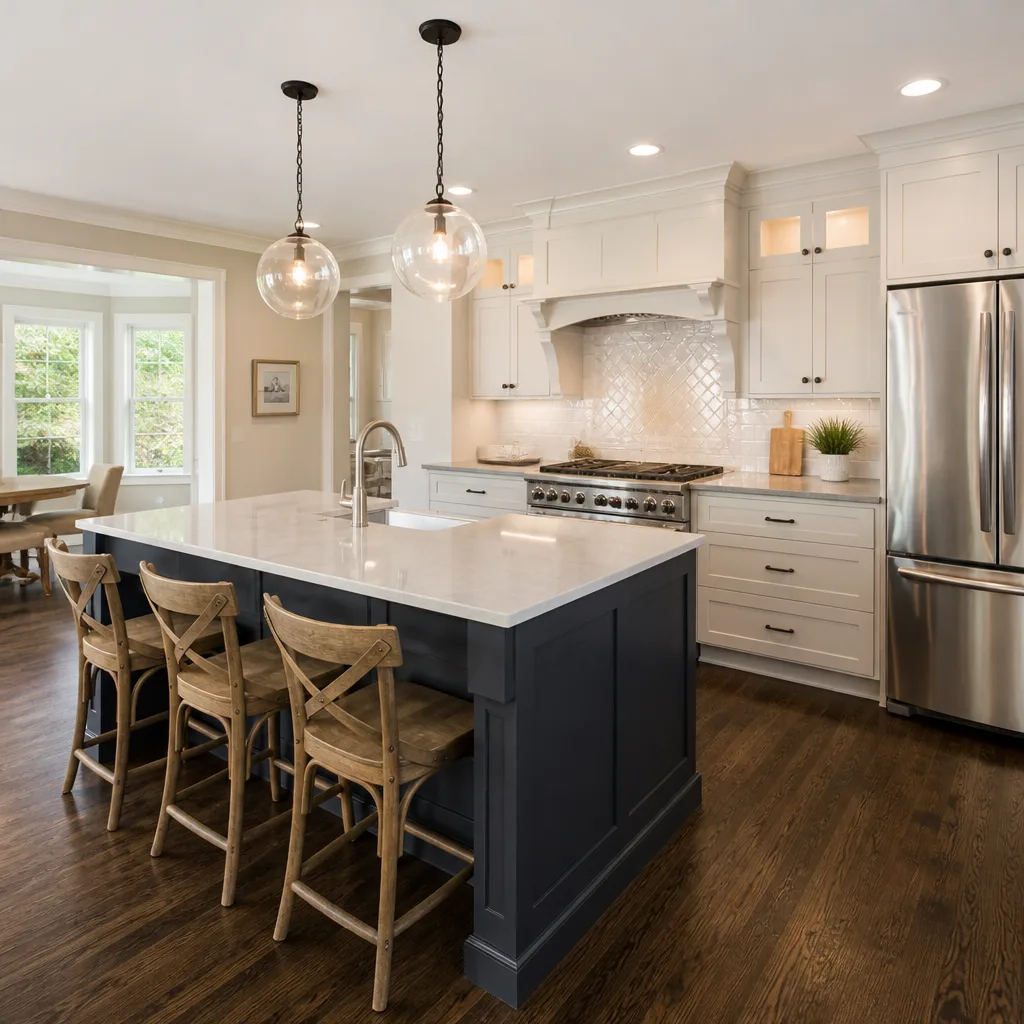
 Kitchen remodeling
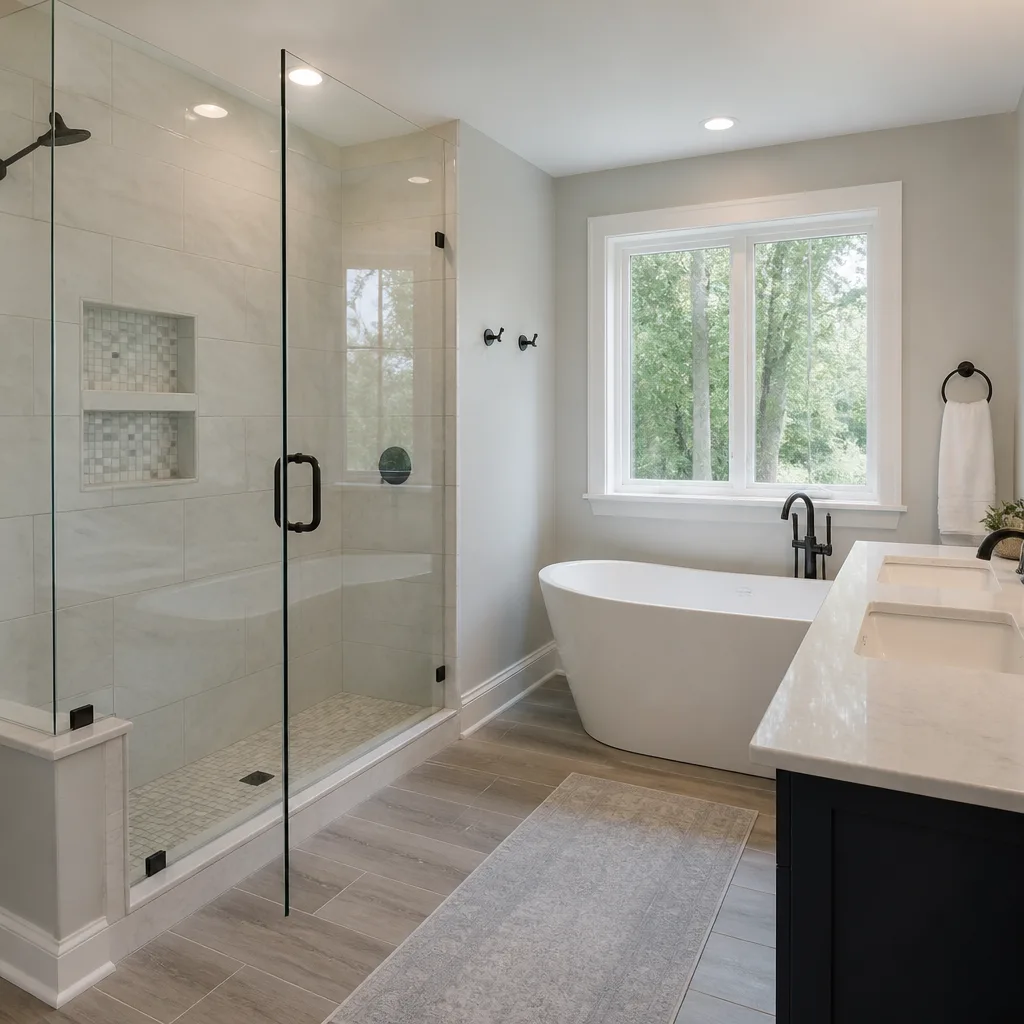 Bathroom remodeling
 Home additions & ADU
 Roofing
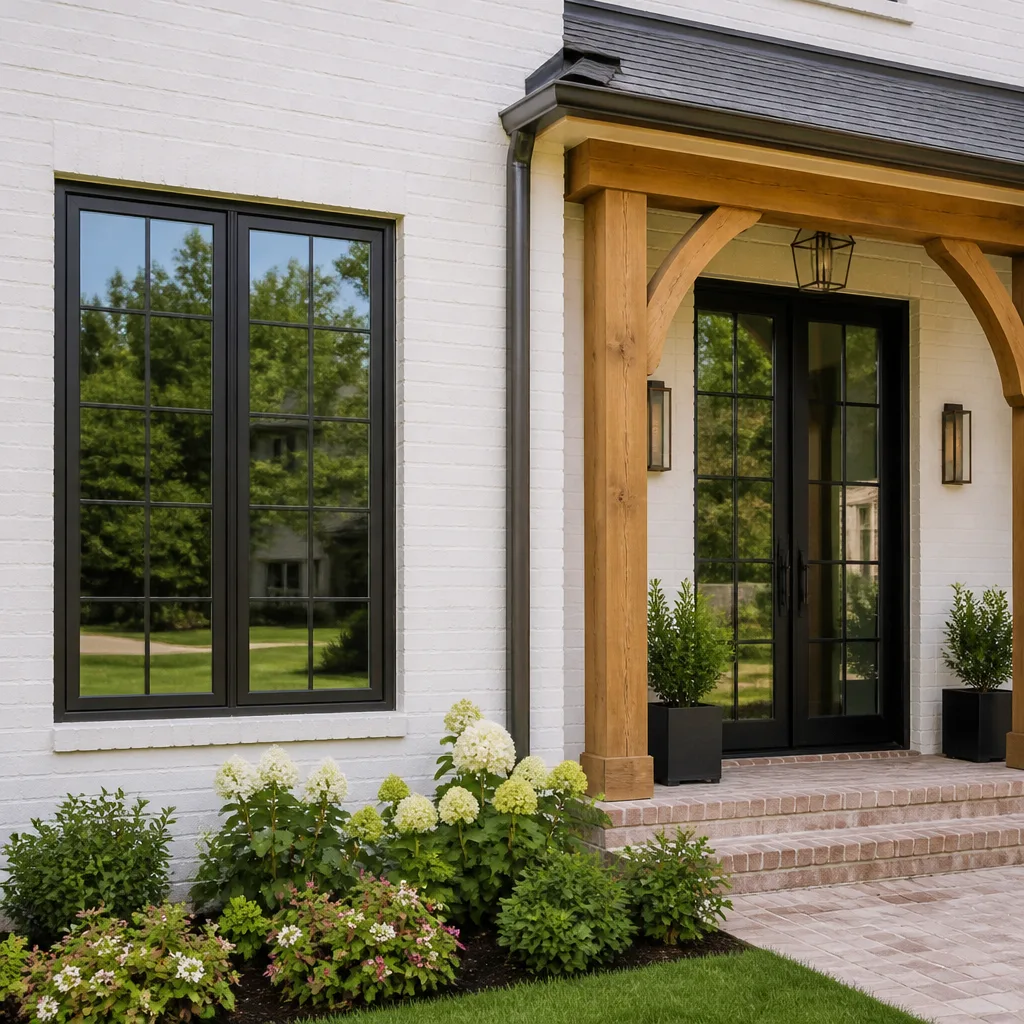 Windows & doors
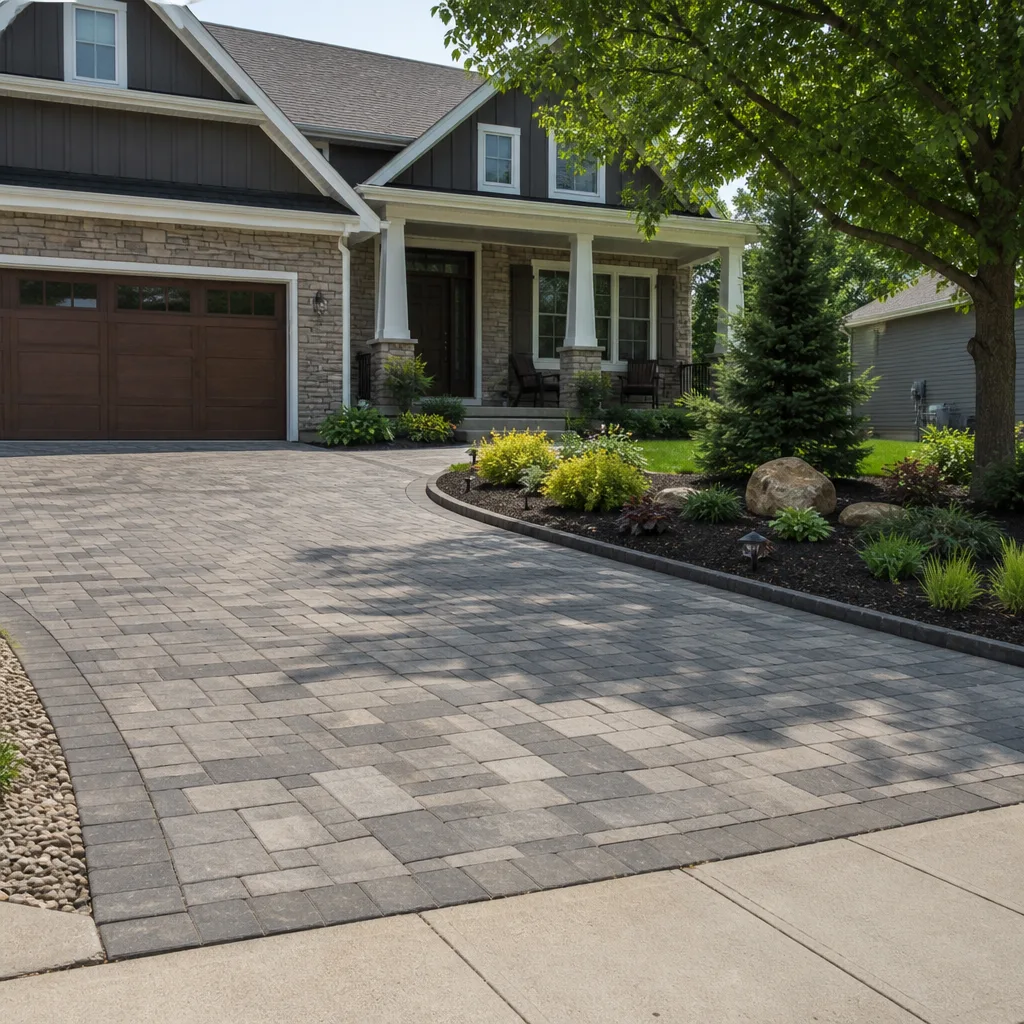 Driveway & pavers
 Fence
Free written scope consultation - allowances, timeline, and change-order rules on paper before a single trade is scheduled
Styles & brands we work with
- Kitchen remodeling
- Bathroom remodeling
- Home additions & ADU
- Roofing
- Windows & doors
- Driveway & pavers
- Fence
See the difference
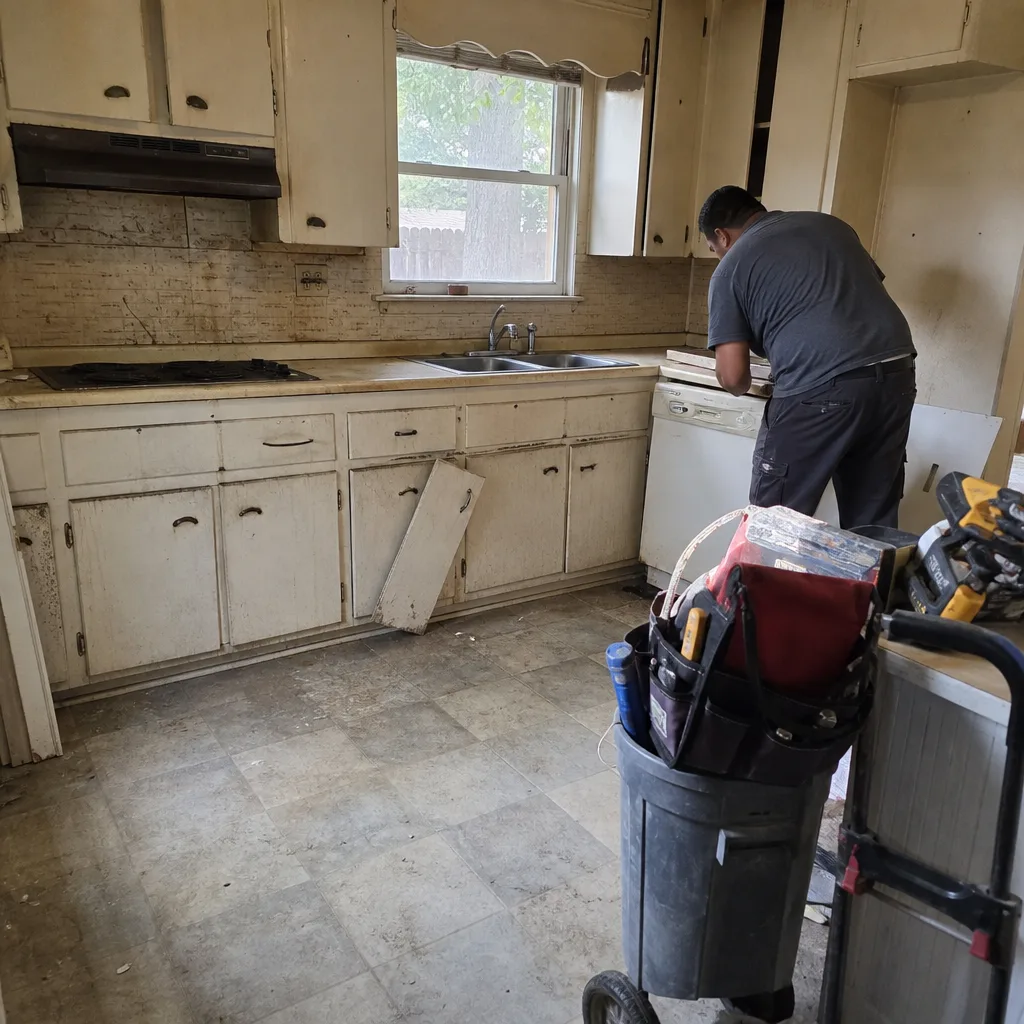 Before
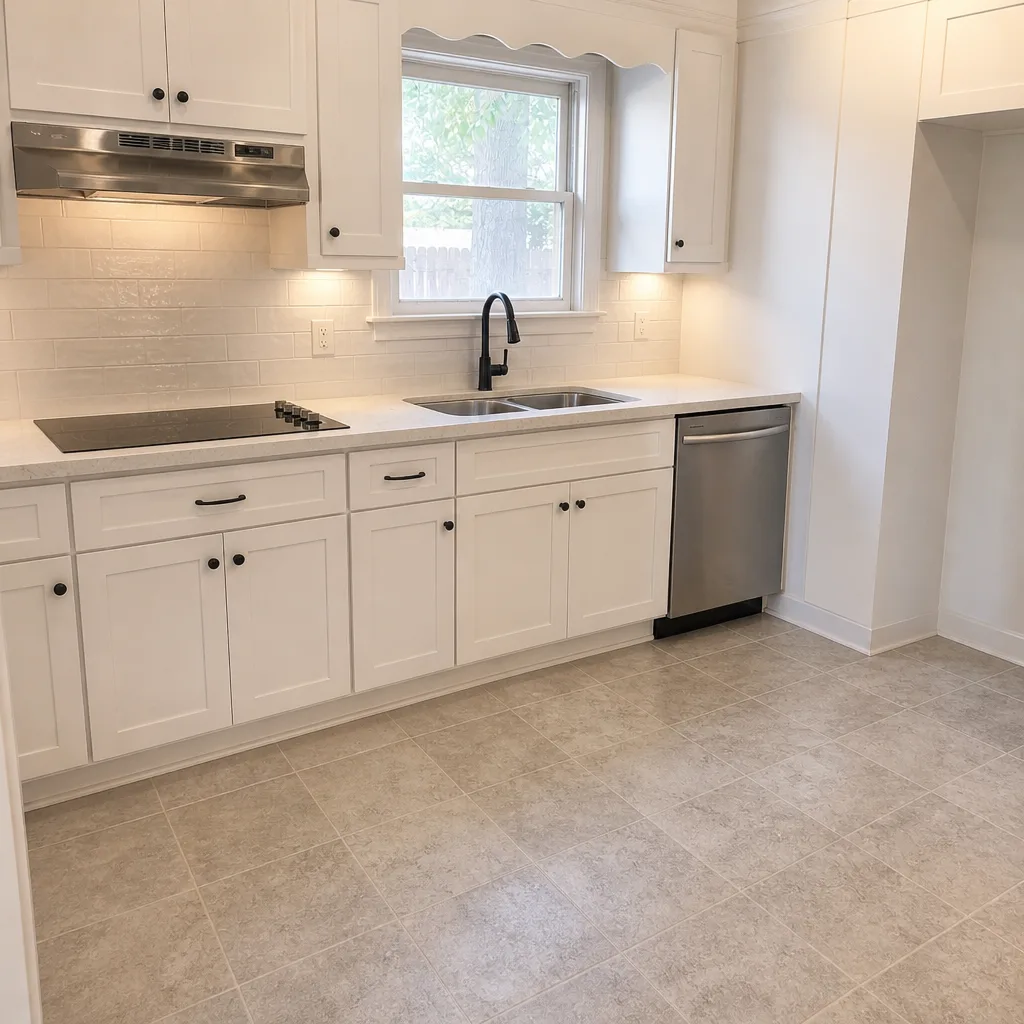 After
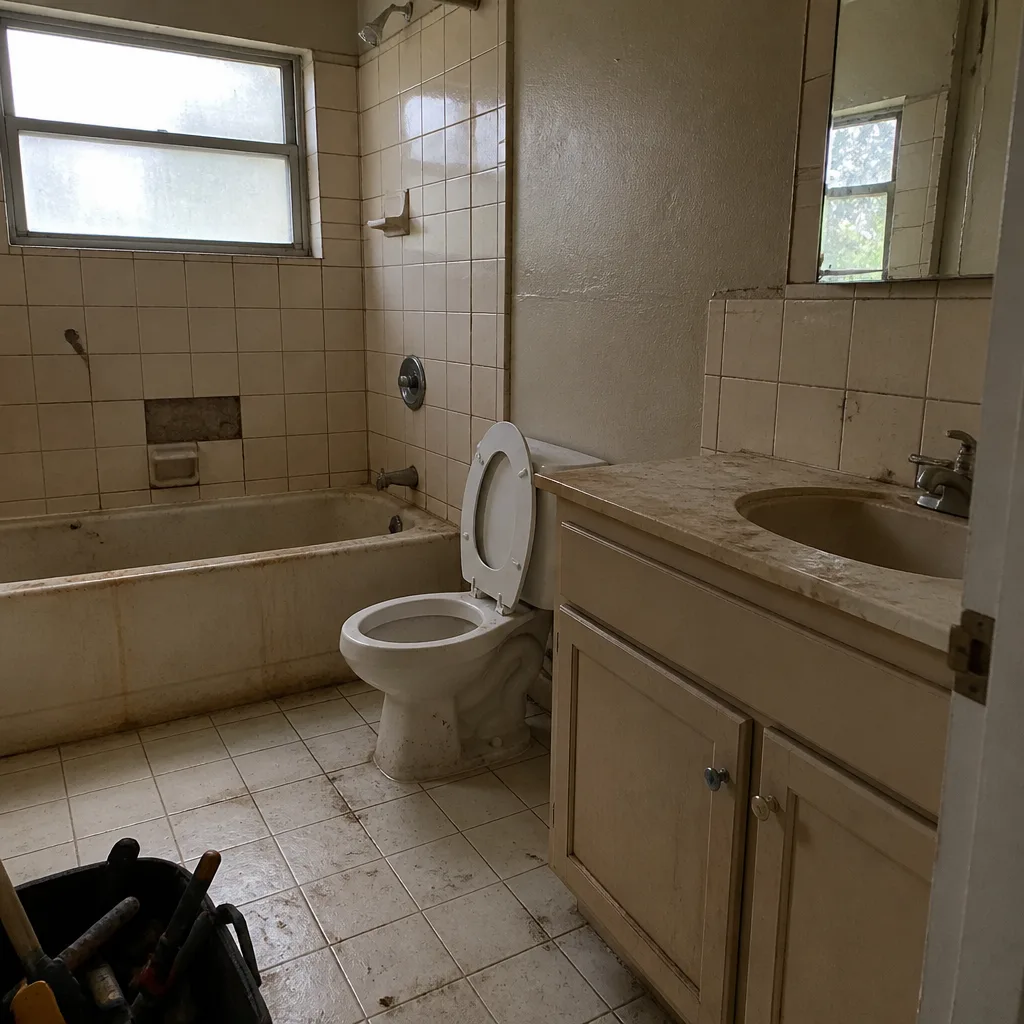 Before
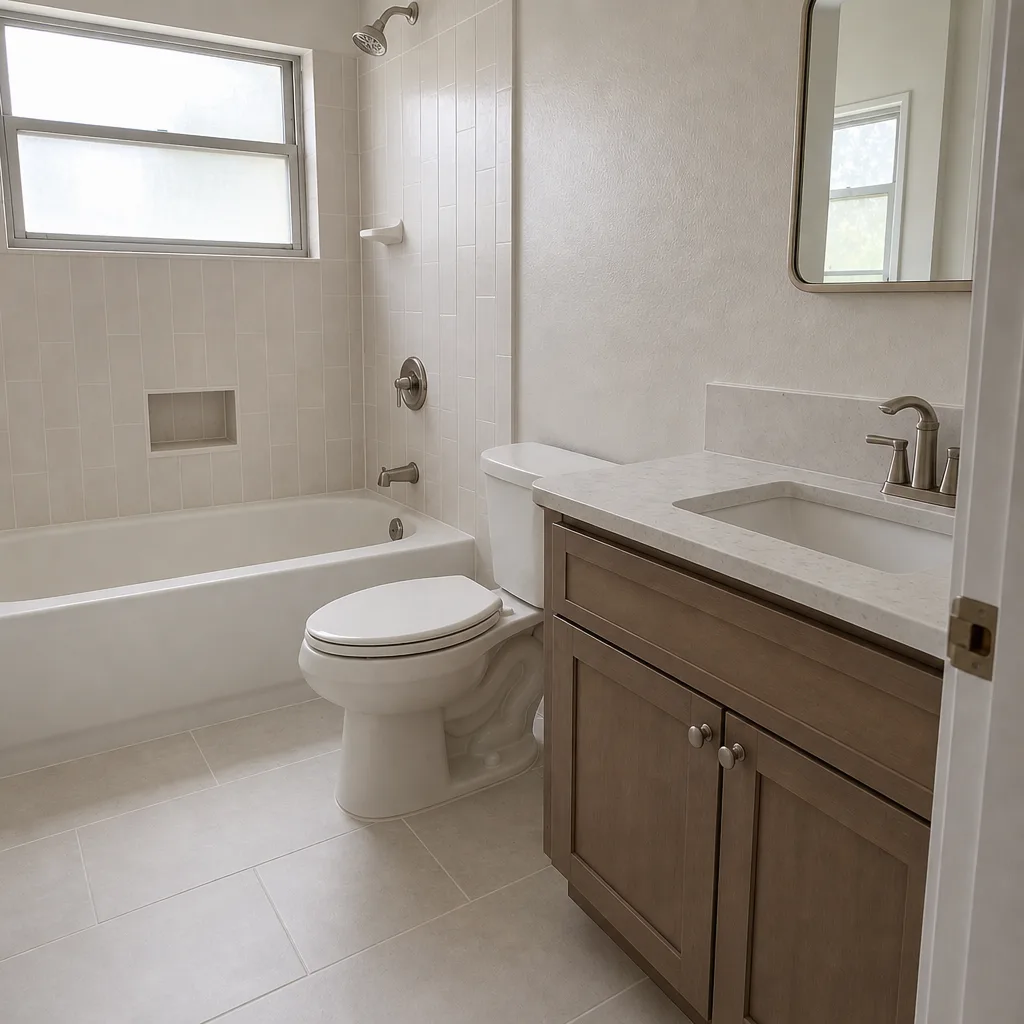 After
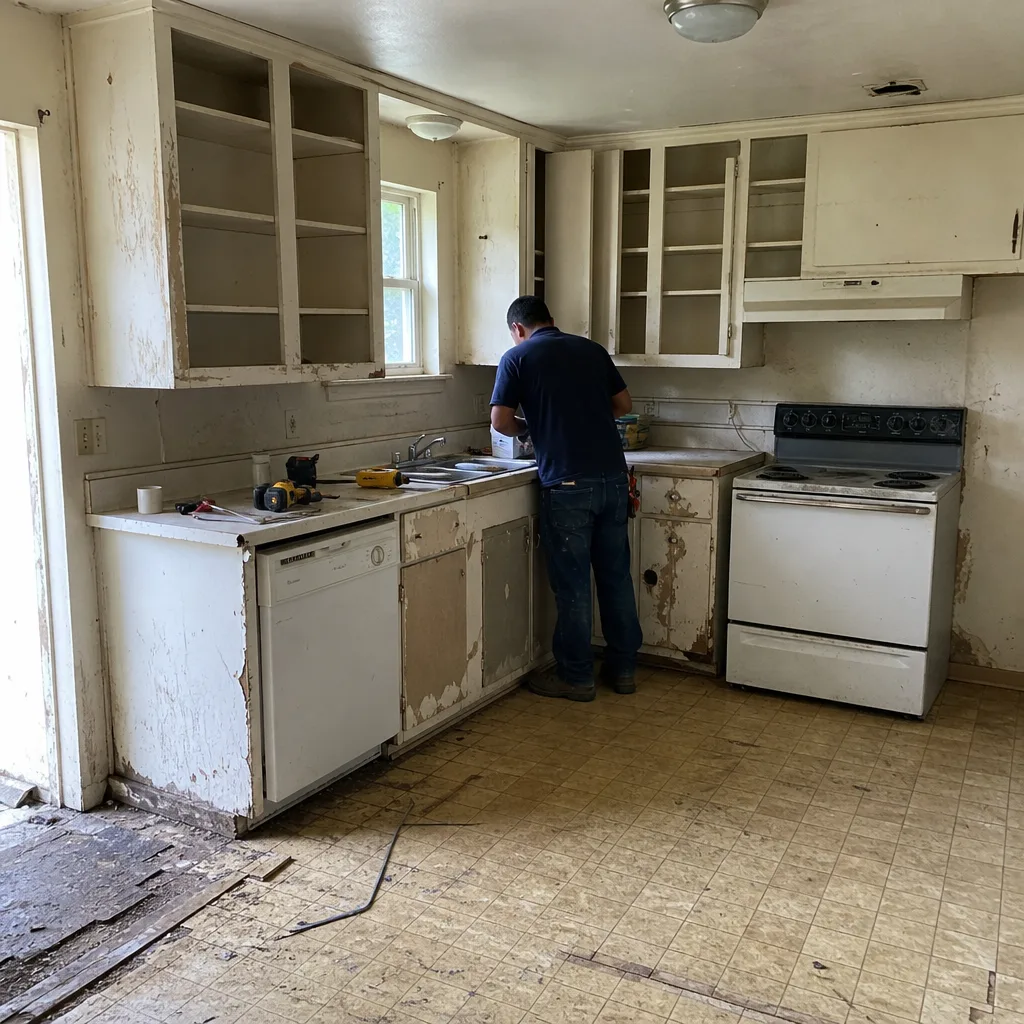 Before
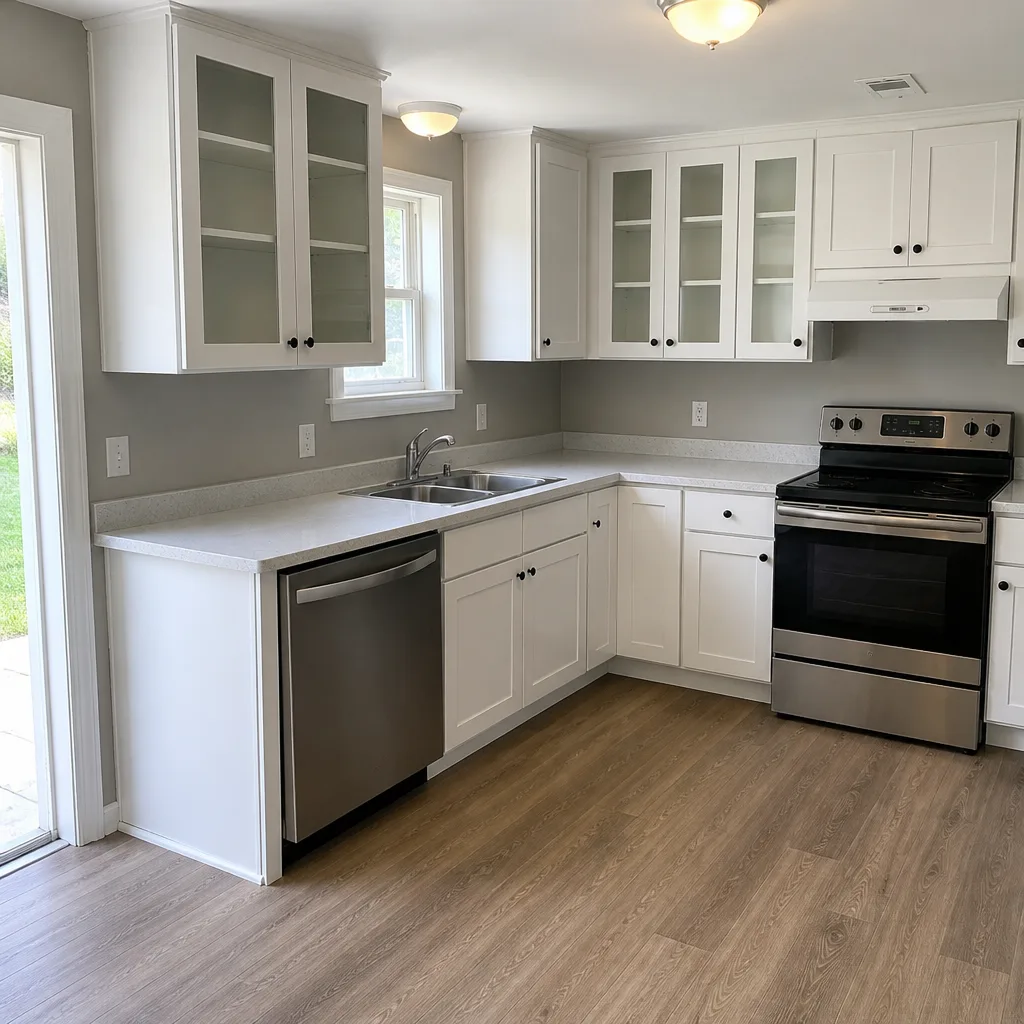 After
Do You Need a Permit to Remodel a Kitchen in Dallas? The Short Answer
Not always, but the answer depends entirely on what you’re changing. Painting cabinets and swapping a dishwasher in place don’t require a permit in Dallas. Moving the sink three feet, adding a 20-amp island circuit, or installing a range hood that vents through an exterior wall each triggers a separate permit and inspection. And if any of that work involves saw-cutting your foundation, add an engineer’s letter to the list before the city will sign off. We’re Groundwork Construction Co. of Dallas, and we pull every required permit as part of the project contract. Call (844) 797-4808 for a free estimate.
Key Takeaways
- Cosmetic-only kitchen work in Dallas generally needs no permit. Trade work (electrical, plumbing, structural) almost always does.
- Dallas requires a cable location survey and an engineer’s sign-off before any saw-cut of a post-tension slab. That’s routine here, and skipping it is a serious liability.
- Unpermitted kitchen work can surface as an open permit in a Dallas County title search and stall your sale.
- Work that isn’t inspected and to code isn’t covered by our 730-Day Done Right Promise. We won’t take a project that skips inspection.
What Actually Triggers a Permit on a Dallas Kitchen Remodel?
This is where most homeowners get surprised. Dallas doesn’t issue one blanket “kitchen remodel permit.” The requirement attaches to the scope of work itself, so two kitchens of the same square footage can need completely different paperwork. Here’s the chart we walk every homeowner through before the first hammer swings.
| Scope of Work | Permit Needed? | What It Involves |
|---|---|---|
| Cabinet refacing, painting, new backsplash | No | Cosmetic finish work. No inspection. |
| New electrical circuit (island outlet, dedicated appliance line) | Yes | Electrical permit plus rough-in and final inspection |
| Moving or adding a sink, relocating plumbing | Yes | Plumbing permit plus rough-in inspection before close-up |
| Removing a load-bearing wall | Yes | Building permit plus engineer’s letter |
| Cutting the slab to reroute a drain | Yes | Plumbing permit plus post-tension cable survey and engineer’s sign-off |
Replacing a dishwasher or range in the same spot? No permit. But reroute that water line even a foot and you’ve crossed into plumbing permit territory. The line between cosmetic and trade work is exactly where bids from cheap crews and licensed ones start to diverge.
Why the Post-Tension Slab Rule Catches People Off Guard
Dallas sits on the Blackland Prairie, and that clay soil swells and shrinks through every wet-dry cycle. Post-tension slabs are the standard residential foundation across most of the city because they hold up to that movement far better than a conventional slab. The trade-off: those slabs carry tensioned steel cables running through them, and you cannot just cut one blind.
So when a kitchen layout change requires cutting the slab, Dallas requires a cable location survey first, then an engineer’s review of the cable layout and sign-off before the city will approve the penetrations. Out-of-market contractors often don’t anticipate this. We see it constantly on remodels in Oak Cliff’s pre-war pier-and-beam bungalows, where a plumbing move might mean new framing and subfloor work instead of a cut, and on the 1950s-70s slab-on-grade ranches across East Dallas, where nearly every plumbing relocation touches a post-tension foundation.
Here’s the practical reason that engineer’s letter matters: a slab cut without it can show stair-step brick cracks and sticking doors within a few dry summers. That’s not just a cosmetic annoyance. It’s a foundation problem that can run into the thousands to correct, long after the remodel is done.
The Resale Trap: Unpermitted Work Follows the House
A permit isn’t paperwork for the contractor’s convenience. It’s a public record that stays with the property. When a Dallas County title search pulls up an open or failed permit on your kitchen, it surfaces during the sale, not before.
What happens next depends on the scope. An unpermitted electrical or plumbing change can trigger a disclosure obligation, a re-inspection, or in the worst cases, remediation or demolition before the buyer’s lender will close. A kitchen remodel that looked finished and beautiful becomes a negotiation chip you didn’t plan on. That’s an expensive way to save a few hundred dollars on a permit.
We mention this early in every estimate, because it’s easier to plan for than to fix. If you’re weighing how much a whole project runs, our full breakdown of Kitchen Remodeling in Dallas covers typical scope and cost, including the $14,000-$45,000 range most Dallas kitchen remodels land in once permits and trade work are accounted for.
“My Contractor Said I Don’t Need One”
Sometimes that’s true, sometimes it isn’t. The problem is that skipping a permit makes a project faster and cheaper to bid, and that speed becomes your liability, not the contractor’s. We’ve been called to correct kitchens where a missing inspection surfaced only at resale, years after the crew that did the work had moved on.
The 730-Day Done Right Promise is our written guarantee that if the work isn’t right, we make it right. That promise only holds for work done to code and properly inspected. We won’t take on a project that bypasses Dallas’s inspection requirements, and that’s a line we hold on every Kitchen Remodeling project, whether it’s a cosmetic refresh or a full overhaul with structural changes.
What we do handle: pulling every required permit under the project contract and managing the inspection schedule with the city. You don’t interact with the building department, and you don’t get a mid-project surprise when a rough-in fails and delays your timeline.
Cost, Materials, and the Paperwork in One Place
Permit fees themselves are a small slice of a Dallas kitchen budget, usually a few hundred dollars depending on scope. The bigger number is the remodel. Here’s how typical Dallas kitchen line items break down:
- Full kitchen remodel: $14,000-$45,000
- Small kitchen remodel: $9,000-$20,000
- Cabinet installation: $4,000-$13,000
- Countertop installation: $2,000-$6,500
- Kitchen island installation: $3,000-$10,000
- Backsplash installation: $800-$2,500
The materials inside those ranges are where a kitchen earns its long life. We work with a curated set of brand partners, and in kitchens that usually means KraftMaid cabinetry and Cambria quartz counters. Built to last, backed in writing, is the standard we hold every trade to, from bathroom remodeling to home additions.
What It Costs to Do the Permit Work Right
Pricing that includes permits is exactly what it sounds like: no-hassle upfront pricing, and the number you see is the number you pay. Our technicians have up to 12 years of experience, every project is background-checked and uniformed, and calls are answered by a live person 24/7. Larger remodels often qualify for our standing promotions: 0% financing for 18 months and $1,000 off projects over $10,000.
FAQs
Yes, if the scope involves electrical, plumbing, structural, or slab work; no, if it’s purely cosmetic. Painting cabinets, new backsplash tile, and cabinet refacing don’t require a permit. Adding a circuit, moving a sink, removing a bearing wall, or cutting a post-tension slab each requires a permit and inspection. Call (844) 797-4808 if you’re unsure where your project falls; estimates are free.
The work can become a liability at resale, when a Dallas County title search flags the open or failed permit and a buyer’s lender requires it resolved first. Skipped inspections can also mean remediation or demolition, and they void any workmanship guarantee tied to code compliance. Getting a permit costs far less than correcting years later. Call us for an exact quote.
Because post-tension slabs carry tensioned steel cables, and cutting one without knowing where they are is dangerous. Dallas requires a cable location survey and a structural engineer’s sign-off before slab penetrations for plumbing reroutes. Our crews coordinate both as part of the contract, so the inspection schedule stays on track. Call (844) 797-4808 to talk through your project.
Yes. Groundwork Construction Co. of Dallas pulls every required permit under the project contract and manages the inspection schedule with the city. You never interact with the building department or worry about a failed inspection stalling your timeline. Call (844) 797-4808 for a free estimate.
Question about permits or scope? We’ll look at your kitchen and tell you plainly what’s required, no pressure. Groundwork Construction Co. of Dallas offers a no-pressure assessment in Dallas. Call (844) 797-4808 today. You can also reach our home page for the full picture of what we do.
Written by the team at Groundwork Construction Co. of Dallas, serving Dallas, TX.