
 Kitchen remodeling
 Bathroom remodeling
 Home additions & ADU
 Roofing
 Windows & doors
 Driveway & pavers
 Fence
Free written scope consultation - allowances, timeline, and change-order rules on paper before a single trade is scheduled
Styles & brands we work with
- Kitchen remodeling
- Bathroom remodeling
- Home additions & ADU
- Roofing
- Windows & doors
- Driveway & pavers
- Fence
See the difference
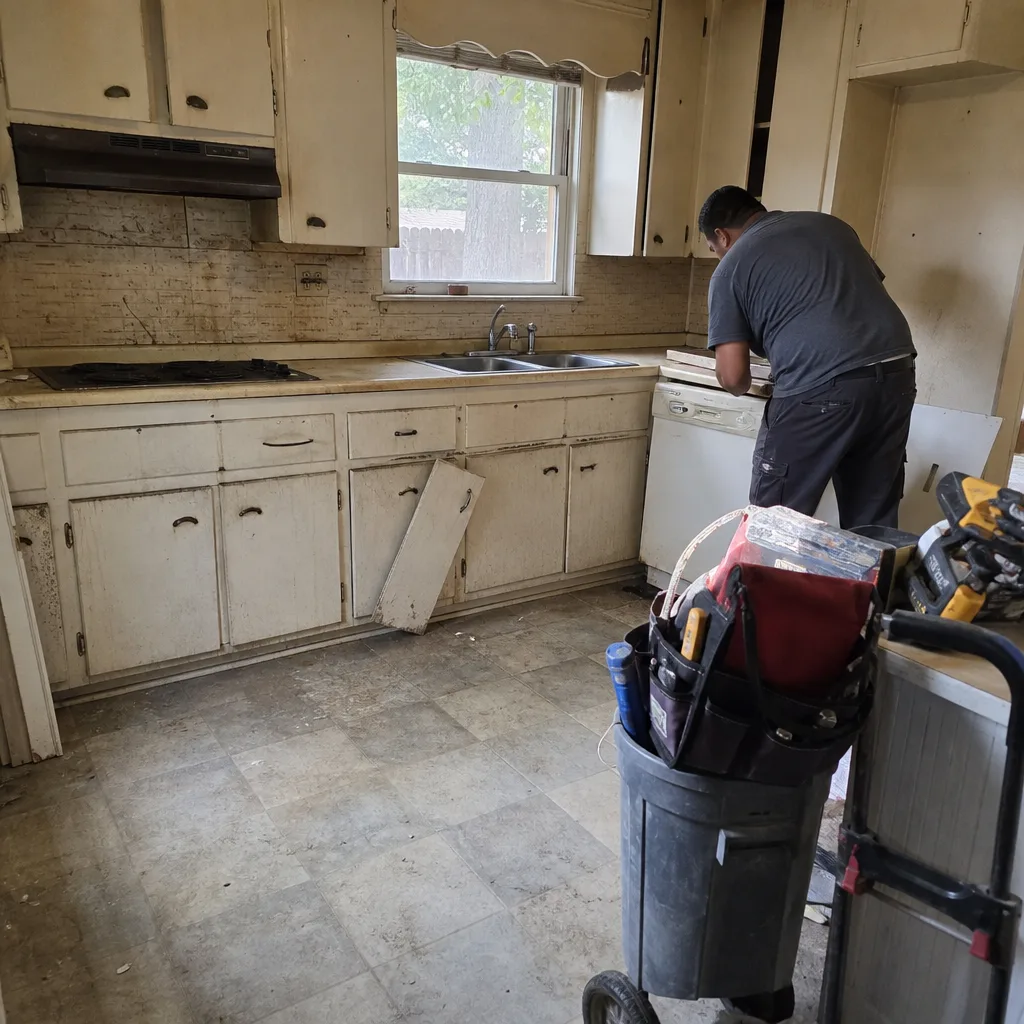 Before
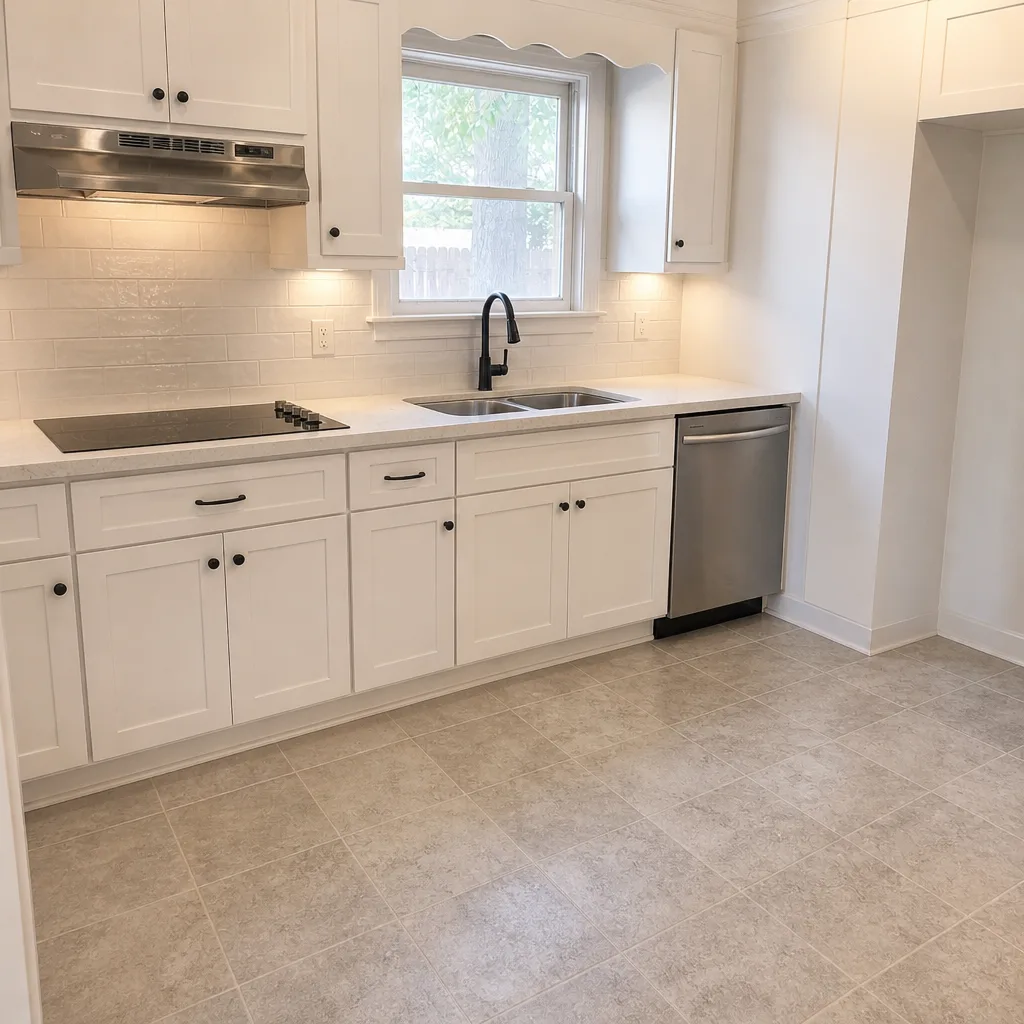 After
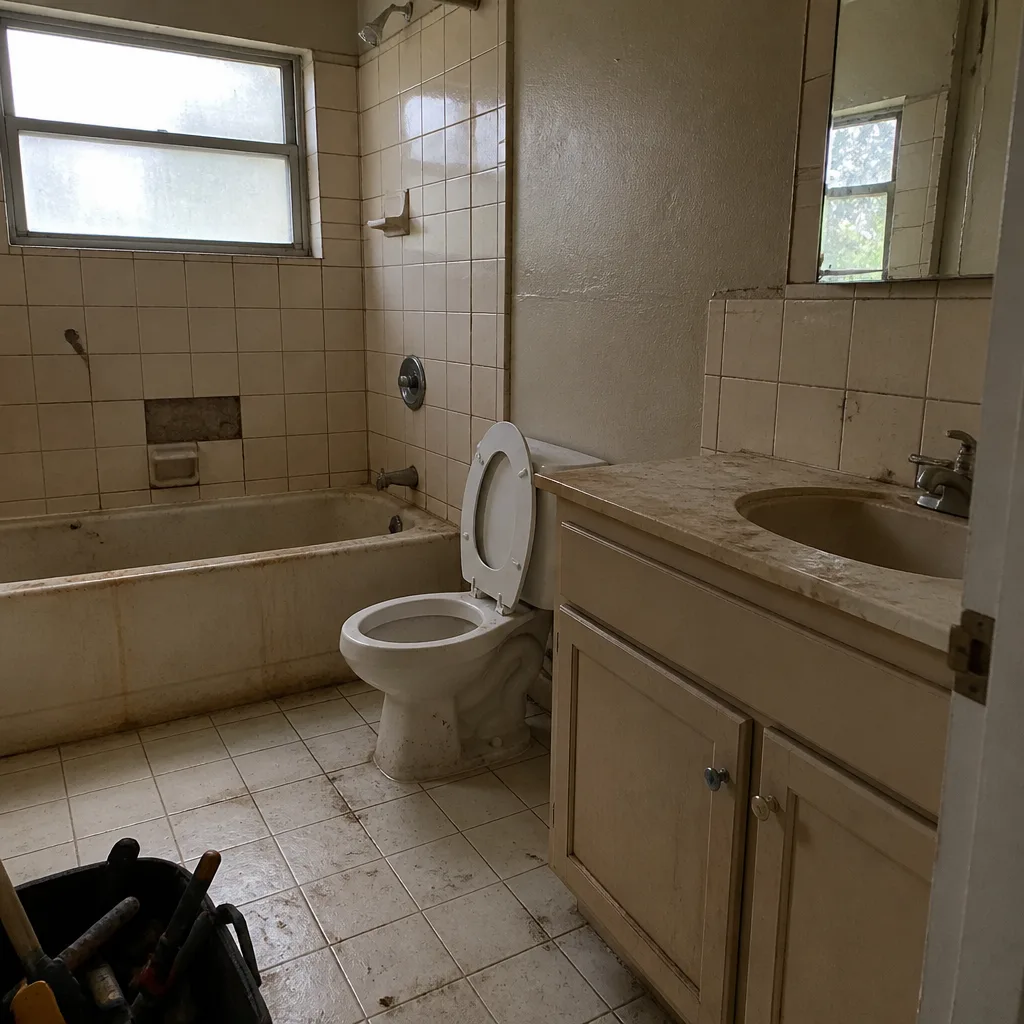 Before
 After
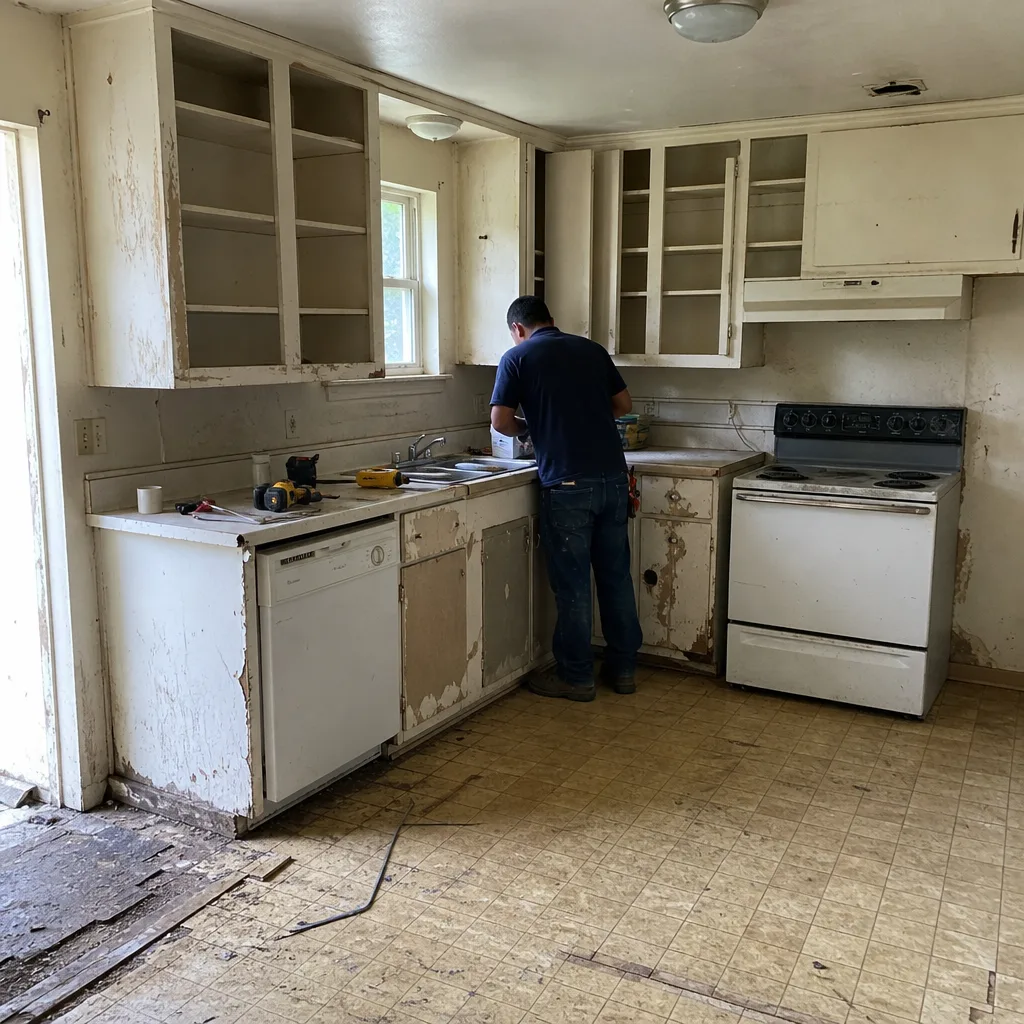 Before
 After
How to Clean Gutters in Dallas, TX: The Pollen-Paste Problem Most Guides Miss
The short answer: in Dallas, gutters need a wet flush from above and a downspout clear from below, and most spring overflows come from pollen paste packed into the elbows, not leaves sitting in the trough. If you cleaned in March but still had water sheeting over the edge in April, you didn’t finish the job - the oak pollen had already cemented inside the downspout. A garden hose, a downspout rod, and two well-timed cleanings a year handle most Dallas homes; if you’d rather not be up a ladder over a slab foundation, Groundwork Construction Co. of Dallas bundles gutter service with a roof inspection in one visit - call (844) 797-4808.
Key takeaways
- Dallas gutters clog from oak catkins and cottonwood fluff that turns into a fiber-reinforced mat, not dry leaves.
- A leaf blower pushes that mat around; only a wet flush plus a downspout rod actually clears it.
- The two dates that matter here are late April/early May and December - not the generic “spring and fall.”
- A slow-draining downspout still backs up in a 3-inch-per-hour storm, and overflow near the slab on Blackland clay is a foundation problem, not a cosmetic one.
Why Dallas Gutters Clog Differently Than the Guides Assume
Most online gutter guides are written for the Pacific Northwest leaf-clog model: big maple leaves, wet winters, scoop them out twice a year. Dallas doesn’t run that program. Here the real enemy is oak pollen. Live oaks and red oaks drop catkins from February through April, the catkins mix with morning dew, and together they form a dense, fibrous paste that sets up like papier-mâché inside the trough and the downspout elbows. Cottonwood fluff in early summer adds a second layer of the same problem. It looks like a soft fuzzy mess and behaves like concrete once it dries.
That’s why a leaf blower fails in Dallas. Blowing a dry-looking trough pushes the top layer around and leaves the compacted mat glued to the bottom and the seam. The mat doesn’t block the whole gutter, either, which is the trap. The trough looks open, water trickles along it, and then the first convective storm of May sends three inches an hour and the whole run overflows at the low corner.
You’ll see this across the city’s housing mix. Dallas runs from pre-war pier-and-beam bungalows in Oak Cliff and East Dallas to the vast tracts of 1950s-70s slab-on-grade ranch homes, and newer infill keeps crews busy. The slab-on-grade stock is where gutter overflow matters most - on Blackland Prairie clay, water dumped at one corner changes that corner’s soil moisture while the rest of the slab stays put, and that differential is exactly what drives the stair-step brick cracks and sticking doors people here know too well.
The Dallas Gutter Cleaning Method That Actually Works
Forget scooping and blowing. The method that clears a Dallas gutter is a top-down wet flush paired with a bottom-up downspout clear. Here’s the sequence:
- Flush the trough from above with a garden hose, working from the high end toward each downspout. The water pressure loosens the pollen mat; a blower can’t. Keep the hose moving so you don’t flood the fascia.
- Disconnect the downspout elbow at the bottom and flush from the top with the hose. This is the step almost every DIY guide skips. If water backs up or drains slowly, the paste has packed into the elbow or the vertical run.
- Rod the downspout from below if the flush stalls. A downspout rod or a drain snake clears the compacted plug that a hose alone won’t push through. Work the rod up, not down, so you’re pulling the plug out rather than driving it deeper.
- Reconnect the elbow and check discharge direction. Water should land on the lawn or a splash block, at least a couple of feet off the slab perimeter - not against the foundation wall.
Leave the ladder work to a pro if your roofline is steep, two-story, or you’re not comfortable near the edge. Gutter cleaning looks simple and isn’t; falls from ladders are the most common home-improvement injury, and a fall onto a Dallas slab is unforgiving. A trained, insured crew also spots the damaged hangers and separated seams a homeowner can’t see from the ground.
The Dallas Seasonal Cleaning Calendar (and Why “Twice a Year” Misses It)
The standard “clean in spring and fall” advice gets the dates wrong here. The two cleanings that actually matter in Dallas are:
- Late April or early May - post-pollen flush. Oak catkins and cottonwood debris have finished dropping and set into the trough. A garden-hose flush now clears the paste before the summer storm season.
- December - post-pecan and oak leaf drop. Leaves are down and the plants are dormant. Clear the troughs and downspouts before the freeze snaps; a clogged downspout that freezes and splits the elbow is a repair you don’t want in January.
Why does “twice a year” still miss the worst event? Because the generic calendar’s spring cleaning usually happens in March, before the oak pollen has finished. The pollen paste that forms through April then sits in a “clean” gutter through the summer thunderstorm season. Timing the first cleaning to the end of the pollen drop, not the start of it, is the fix. Scheduling both gutter cleaning and an annual roof inspection in one visit makes sense, too - the roof and the gutters are the same water-management system, and one trip up the ladder covers both.
What to Look for in a Gutter Service in Dallas
A gutter cleaning in Dallas isn’t just a scoop-and-go job. Here’s what separates a crew that clears the problem from one that pushes it around:
- A wet flush, not just a blower pass. Ask whether they flush the trough with water and rod the downspouts. If the answer is “we blow it out,” the pollen paste stays.
- Downspout checks at the elbow. A crew that doesn’t disconnect the bottom elbow and check flow isn’t finishing the job.
- Downspout-placement awareness. A good service notes where the water lands. Overflow against the slab on Dallas clay is a foundation risk, not just a wet patch of mulch.
- Licensed, insured, and accountable. Roofing and gutter work near the roofline should be performed by a licensed, insured professional - one who stands behind the work. Every job from Groundwork is covered by the 730-Day Done Right Promise.
Groundwork’s technicians have up to 12 years of experience, and every crew is background-checked and arrives in uniform. Roof and gutter work is the closest thing we do to what you’re reading about: our Roofing and gutter installation service plans downspout placement specifically to route discharge away from the slab perimeter - because here the discharge point matters as much as the trough itself. If you’re pricing the related work, roof repair in Dallas runs $400-$1,800 and a full roof replacement runs $8,000-$20,000, so a $250-$700 gutter-and-downspout cleaning that prevents an $8,000 problem is an easy call. Our crews work with GAF and CertainTeed shingles and impact-rated materials, since Dallas’s spring hail and straight-line winds demand it. For the full range of work we handle across the area, see our home page and the Dallas service area.
FAQs
Twice a year is the right count for most Dallas homes, but the timing matters more than a generic calendar suggests: schedule one cleaning in late April or early May after the oak pollen drops, and the second in December after pecan and oak leaves fall. That covers the two events that actually clog Dallas gutters.
No. A leaf blower pushes pollen paste and cottonwood fluff around but can’t dislodge it from the trough or the downspout elbow. In Dallas you need a wet flush from above and a downspout rod from below to break the compacted mat, or the gutter will still overflow in the next storm.
Because the clog is in the downspout, not the trough. A compacted pollen plug in the elbow lets the gutter drain slowly and look open while it backs up under heavy rain. Disconnecting the bottom elbow and flushing from the top usually reveals the problem.
Yes. Overflowing troughs dump water against the slab perimeter, and on Blackland clay a single wet corner causes the soil there to move differently from the rest of the slab. That’s the mechanism behind corner cracks and sticking doors, and it’s why gutter discharge direction matters in Dallas.
If you’d rather have it looked at, Groundwork Construction Co. of Dallas offers a no-pressure assessment in Dallas - call (844) 797-4808 for a free estimate, and we can schedule gutter service and a roof inspection in a single visit. Live person answers around the clock, upfront pricing, no surprises.
Written by the team at Groundwork Construction Co. of Dallas, serving Dallas, TX.