
Last updated November 17, 2026
 Windows & doors
 Kitchen remodeling
 Bathroom remodeling
 Home additions & ADU
 Roofing
 Driveway & pavers
 Fence
Free written scope consultation - allowances, timeline, and change-order rules on paper before a single trade is scheduled
DIY vs Professional Windows & Doors: What’s Safe to Do Yourself
A window is not a hole in a wall. It’s a controlled failure point, engineered so that wind, water, and heat behave predictably around it. The moment someone cuts into a load-bearing wall without understanding the header above it, the job quietly stops being a window replacement and becomes a structural project that happens to involve a window. That gap – between manageable and structurally compromising – is narrow, and it isn’t intuitive. Some window and door tasks genuinely save Dallas homeowners real money. Others void warranties, invite rot, and put people in danger. This guide draws the line with precision, task by task, using what we’ve learned across thousands of North Texas installs.
Quick Answer
Interior trim, weatherstripping, hardware swaps, and insert (pocket) window replacements are genuinely DIY-friendly for a careful homeowner. Full-frame window replacements, anything involving a structural header, and all exterior water management along the rough opening need a licensed professional, because the cost of a mistake runs into thousands and shows up years later as rot or a failed inspection. When in doubt, the safest and often cheapest move is a free professional estimate in Dallas to confirm what you’re actually dealing with.
Styles & brands we work with
- Kitchen remodeling
- Bathroom remodeling
- Home additions & ADU
- Roofing
- Windows & doors
- Driveway & pavers
- Fence
Table of Contents
- The Line Between DIY and Professional, Mapped
- Task-by-Task Breakdown: What’s Safe and What Isn’t
- Insert Replacement vs. Full-Frame: The Distinction That Changes Everything
- What Dallas County Requires for Window and Door Permits
- The Honest Skills Assessment: Do You Actually Have What It Takes?
- Why Dallas Heat and Spring Storms Make Water Management Non-Negotiable
- Partial Work: How We Handle Homeowners Who Want to Do Some of It
- Materials and Hardware: Where Cheap DIY Becomes Expensive
The Line Between DIY and Professional, Mapped
Most homeowner guides treat window and door work as one category. It isn’t. It’s a spectrum where the difficulty jumps sharply in specific spots, and knowing where those jumps happen is the whole game. A sweep seal on a drafty back door in Lakewood is an hour of work and a $20 part. A full-frame window swap into a brick opening on a 1950s ranch house in East Dallas is a two-day job that depends on flashing knowledge most people don’t have.
Here’s the broad map. Interior work that sits behind the glass, on either side of the wall, is nearly always DIY-safe. Weathersealing and hardware live in that same zone. The moment work moves into the wall cavity – the rough opening, the framing, the flange, the exterior seal – the risk curve bends hard. That’s because the failure mode changes. Corners cut on interior trim look bad; corners cut on exterior flashing look fine for two or three years and then reveal themselves as rot in the sheathing, water staining inside the wall, and an insurance conversation nobody wants.
We’ve walked into plenty of Dallas homes where a homeowner did solid work replacing an insert window and then also tried to handle the exterior seal themselves on a subsequent full-frame project. The two tasks look adjacent. They aren’t. Insert replacements reuse the existing frame and sill, which are already tied into the moisture management system of the house. Full-frame replacement creates a new opening that has to be independently sealed against wind-driven rain, and in Dallas, that rain arrives hard and sideways.
Task-by-Task Breakdown: What’s Safe and What Isn’t
This is the section we’d tape to the refrigerator if you’re planning window and door work this year in Dallas. It’s a straight yes/no on each task, followed by why.
Genuinely DIY-Friendly
- Interior casing and trim replacement. Purely cosmetic, attaches to finished walls, no moisture exposure. If you can run a miter saw and caulk a joint, you can do this. Worst case, you redo a corner.
- Weatherstripping replacement. Door sweeps, foam gasket, and kerf seals all replace in under an hour. It’s the single highest-return DIY task for draft reduction and summer cooling bills in Dallas.
- Hardware swaps. Handles, locksets, deadbolts, and multipoint trim on doors. A Therma-Tru entry door takes new hardware cleanly. No structural implication.
- Caulking interior gaps. Filling the seam between trim and wall on the inside. Cosmetic and easy to correct.
- Screen replacement. Rescreening a frame requires no special knowledge and no permit.
Borderline – Possible With Real Preparation
- Insert (pocket) window replacement. This is the one category where a careful homeowner with solid carpentry basics can do legitimate work. Insert windows fit into the existing frame opening, so the rough opening and header are already there and already tied into the house. You’re replacing the operable unit and its sash, not creating new wall geometry. It still requires accurate measurements, level installation, and a clean exterior seal at the edge, but the risk of serious structural damage is low. This is where you can save real money.
- Replacing a pre-hung interior door in an existing frame. Manageable if the frame is square and the new door matches the opening. If the wall isn’t plumb, you’re suddenly shimming into a fight.
Not DIY – Hire a Licensed Professional
- Full-frame window replacement. This removes the window entirely, including its frame, and re-ties a new unit into the framing, sheathing, and exterior weather barrier. The number of failure points multiplies. This is where most Dallas window trouble originates years later.
- Any work involving a structural header. Widening an opening, converting a window to a door, or removing a window in a load-bearing wall means the load above now needs a properly sized and installed header. That’s an engineering and code question, not a carpentry one. Getting it wrong has put people in serious danger, and we’re not being dramatic.
- Exterior flashing and water management. Integrating a new window or door into the exterior weather barrier and the flashing system is a trained, sequenced job. In Dallas, where a single spring storm can drive rain horizontally against a wall, an imperfect seal won’t announce itself – it’ll just quietly rot your sheathing over a few years.
- Siding and exterior wall changes. Opening a hole in the exterior wall to accommodate a different window size requires re-working the cladding and the water barrier. This is a full-trade coordination job.
- Any exterior door that changes the opening size. A pre-hung exterior door into an existing rough opening is similar to a window – borderline. A door that requires re-framing is not.
Insert Replacement vs. Full-Frame: The Distinction That Changes Everything
If you remember one distinction from this guide, make it this one. Insert replacement and full-frame replacement are not the same job at two price points. They’re fundamentally different categories of work, and it explains almost all of the DIY-versus-professional decisions a homeowner faces.
Insert Replacement: DIY-Accessible
An insert window installs inside the existing window frame. The old sash and its hardware come out; the new insert unit goes into the same opening. You reuse the existing frame and sill, which remain tied into the wall, the header, and the flashing system already in place. Because you aren’t touching the rough opening, the structural story of the window is unchanged. What’s left is careful measuring, leveling, sealing the perimeter, and finishing the interior. Done well, it looks clean with minimal interior disruption. This is the only window task where we’d say a prepared homeowner can reasonably consider the work themselves. Companies like ES Windows and ECO Window Systems manufacture insert-friendly units that make the job tractable.
Full-Frame Replacement: Professional Work
Full-frame replacement removes the entire window – sashes, frame, and sill – back to the rough opening in the framing. Now you’re installing a new unit from scratch against an opening whose dimensions need to be right, whose framing needs to be intact, whose water barrier needs to be re-established, and whose exterior cladding needs to integrate cleanly. Every house at this point is a bit different. Old Dallas homes often have surprises once the wall is open: deteriorated sheathing, undersized headers, or a sill that was never properly flashed. A trained installer knows how to read what’s there and correct it; a first-time DIYer tends to close the wall back up before the problems are solved, and that’s when the failures start.
The One-Sentence Rule
If the existing frame stays, it’s an insert job and DIY is possible. If the frame comes out, it’s a full-frame job and it needs a licensed professional. That’s the whole distinction. Everything else is a variation on it.
What Dallas County Requires for Window and Door Permits
Dallas County, like most Texas jurisdictions, requires a permit for structural changes to a window or door opening – and for most full-frame window replacements in which the rough opening is modified. Straight insert replacements that don’t alter the opening typically don’t require a permit, though it’s worth confirming with the City of Dallas permit office before you commit the weekend. The permit matters for two reasons most homeowners don’t see until later.
First, insurance. If a window fails and causes water intrusion or interior damage, an adjuster is going to ask whether the work was permitted and inspected. If it wasn’t, your claim has just gotten complicated. Second, resale. When a buyer’s inspector finds a new window or door that has no permit record on file, the closing process gets a lot longer. In a Dallas market where homes turn over quickly in neighborhoods like Lake Highlands or Bishop Arts, an unpermitted window replacement can slow a sale and cost you concessions at the closing table.
There’s also a code question most DIY guides skip: egress. A bedroom window must meet minimum clear opening dimensions for emergency escape. If you’re replacing a window to save money on cooling and happen to change the operable size – because the unit was on sale, or you liked a slimmer profile – you can unknowingly break egress compliance. A licensed professional knows what those minimums are and checks before ordering. So do building inspectors, which is why it’s better to know before the work begins.
For broader projects that pair window work with structural changes – like converting a garage to living space or adding a new room – the permitting conversation gets bigger. We cover that separately in our guide to Home Additions & ADU in Dallas, because those projects have their own code track.
The Honest Skills Assessment: Do You Actually Have What It Takes?
Most DIY content gives you a shopping list. What you actually need is a self-assessment. Tools can be bought; skills can’t be pulled off a shelf. Here’s the honest version of what a successful window or door project demands of a homeowner.
1. Accurate Measurement
Window and door units are ordered to the sixteenth of an inch. You need to measure the rough opening in at least three places per dimension and know which number to trust. Getting this wrong means the unit doesn’t fit and cannot be returned on most orders.
2. Working With a Level Over Six Feet
A window that’s out of plumb by an eighth of an inch across its height will bind its sashes and leak at the corner. If you haven’t used a four-foot level as a working tool – not just to check a picture frame – you’ll fight every step of installation.
3. Cutting and Fitting Trim
Casing returns, miter joints, and exterior corner details are all standard carpentry but they show every mistake. If interior trim work isn’t already in your repertoire, a window replacement isn’t the job to learn on.
4. Understanding of Flashing Sequence
This is the one that decides the project’s long-term success. Flashing must be installed in the right order – sill, then jamb, then head, with the house wrap overlapping correctly – so water drains out, not in. If you can’t explain the order, you don’t have the skill needed for any task that involves the exterior seal.
5. Physical Reach and Safety on a Ladder
Second-story windows on a Dallas home are a ladder job. If you don’t already own fall protection and know how to use it, don’t buy a second-story window unit. Height work on a ladder is where DIY window projects turn into hospital visits.
6. Realistic Time Assessment
An insert window replacement takes a competent first-timer four to six hours per window if everything goes right and the walls cooperate. A full-frame replacement takes a crew half a day and a homeowner a weekend – and often two. If a single window is already a two-weekend project, plan on the whole house taking a season.
If you read that list and wince at two or three items, that’s not a verdict on your ability. It’s information. The right call is to hire those items out and own the rest.
Why Dallas Heat and Spring Storms Make Water Management Non-Negotiable
Window and door failures don’t look the same everywhere. In Dallas, the two conditions that punish weak installs are heat and wind-driven spring rain, and they combine in ways that punish shortcuts specifically.
Summer heat in Dallas cycles exterior caulk through daily expansion and contraction. Any seam that was less than fully sealed when it was installed will open within a single season. That’s why we prefer to see the exterior seal done with correct materials and proper sequencing, not just a heavy bead of caulk over the top. The climate demands a mechanically sound install; caulk is a secondary defense, not the primary one.
Spring rain is the other half. Dallas storms regularly drive rain sideways against a wall at an angle standard window testing doesn’t always cover. A poorly flashed rough opening might not leak in a light rain, but it will have a very bad weekend in April. And in a Dallas home with stucco or brick veneer, the failure isn’t visible from outside – water travels behind the cladding and starts working on the sheathing. We’ve opened walls on homes in Preston Hollow where a professionally installed window sat next to a homeowner-installed one, and the difference in the sheathing behind each would settle any debate about DIY water management.
Where does this leave a homeowner who wants to tackle some of it? Do the work you can do inside, where climate doesn’t stress it. Leave the exterior seal and any task touching the rough opening to someone who has installed and tested these systems in Dallas for years. The point isn’t to discourage effort. It’s that “well-sealed” means something specific here, and the ceiling for DIY gets lower in Dallas than it does in a milder climate.
Partial Work: How We Handle Homeowners Who Want to Do Some of It
We get asked this a lot: “Can I do the parts I’m comfortable with and hire out the rest?” The answer is yes, with clear boundaries, because getting those boundaries right protects both the homeowner and the warranty.
Here’s the split we use. Homeowners can safely take:
- Interior casing and trim after installation.
- Paint and finish work on the interior.
- Removing old hardware before a replacement.
- Repainting exterior trim in areas the crew hasn’t touched.
What we need to own – and what we will not split out on a project where we’re installing the window – is:
- All rough opening work, including any framing corrections.
- All flashing and weather barrier integration.
- The structural check on any opening where a header is involved.
- The final exterior seal, so the 730-Day Done Right Promise covers a complete install.
There’s a liability logic behind that boundary, and it’s worth naming. If we install a window and the homeowner later seals over the exterior with a different product that isn’t compatible, and the window leaks at the seal, we can’t inspect or warranty something we didn’t do. That isn’t a policy to hide behind; it’s how a meaningful warranty works. The 730-Day Done Right Promise is one of the longest workmanship guarantees in residential construction because we can control every variable we take responsibility for. Splitting that variable with a homeowner weakens the whole thing.
Where we genuinely like the split is when a homeowner wants to handle interior finish work – that’s where their taste shows up and their time saves real money without creating structural risk. The trade we handle is the part where a single hidden mistake becomes somebody’s problem two summers later.
Materials and Hardware: Where Cheap DIY Becomes Expensive
The last thing we’d offer from the field: the part of window and door work that homeowners are most likely to try to save money on is the part where savings backfire fastest. Hardware, seals, and the actual window unit itself are not interchangeable commodities.
Where Savings Actually Land
- Interior trim and paint. Standard materials are fine. Buy the paint you like; you’ll repaint eventually anyway.
- Hardware finish. A solid Therma-Tru or equivalent multipoint set covers a wide range and doesn’t need to be the most expensive option. Get the function right and the finish is taste.
- Interior caulk and finish products. Off-the-shelf is genuinely fine for interior.
Where Savings Backfire
- Weatherstripping and seals. A $4 sweep is a $4 sweep. A $12 sweep that seals properly saves you a small power bill every month for years. Buy the better one.
- Window units. Cheap units fail at gaskets and seals first, and the failure happens inside the wall behind the cladding where you can’t see it. A reputable manufacturer – ES Windows, ECO Window Systems, or a Mr-Glass repair for glass-only issues – is the difference between a 15-year window and a 6-year one.
- Exterior sealant. The best caulk for Dallas heat cycling is worth the two extra dollars per tube. Don’t shop here.
- Exterior doors. A good Therma-Tru entry door is engineered to shed water correctly at the frame. A cheap equivalent can rot at the bottom rail in one or two North Texas summers.
We name these brands because we’ve installed them and know how they hold up in Dallas, not because you need to shop for them. Homeowners who use our portfolio of partners – KraftMaid, Kohler, GAF, CertainTeed, Andersen, Pella and dozens more across every trade – get a window or door that’s matched to the climate it’s going into.
Common Mistakes to Avoid
- Skipping the header check on a load-bearing wall. A homeowner who opens a wall to widen a window and finds a header but assumes it’s “probably fine” is making a structural call that should belong to a licensed professional. In older East Dallas homes, header sizes vary and sometimes weren’t correct from the start.
- Treating insert replacement and full-frame replacement as the same job. They look adjacent from the outside. They require completely different skills. Confusing them is how a nice Saturday project becomes a sheathing repair two springs later.
- Caulking the exterior instead of flashing it. A fat bead of caulk over an improperly flashed rough opening will read as fine for a year. Then a Dallas storm finds the seam and the water goes where you can’t see it.
- Ordering units off a single measurement. The rough opening dimensions vary by location; using one measurement to order every window in a house is a common DIY-caused return that costs more than a professional install.
- Ignoring egress code on a bedroom window. If you swap a bedroom window for a slimmer profile without checking minimum clear opening, you’ve built a code violation into a house you might want to sell.
- Working on second-story windows without fall protection. Ladders on a Dallas summer afternoon are one of the fastest ways a weekend project ends in the ER. Height work is professional work.
- Doing the work unpermitted to save a fee. The permit fee is a rounding error compared to the cost of dealing with an insurance claim or a stalled sale because records don’t exist.
See the difference
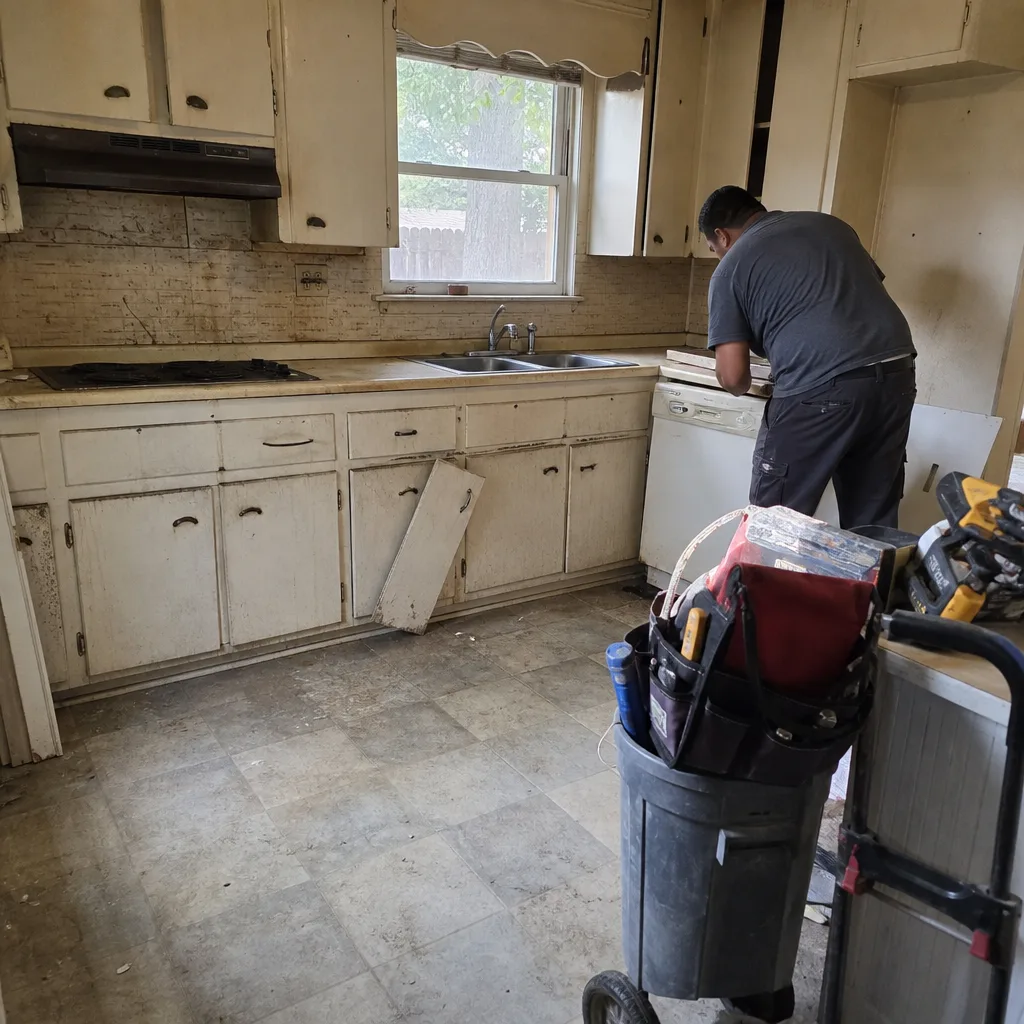 Before
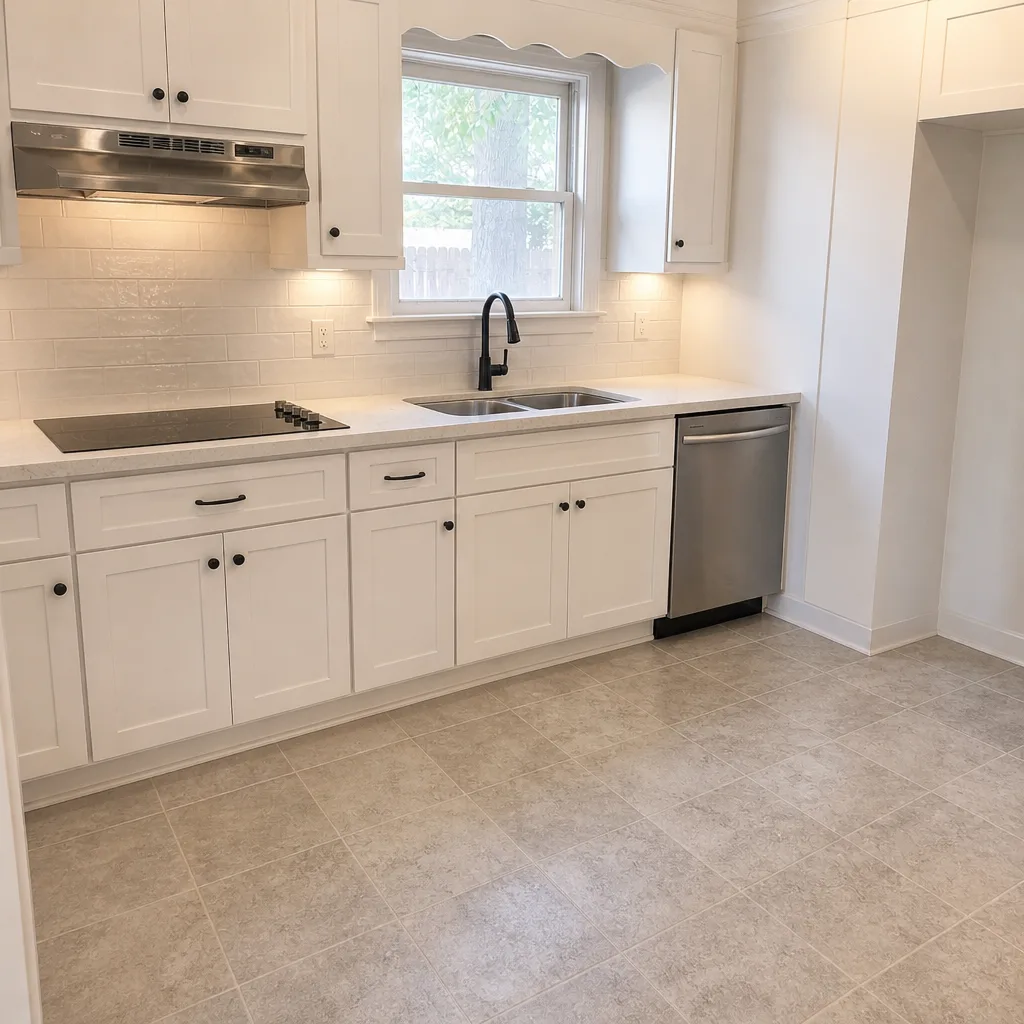 After
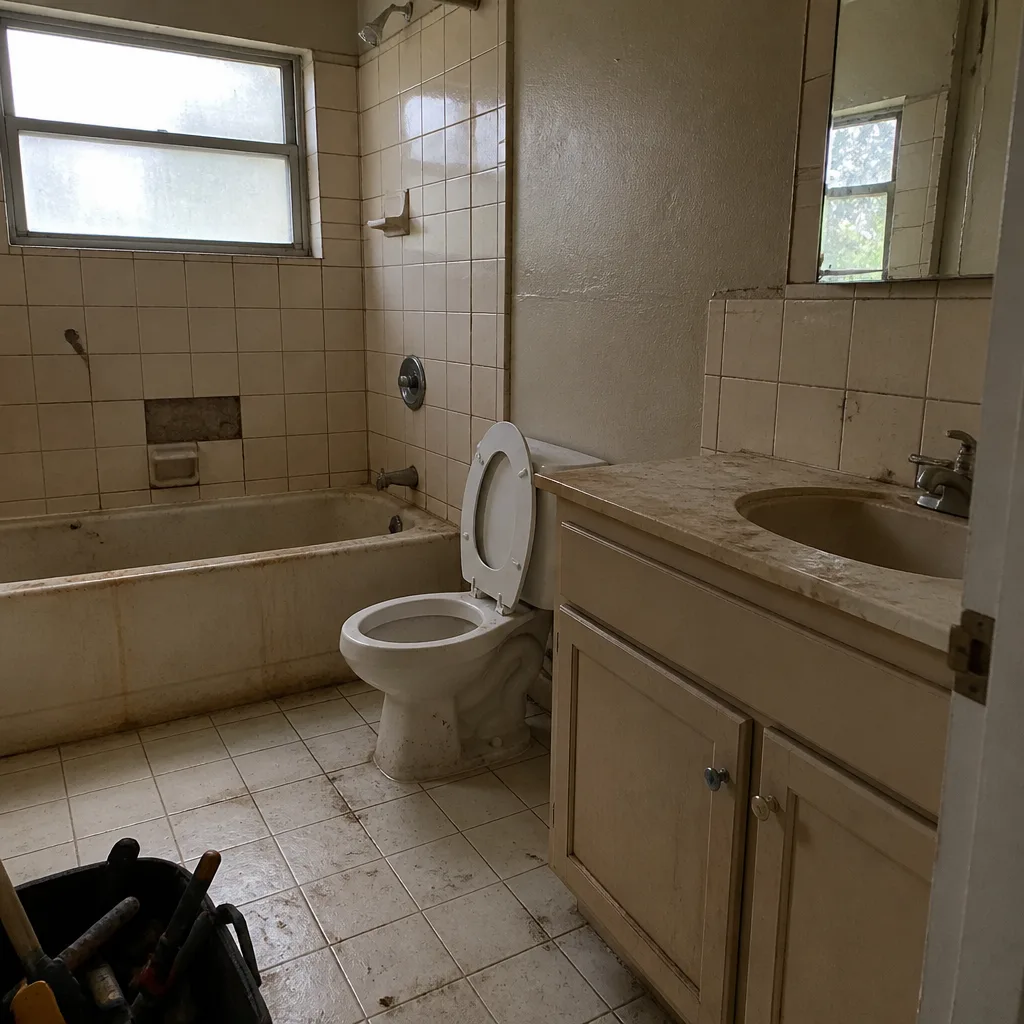 Before
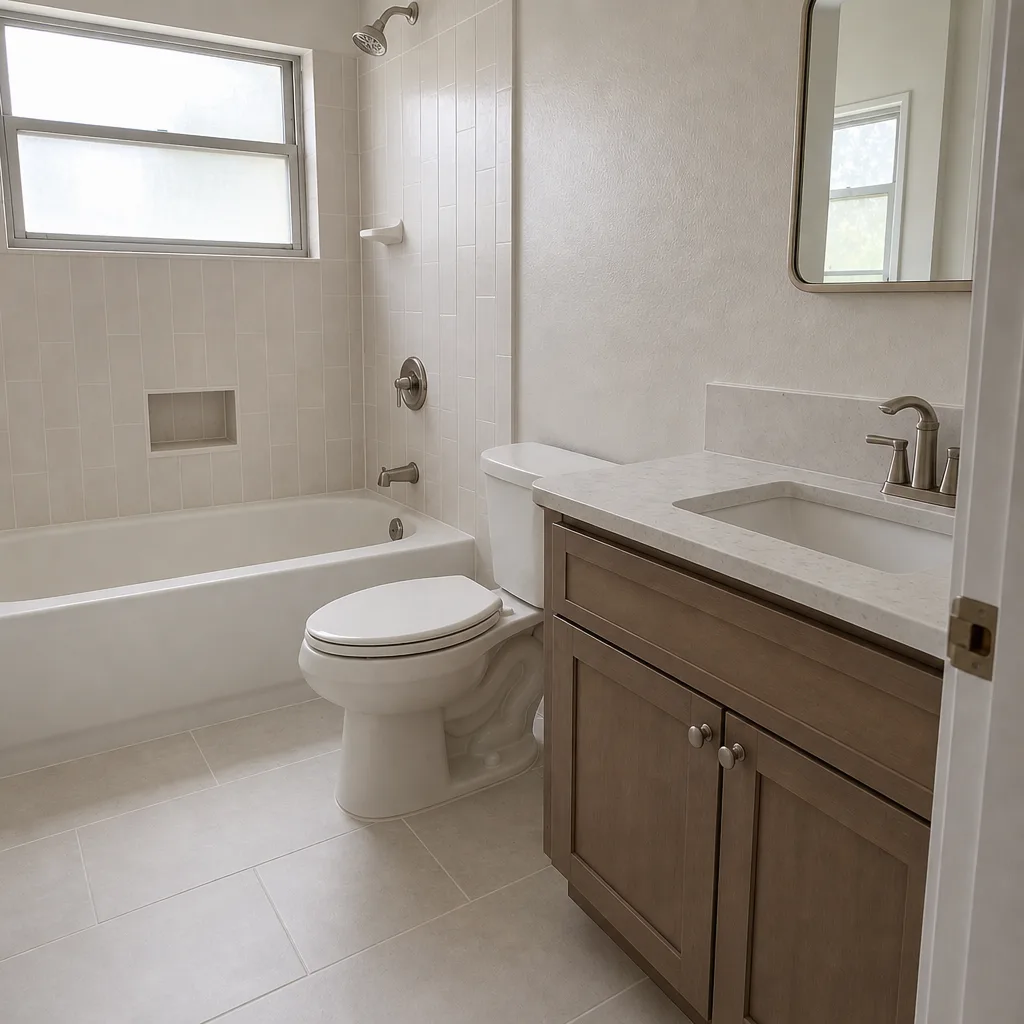 After
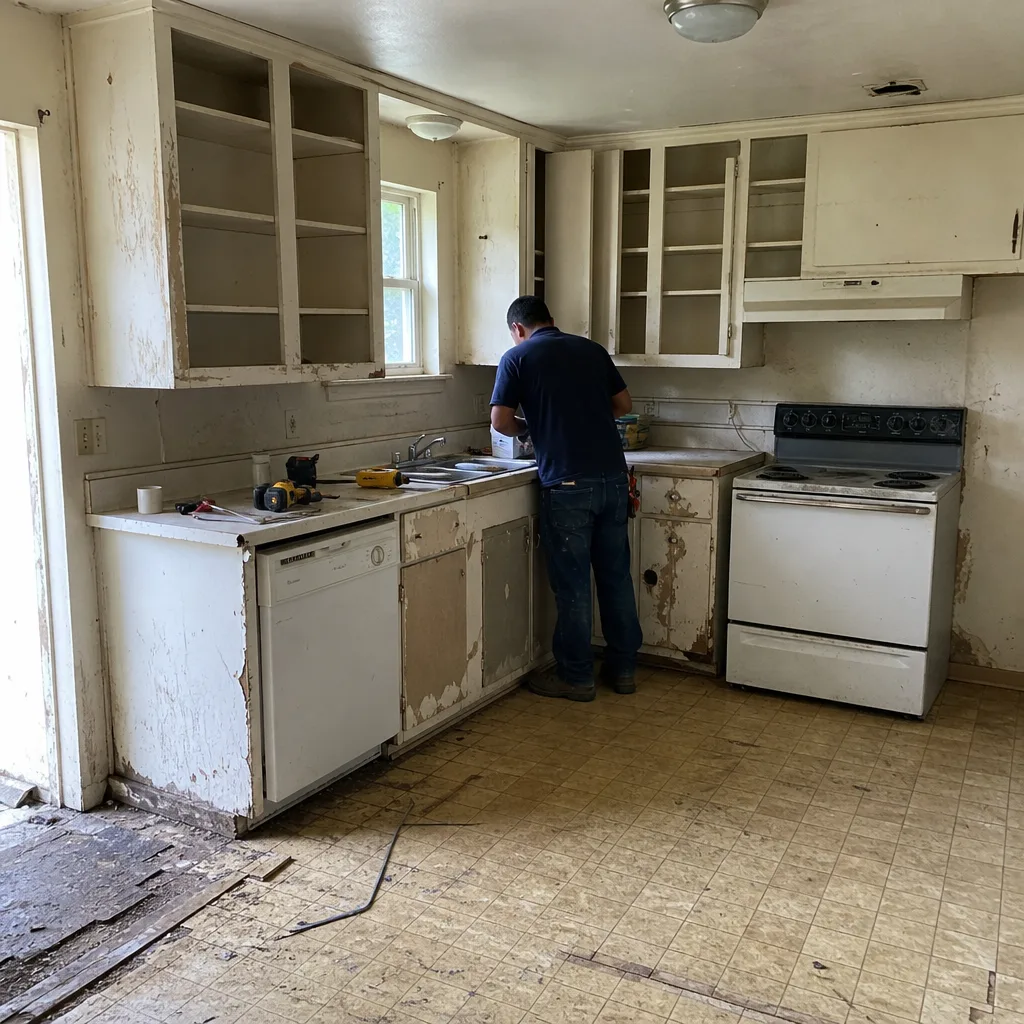 Before
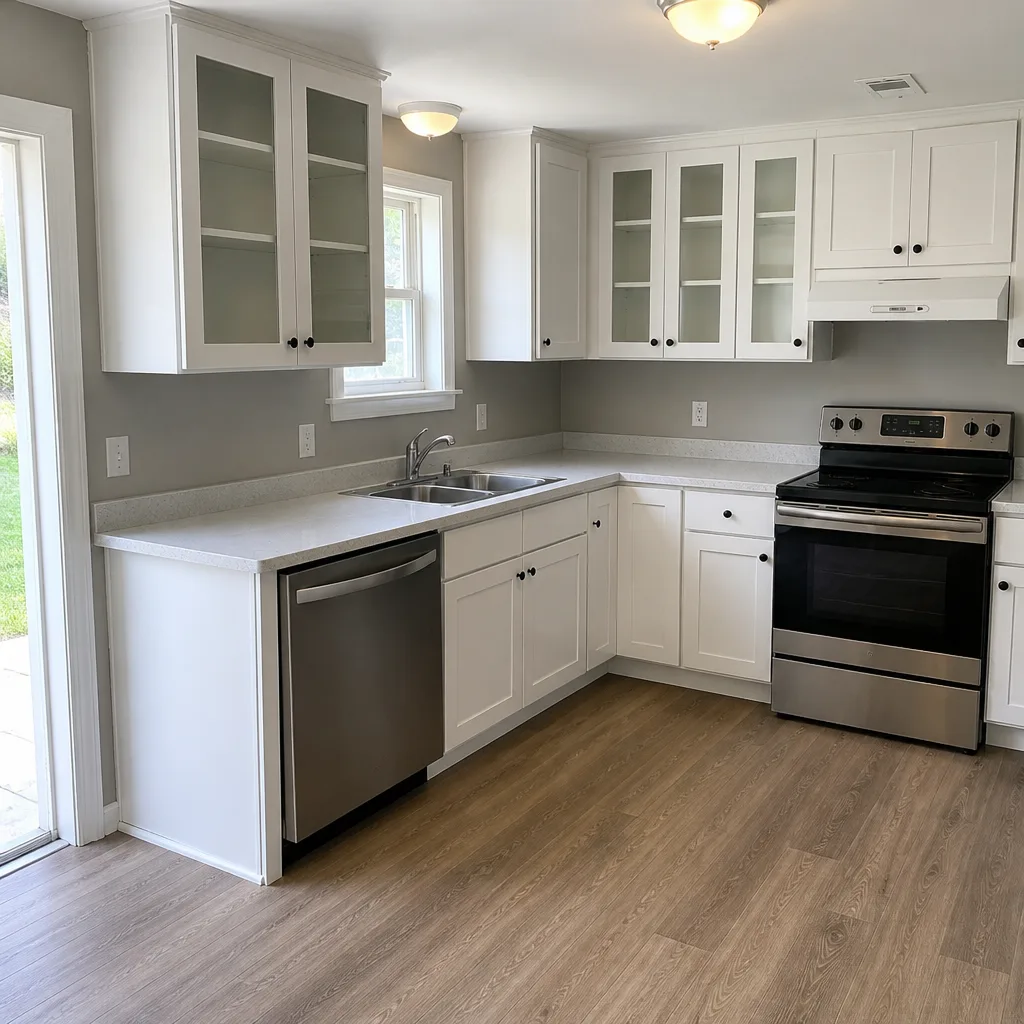 After
When to Call a Professional
Call a professional for any full-frame window replacement, any work touching a structural header, any task that involves the exterior weather barrier or flashing, and any second-story install. Call if you can’t confidently explain the flashing sequence out loud. Call if the wall opening looks different from what you expected – deteriorated sheathing, undersized framing, or a header that doesn’t match the plan. Call if you’re on a deadline, because DIY window work with a move-in date attached has a way of stretching. And call before you order expensive units you’re not sure will fit. Groundwork Construction Co. of Dallas offers free estimates in Dallas – call (844) 797-4808 to schedule yours. We’ll walk the openings with you, tell you honestly what’s a weekend job and what isn’t, and quote any work that needs a licensed installation in writing.
Frequently Asked Questions
Yes, if it’s an insert (pocket) replacement that reuses the existing frame, and if you’re comfortable with accurate measurement, leveling, and neat trim work. Full-frame replacements are a different category and should be handled by a licensed professional because the rough opening and exterior flashing have to be rebuilt correctly. For a free assessment of which category your project falls into, call (844) 797-4808.
Typically yes for full-frame replacements or any job where the rough opening is modified, and usually no for straight insert replacements where the opening doesn’t change. The safe move is to confirm with the City of Dallas permit office for your specific project before you start. An unpermitted window can complicate an insurance claim and slow a resale. Call (844) 797-4808 if you’d like us to look at your project and tell you what we see.
Insert replacement installs a new window unit inside the existing frame, so the rough opening, header, and existing flashing are left intact. Full-frame replacement removes the entire window including its frame and re-establishes the rough opening, framing, and exterior water management from scratch. The first is DIY-accessible; the second is professional work almost every time.
In the Dallas market, insert replacements typically run in the mid-hundreds to low four figures per window depending on size and unit quality, while full-frame replacements run higher because they include framing, flashing, and exterior finish work. The exact number depends on how many windows, the sizes, and what the wall reveals once opened. Call (844) 797-4808 for a written, line-item estimate – estimates are free.
A properly scoped window job includes a written line-item quote and fixed pricing, so the number you see is the number you pay. The exception is if the wall reveals hidden damage – deteriorated sheathing or an undersized header – once the old unit comes out. Any professional should show you that condition with photos and a written change, not verbalize a higher number. Call (844) 797-4808 to see how we quote Dallas projects.
Yes. Interior trim, paint, and pre-install hardware removal are the natural homeowner splits. All rough opening work, flashing, structural checks, and the final exterior seal need to stay with the installer to keep the warranty meaningful. That split protects you as much as it protects the warranty. Call (844) 797-4808 to discuss what portion you’d like to handle.
The Bottom Line
Window and door work has a wider DIY-safe zone than most contractors will admit – but the line where it stops being safe is abrupt and often invisible to a first-timer. Interior trim, weatherstripping, hardware, and insert replacements are real savings. Full-frame replacements, structural headers, exterior flashing, and anything second-story are not the place to learn. Dallas climate punishes the difference more than most cities, because heat and spring storms find every shortcut within a couple of seasons. The right move, always, is to get the estimate before you commit the weekend. Groundwork Construction Co. of Dallas answers the phone with a live person 24/7, quotes in writing with no change orders, and backs the work with a 730-Day Done Right Promise. Whether you need Driveway & Pavers in Dallas, a new Fence Installation in Dallas, or simply a straight answer on which window tasks you can own, we’re glad to help. You can also return to our Groundwork Construction Co. of Dallas home to see the full range of what we build. Call (844) 797-4808 to schedule your free estimate.
Written by the team at Groundwork Construction Co. of Dallas.